
Why the 100 Billion FCAS Project Will Die in April 2026 — and Europe Will Get Three Fighter Jets Instead of One
 Dr. Klaus Weber
Why the 100-Billion-FCAS Project Will Die in April 2026 — and Europe Will Get Three Fighter Jets Instead of One
A number deserves more attention than it gets: In April 2026, in just a few weeks, Phase 1B of the FCAS program will expire. After that, there will be no Phase 2 — at least not a joint one. An industry representative bluntly stated on the sidelines of the Munich Security Conference: "Why negotiate" about Phase 2 when Airbus and Dassault are not in agreement on a single fundamental point? The next-generation fighter — NGF — is "all but dead." This marks the end of a project that was launched in 2017 as the flagship of European strategic autonomy. The timing could hardly be worse.
The Heart of a Dream
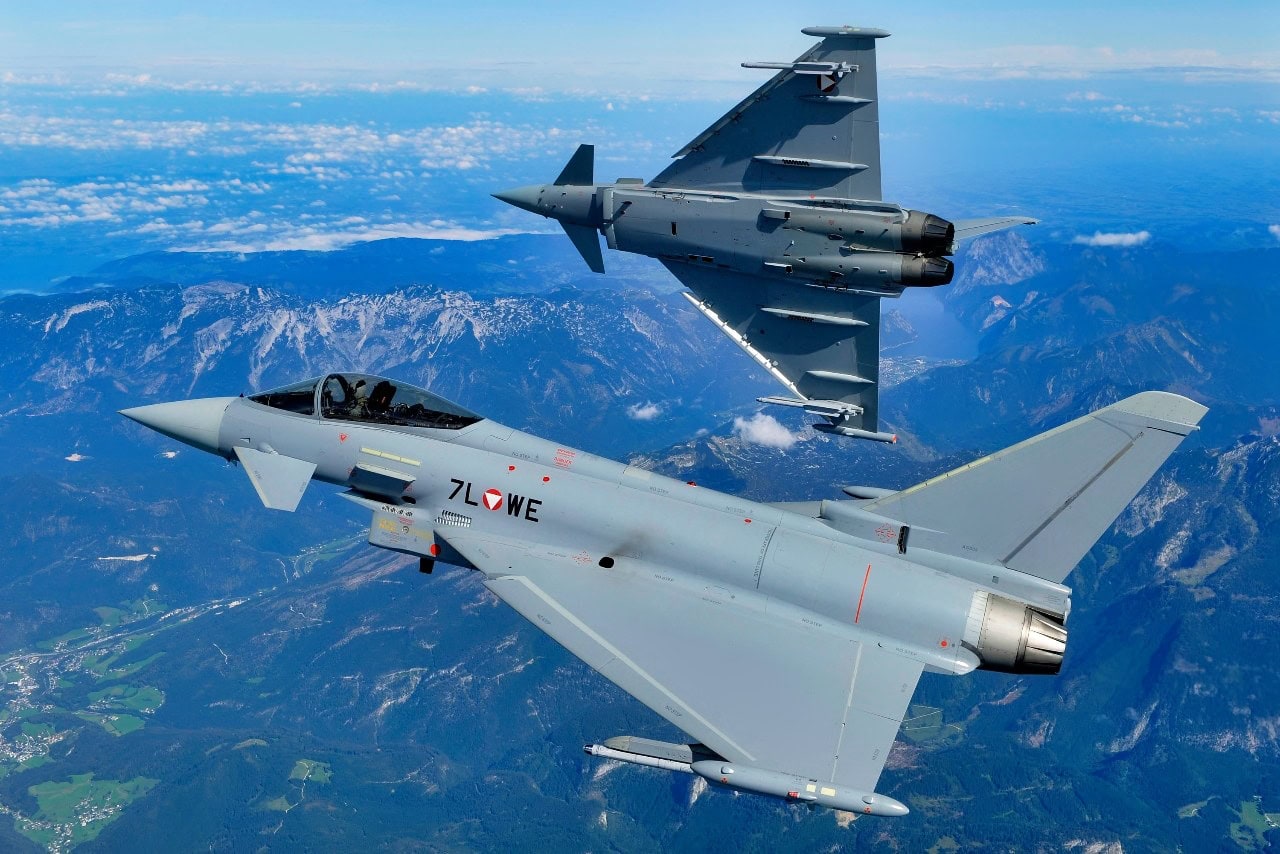
FCAS — the Future Combat Air System — was more than a procurement project. It was a political symbol: Germany and France working together on a sixth-generation fighter jet was meant to prove that Europe is technologically self-sufficient in defense. The Eurofighter was to be replaced for Germany and Spain, the Rafale for France. The total scope: well over 100 billion euros, including drone swarms, sensor networks, a "Combat Cloud." Macron called the project at its launch "l'avenir de la défense européenne."
Now, nine years later, Airbus and Dassault have been arguing for months over a single question: Who leads the program? Dassault insists that France, as the "lead nation," retains industrial control — over system architecture, software integration, weapon system control. Airbus sees this as "de facto sole rule" and refuses to sign off on Phase 1B follow-up work. IG Metall and the Federal Association of the German Aerospace Industry (BDLI) have expressed the unthinkable in a guest commentary in Handelsblatt: Germany should withdraw and start a national fighter jet program, "and then look for partners who want to participate."
Macron's "Non" Solves No Problem
When the media asked Macron in Munich if FCAS was dead, he replied: "Non." Boris Pistorius stated that the fate of the program would be "clear soon." These are political reflexes, not answers. The real question is not whether the program will be officially buried — the political procedure of a public burial is too embarrassing for both sides. The question is: Into what parts will it disintegrate?
The most likely answer circulating in the conference halls in Munich: Two fighter jets instead of one. France will develop its carrier-based successor to the Rafale alone or with small partners. Germany and Spain will start a joint program — possibly with Sweden's involvement, which is considered an interested observer despite all denials. And FCAS as a brand will survive as a cooperation framework for technology projects: communication systems, remote carriers, sensor integration.
Belgium's Defense Minister Theo Francken has given the only honest answer to this: "That's crazy. We need to stop this idea." Three European next-generation fighter jets — FCAS Germany/Spain, FCAS France, and the British-Italian-Japanese GCAP — would mean that the continent is repeating the same mistake that has been systemic in the European defense industry since 1960: too many programs, too little mass, no joint operational logistics.
The Fallacy of Division of Labor
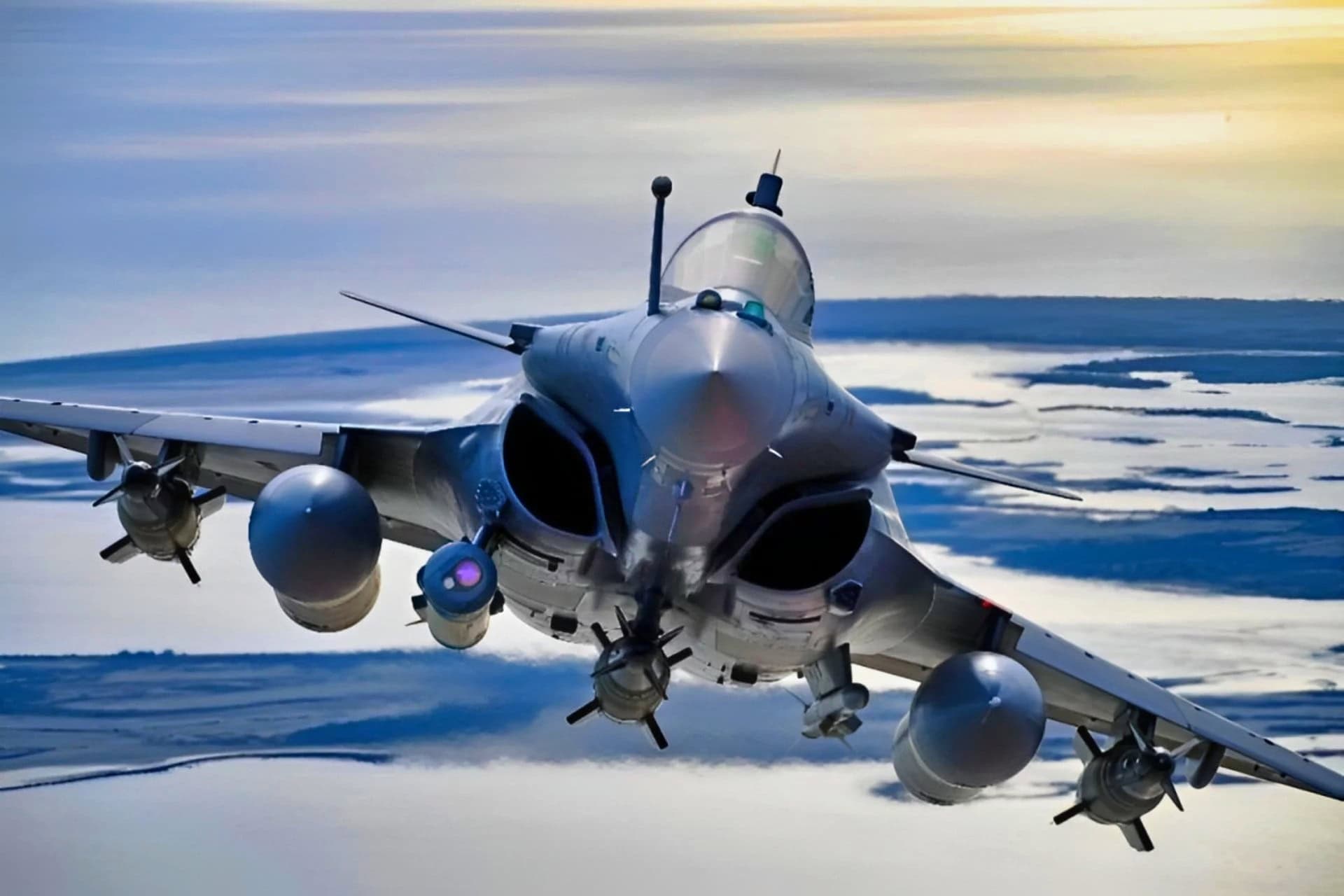
The central point of contention — workshare division — sounds like banal industrial politics. It is not. In complex weapon systems, the division of labor determines who develops the critical technologies, who retains the integration competence, and who ultimately can further develop the system. France insists on system leadership because Dassault understands that "who integrates, understands." Germany underestimated this in the 1990s with Eurofighter — and has since struggled to gain technological sovereignty over its own weapon systems, which are officially labeled "Made in Germany" but are understood in Paris.
IG Metall and BDLI are right when they say that France's stance is not that of an "equal partner." But the solution — to start a national program — does not address the fundamental problem. Germany lacks both the industrial base and the timeline to develop a sixth-generation capable combat aircraft on its own. The special fund has largely been earmarked for modernization and F-35 procurements; a completely new fighter jet program would not be operational until at least 2045, by which time the Eurofighter and Tornados will have long been retired.
The Timing is the Real Problem
Here lies the real irony. Europe is rearming. Germany has spent 100 billion in special funds, the Air Force is getting F-35s, and army capabilities are being increased. At the same time, the only truly European major program — FCAS — threatens to fail over the dispute about industrial leadership, just when Europe's strategic autonomy becomes an urgent need, not an aspirational policy.
Colby named the formula in Munich: "Partnerships, not dependencies." Washington tells Europe to take its defense into its own hands. But if Airbus and Dassault cannot even sign a workshare agreement, how can Europe credibly build an independent air combat capability? The answer is: by purchasing American F-35s. This is pragmatically sensible for the next 20 years — and cynically undermines Europe's narrative of strategic sovereignty.
What Comes After FCAS — and What It Does Not Solve
A restructuring of FCAS into shared technology projects is technically possible. Sensor networks, remote carriers, digital infrastructure can be developed without a common fighter jet. This would be a retreat to the feasible — and would save FCAS as a symbol while FCAS as substance dies. For Europe's long-term air defense, this is insufficient.
The GCAP model — the UK, Italy, Japan — shows that industrial cooperation is possible when the workshare question is resolved at the outset through clear political decisions, not through endless industrial negotiations. France and Germany should have clarified this in 2020, not 2026. This indecisiveness is not a failure of Airbus or Dassault. It is a failure of European defense planning at the political level.
This does not change with the 150-billion SAFE program. Money does not solve institutional dysfunction. Europe's fighter jet problem is not a funding problem. It is a governance problem — and that is, with all due respect, not an industrial crisis, but a political failure that is costly. Very costly.
Sources: Breaking Defense (Munich Security Conference, February 14, 2026) / Reuters (Pistorius Statement, February 11, 2026) / Handelsblatt (von Hahn/Kerner Guest Commentary, February 10, 2026) / The Economist, “A European fighter-jet partnership is verging on a break-up” (February 11, 2026)
The FCAS project is likely to collapse by April 2026 due to unresolved disputes between Airbus and Dassault over leadership and workshare. France may independently develop a new fighter jet, while Germany and Spain consider a joint program. This fragmentation reflects ongoing challenges in European defense cooperation and strategic autonomy.
- The FCAS project is set to end in April 2026 due to disagreements between Airbus and Dassault.
- France may develop its own carrier-based fighter jet while Germany and Spain pursue a joint program.
- The project was intended to symbolize European strategic autonomy in defense.
- The failure to agree on workshare has led to calls for Germany to start a national fighter jet program.
- The report highlights the broader implications for European defense cooperation.