
Why the US Warning About Putin's NATO Test Until 2029 Reveals the Alliance's Gray Zone Gap
 Dr. Klaus Weber
Why the US Warning About Putin's NATO Test Until 2029 Exposes the Alliance's Gray Zone Gap
On August 6, 2026, the Wall Street Journal published a new assessment from US intelligence agencies that should have raised alarms in Warsaw, Vilnius, and Brussels: Vladimir Putin could launch a limited attack on a NATO state between this fall and 2029 — most likely against Poland or the Baltics — to test the credibility of Article 5 and to separate the United States from its European allies. According to the agencies, the spectrum ranges from cyberattacks to a small-scale land operation; the latter is considered the least likely variant precisely because it would trigger the alliance's collective defense clause (WSJ, August 6, 2026; CNN, August 7, 2026).
The assessment marks a break from the previous Washington line: Just a few months ago, the agencies believed that Putin would not attack a NATO state during the war against Ukraine. This assumption has fallen. The Kremlin, according to the reasoning, is seeking a success story in light of the protracted war and Ukraine's deep strikes against Moscow and St. Petersburg — and has already tested the alliance repeatedly in recent months. The real question is not whether Putin is testing. It is what NATO can respond with to a test.
The Evidence — From Galati to Tarnawa-Kolonia
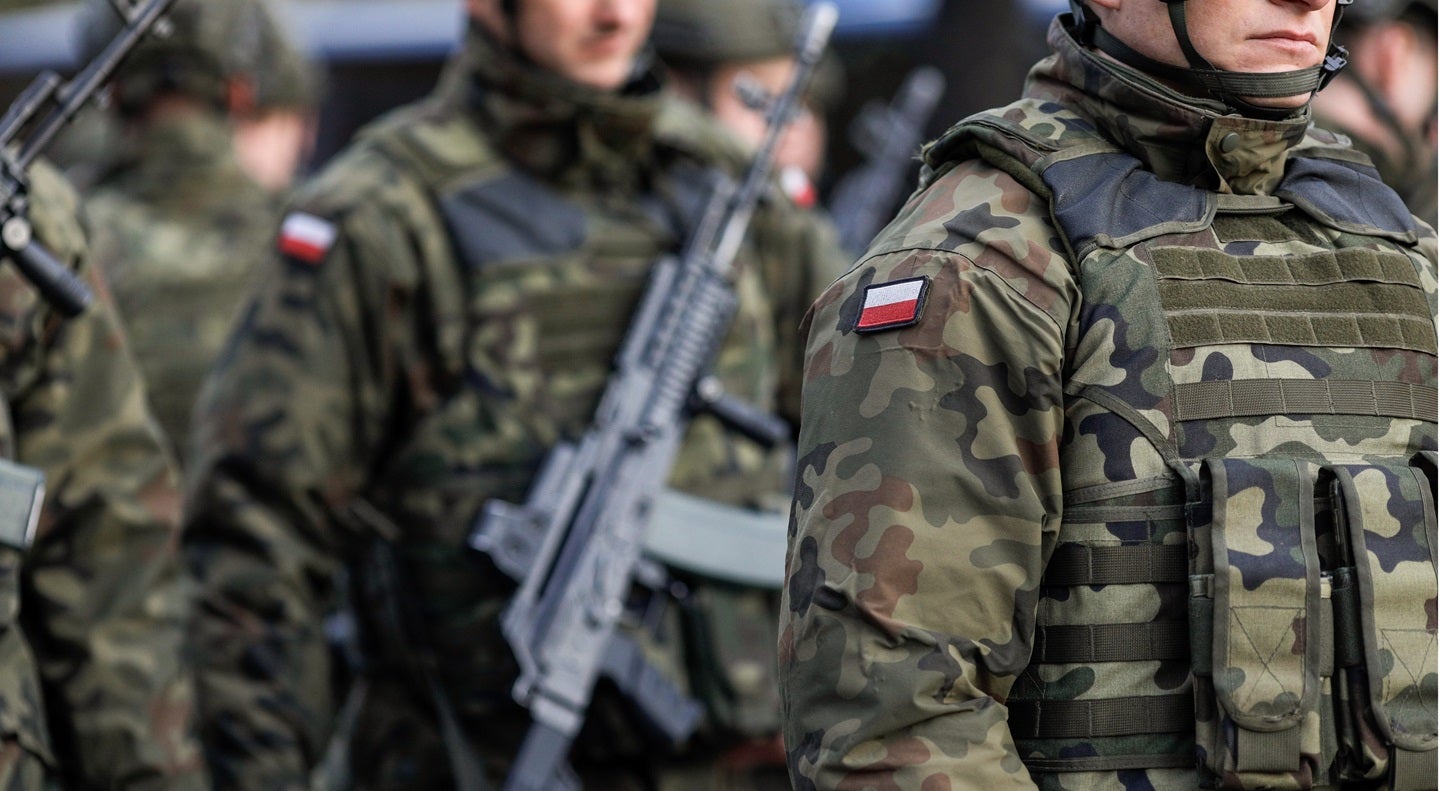
The warning is not an abstract forecast. The list of incidents is long:
- May 29, 2026 — a Russian drone strikes an apartment building in Galati (Romania).
- July 30, 2026 — the Polish army secures a crater in Tarnawa-Kolonia (eastern Poland); the Wall Street Journal reports cruise missiles that struck Polish territory at the end of July.
- September 2025 — 19 Russian decoy drones cross Polish airspace; three eastern provinces go into protection mode.
- December 2025 — FSB Center 16 attacks a Polish heating plant that supplies nearly 500,000 households; the EU publicly classifies the campaign in July 2026 as cyber espionage and sabotage against the defense industry and critical infrastructure.
- 2024 to 2026 — shadow fleet ships launch drones over Europe, repeatedly disrupting civilian air traffic (IISS).
None of these incidents triggered a collective alliance instrument — no collective defense, no formalized joint response. This is not an oversight. It is the real message of the US warning.
Article 5 is Binary — the Threat is Not
The founding treaty of NATO recognizes two states: attack or no attack. For everything below that, there is no agreed-upon response cascade — no escalation threshold, no common decision-making mechanism, no defined response. Heather Conley from the American Enterprise Institute articulates the dilemma precisely: “This has always been NATO's challenge, to respond to an attack below Article 5 — and so far, allies have preferred not to escalate.”
“It has always been a goal of Russia to challenge the credibility of NATO and to separate the United States from its allies.” — Heather Conley, AEI (quoted in the Wall Street Journal, August 6, 2026)
This is exactly the gap Moscow wants to exploit. A land operation is the riskiest variant because it would trigger Article 5. A cyberattack, a blown-up Baltic Sea pipeline, an “accidental” drone over a NATO base — all of this remains below the threshold and forces the alliance into a political decision for which it is not institutionally prepared. The Pentagon rejects the accusation of depleted munitions stocks (“We have everything we need to strike at the time and place chosen by the President,” said spokesman Sean Parnell), and the NATO spokesman assures: “We are always thinking through and preparing for any number of scenarios. NATO is watching, and we are ready to deter and defend as necessary.” However, deterrence in the gray area is not a matter of stockpiles, but of decision rules.
The Eastern Allies Understand — the Institutions Do Not
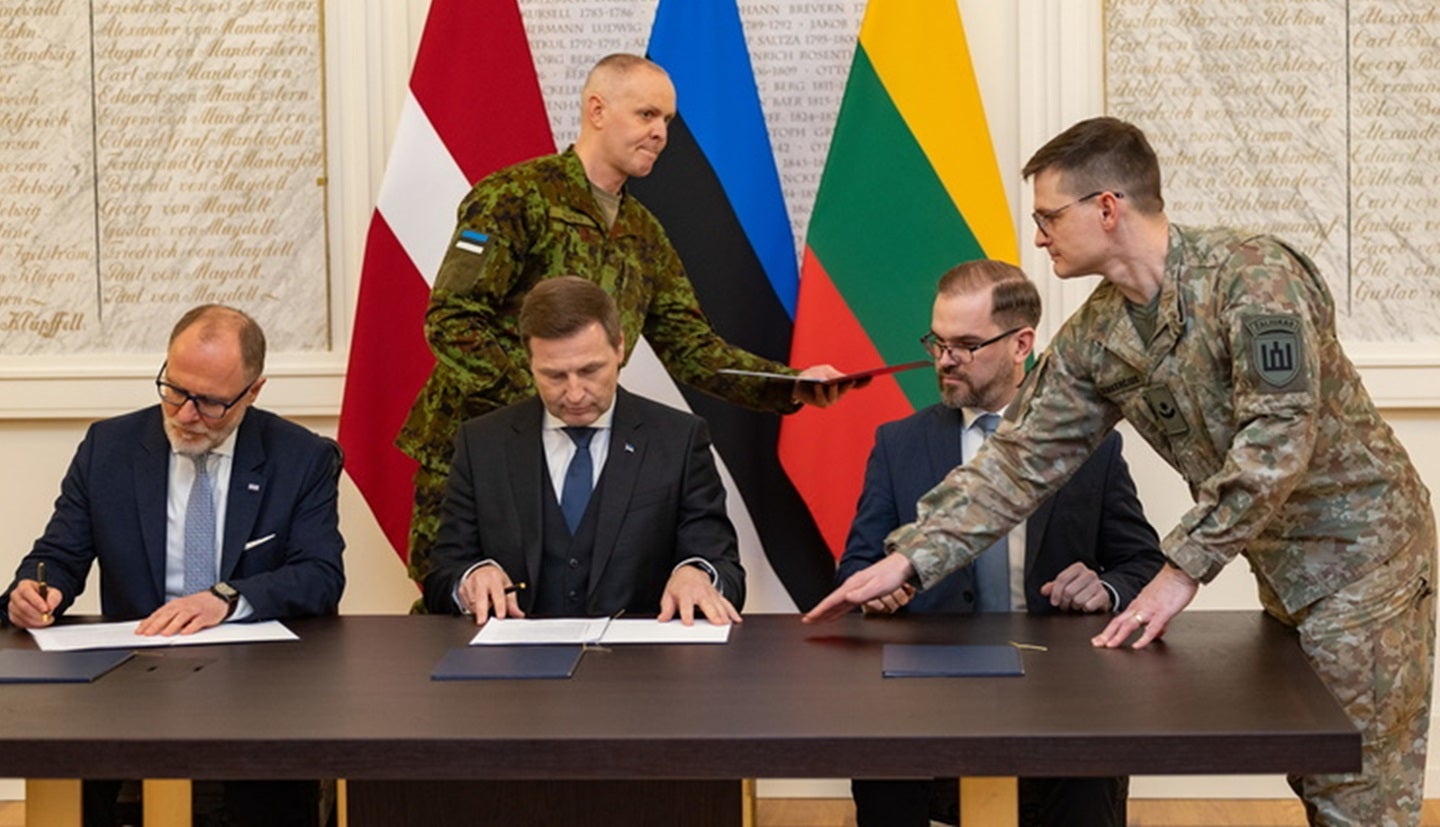
The clearest view comes from the states that would be affected. Lithuania's President Gitanas Nausėda confirmed in mid-July that intelligence agencies had indications of “limited kinetic operations against critical infrastructure” — energy and transport networks, including connections to the European power grid. His Latvian counterpart Edgars Rinkēvičs warned that Russia could “indirectly test Article 5 and the alliance's and EU's response mechanisms”; the next twelve months are crucial for the security of the Baltics. Lithuania has deployed additional units to protect strategic infrastructure. Poland's Prime Minister Donald Tusk expects “various forms of escalation in the coming weeks and months” after the Eastern Flank summit in Gdansk; Foreign Minister Radosław Sikorski sent Putin the message: “We know what you are planning. Do not do it.”
All of this is national, reactive, and declarative — no common doctrine. The EU has instruments with the Hybrid Toolbox and the public naming of FSB Center 16, but they are consensus-based, civilian, and not linked to the collective defense clause. NATO, on the other hand, has invested billions in defense planning for a major attack over the past three years — precisely in the scenario that its own agencies consider the least likely.
The German Question
And Germany? The Zeitenwende has so far been a budgetary shift: In 2026, Berlin plans a defense budget of around 83 billion euros, and the 100 billion special fund is largely allocated. However, when asked how the Federal Republic would respond to a provocation below the Article 5 threshold — a severed Baltic Sea pipeline, a drone strike on a Bundeswehr base, sabotage against the defense industry — there is no publicly articulated answer. Those who do not define where their own red line lies invite testing. This applies to Berlin, to Brussels, and to the alliance as a whole.
A Gift That Can Become a Burden
The US warning is both for Europe: political cover for toughness — and a stress test for its own institutional lack of imagination. The alliance has a plan for a war that no one wants to start, and none for the provocation that can come every day. More money does not solve this problem. Money cannot define an escalation threshold. As long as NATO has no response below Article 5 for the most likely attack, the most important warning of summer 2026 remains unheard.
U.S. intelligence warns that Russia may conduct limited attacks on NATO states, particularly Poland and the Baltic States, between Fall 2026 and 2029. Incidents of drone strikes and cyberattacks have already occurred, highlighting vulnerabilities in NATO's response framework. Eastern European nations are increasing their defensive measures, while Germany has not defined its response to provocations below the Article 5 threshold.
- U.S. intelligence warns of potential Russian attacks on NATO states by 2029.
- Incidents of Russian drone strikes and cyberattacks have occurred in Eastern Europe.
- NATO lacks a defined response mechanism for attacks below Article 5 threshold.
- Eastern European leaders are taking proactive measures in response to threats.
- Germany has not articulated a response to provocations below Article 5.