
Mali, Trump's Eighth Target — Washington Prepares Strikes Against JNIM
 Marie Dubois
Mali, Trump's Eighth Target — Washington Prepares Strikes Against JNIM
On April 25, in Bamako, JNIM fighters were seen moving through the streets of the capital while their katibas struck Bourem, Kati, Sévaré, Sénou, and Mopti. Defense Minister Sadio Camara, the architect of the pivot towards Moscow, was killed in a suicide attack. Kidal fell into the hands of the FLA, and Gao was wavering. Three months later, in Washington, the response taking shape is not diplomatic: according to the Washington Post, the Trump administration is debating direct military strikes against JNIM.
If approved, these strikes would make Mali the eighth country targeted by Trump since the beginning of his second term — after Yemen, Somalia, Syria, Iran, Iraq, Nigeria, and Venezuela. For a president who promised to end foreign wars, the symbolism is heavy.
An Eighth Front, and a Disagreement at the White House
According to current U.S. officials and former officials cited by the Washington Post on July 22, the White House is considering military action against Jama'at Nusrat al-Islam wal-Muslimin, the most powerful al-Qaeda-affiliated organization in the world. The case is being pushed by Sebastian Gorka, senior director for counterterrorism at the National Security Council. However, the camp is divided: several senior officials consider the operation risky, and the Pentagon has declined to comment.
The Malian junta, on the other hand, has not closed the door. When asked by the Washington Post on July 24, a spokesperson for the Bamako government did not rule out an American intervention. A remarkable turnaround for a regime that expelled France and the United States in favor of the Russian Africa Corps — and which American media now describe as a state in decomposition, with a capital under jihadist pressure.
What Washington Can Actually Strike
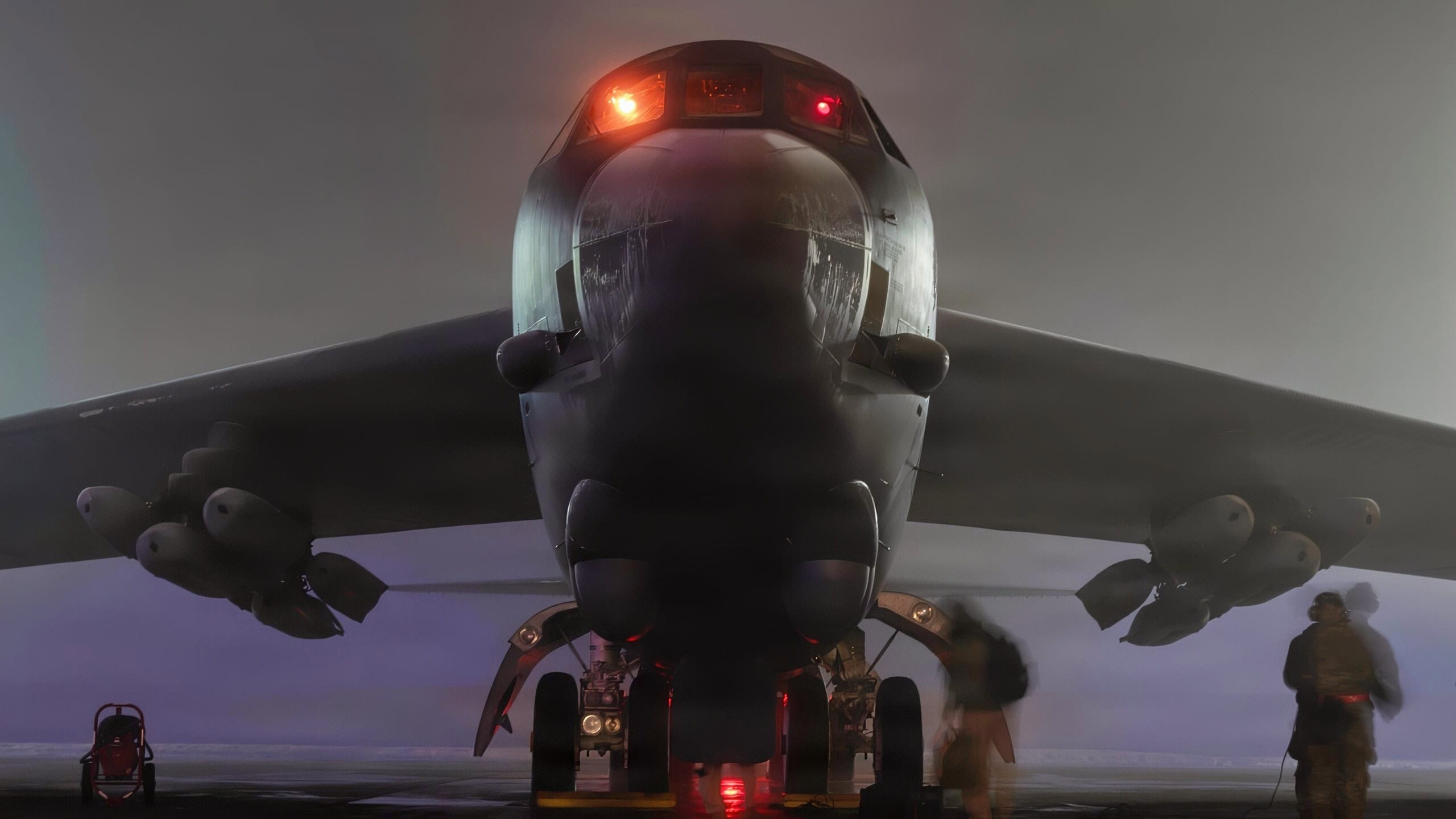
In terms of capability, the most credible option is aerial. The Fleet Tracker from the US Naval Institute shows no American aircraft carriers off the coast of Africa: strikes would therefore rely on long-range bombers — B-52 or B-2 — and cruise missiles, not attack drones, according to a former senior official from the Department of Defense. The coastal drone bases that AFRICOM has been seeking since its expulsion from Niamey in 2024 are still not operational.
The real prerequisite is overflight. Washington has already lifted sanctions against members of the junta, including Camara himself, to obtain overflight rights over Malian territory — officially to track Kevin Rideout, the American missionary captured by ISIS in the Sahel and likely held in Mali. American intelligence has been cooperating with Bamako since 2025. But nothing replaces a ground presence, and the U.S. has not had one since its departure from Niamey.
The Ground Perspective
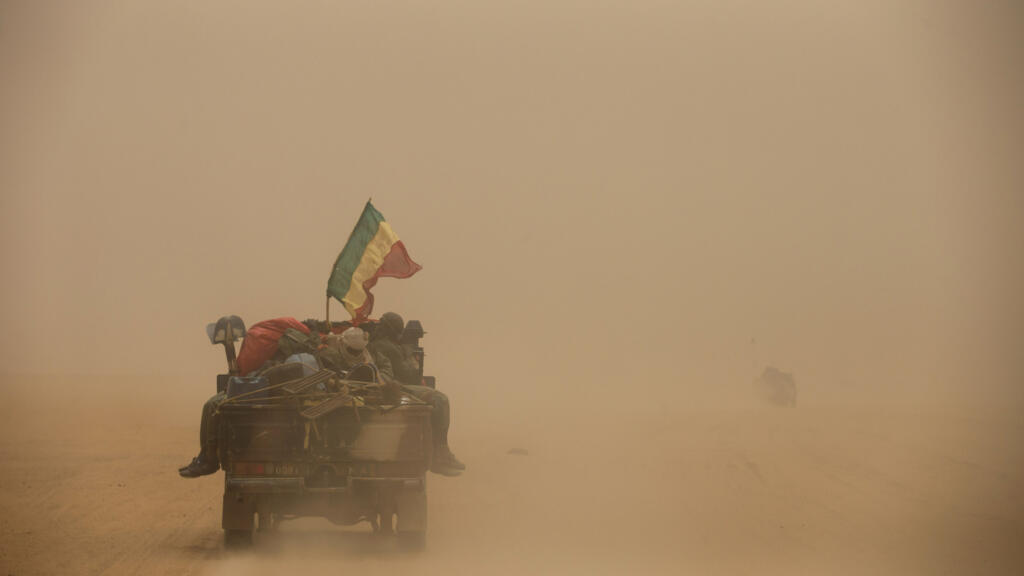
I know this theater. I served in Mali under Barkhane, from Gao to Tessalit. An airstrike in the Sahel, without ground troops or a human intelligence network, produces images, not territorial control.
JNIM is not an army that can be decapitated. It is an archipelago of semi-autonomous katibas, with replaceable leaders. Edmund Fitton-Brown, a former British diplomat at the UN, puts it bluntly: “The organization is resilient and will replace those who are killed.” Strikes can eliminate leaders, but they do not retake Kidal or the Niger loop. In August, JNIM and its FLA allies killed dozens of Malian soldiers, according to unconfirmed partial reports.
General Kenneth Ekman, who led the West African coordination element of the Department of Defense until last year, is pushing in the opposite direction: “JNIM is strangling the government and a large part of the population. The Russians are lamentably ineffective and extractive.” From experience, I share the diagnosis on Moscow — not the conclusion.
The Political and Russian Trap
For striking JNIM means striking for the regime that expelled France and the United States and engaged the Africa Corps. ACLED counts 925 civilians killed last year by the Malian army and its Russian partners, compared to 232 by jihadist groups. “It is extremely problematic for a government like the United States to support these regimes,” warns Héni Nsaibia, senior analyst at ACLED for West Africa. Add to that Malian gold and lithium — arguments that the White House is not ignoring.
There is also Moscow. American strikes in Mali would require deconfliction with the Russian forces present on the ground, as in Syria. The risk of an incident between B-52s and Africa Corps aircraft is not theoretical — both camps operate in the same airspace, for contradictory objectives.
And if the strikes weaken JNIM? The beneficiary could be the Islamic State in the Sahel, its rival, which is consolidating its positions near the Nigerien border. Wassim Nasr, a researcher at the Soufan Center, summarizes the dilemma: “The French tried for ten years. The Russians have been trying for five years. The situation has only worsened.” Corinne Dufka, an independent observer of the Sahel, adds a more direct risk: American strikes could push JNIM to target Americans — something it has never done — or bring it closer to al-Qaeda's central leadership.
What to Watch For
The coming weeks will tell if Washington moves from option to decision. Three signals to follow: a public overflight agreement with Bamako, a request for deconfliction addressed to Moscow, and the junta's response — which could instrumentalize American strikes to mask its own debacle.
On the ground, a strike does not replace a policy. Washington has no strategy for Mali, only targets. And in the Sahel, targets always recompose faster than strikes.
On April 25, JNIM fighters were active in Bamako and attacked Bourem, Kati, Sévaré, Sénou, and Mopti. The U.S. administration is debating military strikes against JNIM, potentially making Mali the eighth target of Trump’s military actions. The Malian government has not excluded the possibility of U.S. intervention, despite previously expelling French and U.S. forces.
- JNIM fighters were seen in Bamako and conducted attacks in multiple locations.
- The U.S. administration is considering military strikes against JNIM.
- The Malian government has not ruled out U.S. intervention.
- The U.S. has lifted sanctions against members of the Malian junta for overflight rights.
- Airstrikes would likely involve B-52 or B-2 bombers and cruise missiles.