
Will Canada Choose the F-35 or the "Eagle Lion"?
Canada has been troubled by the selection of its next-generation fighter jet for over a decade. Recently, Swedish company Saab has once again pitched a "mixed fleet" proposal to Canada, adding new variables to an already challenging process of advancing the next-generation fighter jet selection.
Twists and Turns
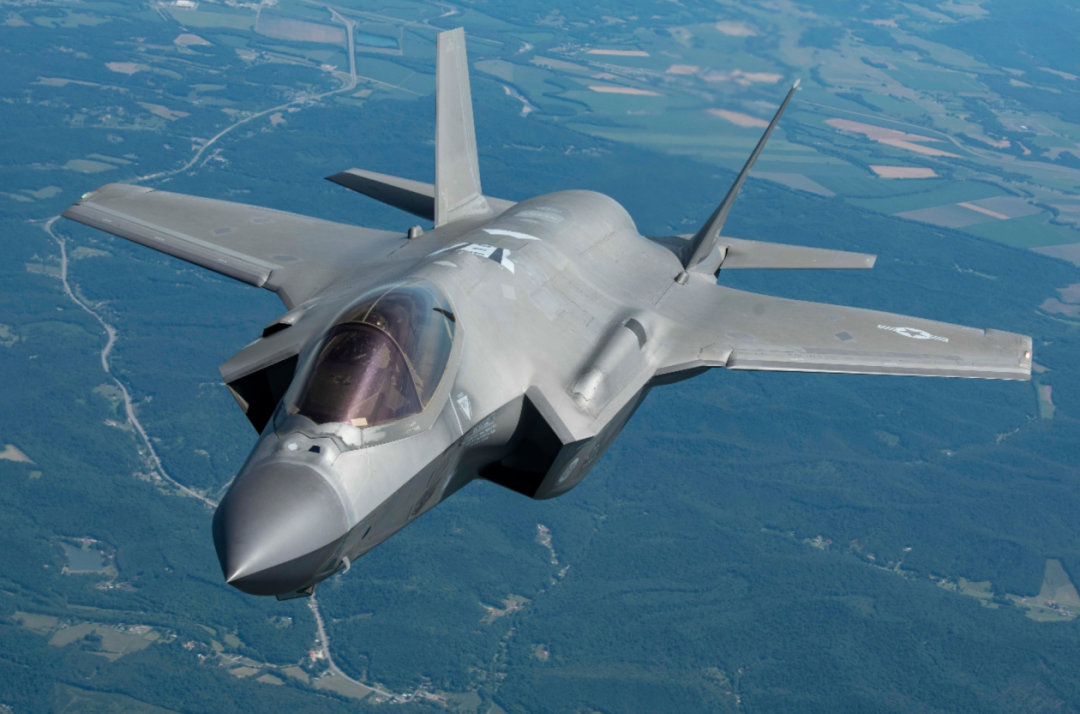
File photo: U.S. F-35 fighter jet
In earlier years, Canada had listed the U.S.-made F-35 fighter jet as its top choice for the next-generation fighter, but the procurement process has faced numerous ups and downs.
Military observer Teng Jianqun believes that Canada's indecision regarding the next-generation fighter jet selection is mainly influenced by domestic party struggles and its reliance on the U.S., among other factors.
Teng Jianqun:
First, Canada has long relied on the U.S. for defense.
Second, Canada faces relatively limited security challenges, resulting in weak development of its air power, which more often acts as an ally following the U.S. in military interventions around the world.
Third, on the political level, there are significant differences among various political parties and interest groups in Canada regarding which type of aircraft to procure, compounded by internal party conflicts, making Canada's fighter jet procurement project encounter many obstacles.
Incongruous?
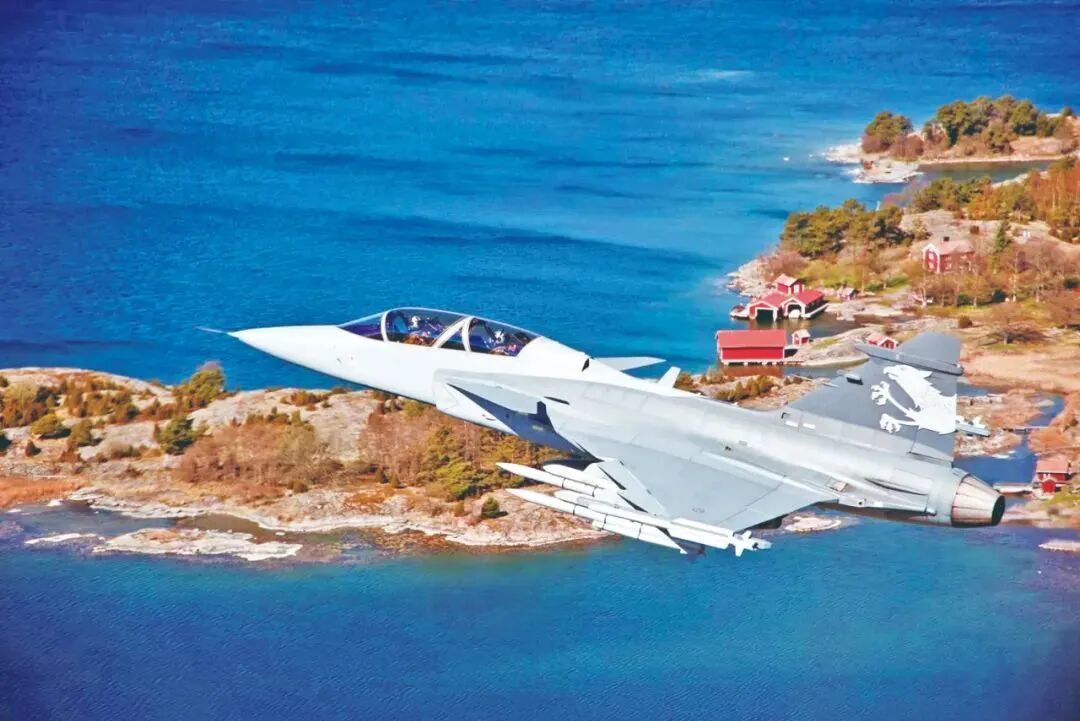
File photo: Swedish "Gripen" fighter jet (Source: China Defense News)
Against the backdrop of Canada's indecision over the F-35 fighter jet procurement plan and the ongoing domestic controversy, Swedish company Saab has seized the opportunity to propose a "mixed fleet" solution.
This proposal suggests that Canada could retain its procurement plan for the 16 F-35 fighter jets currently in production while also acquiring 72 "Gripen" E fighter jets, along with 6 "GlobalEye" airborne early warning aircraft, to form a mixed fleet with complementary advantages.
In Teng Jianqun's view, the Swedish "Gripen" fighter jet is unlikely to effectively match the U.S.-made F-35 fighter jet, and if Canada shifts to two different systems, it would not significantly enhance its combat effectiveness.
Teng Jianqun:
If the "Gripen" E fighter jet is mixed with the F-35 fighter jet in operational use, there would be significant integration issues regarding stealth and penetration capabilities.
In specific operations, to achieve stealthy strikes, F-35 fighter jets must be deployed, but the F-35's operational radius and payload capacity are difficult to match with the "Gripen." Although the Swedish "Gripen" fighter jet emphasizes penetration capability, it is not designed for stealth, which may lead to unclear functional positioning within the Canadian Air Force's equipment system.
Due to its long-term reliance on the U.S., Canada lacks the overall construction of an air combat system.
Limited Choices
File photo: Swedish Saab's "GlobalEye" airborne early warning aircraft (top) and "Gripen" E fighter jet (Source: China Defense News)
As Saab promotes the "mixed fleet" proposal to Canada, the U.S. has warned that if Canada does not advance its procurement plan for the U.S.-made F-35 fighter jets, adjustments will be made to the North American Aerospace Defense Command's arrangements, and the U.S. will send more fighter jets into Canadian airspace more frequently.
Teng Jianqun further points out that Canada's defense autonomy is deeply tied to the U.S., leaving very limited options for its next-generation fighter jet selection.
Teng Jianqun:
The U.S. has long controlled Canada's military industrial enterprises and weapon procurement, including the North American air defense system jointly constructed by the U.S. and Canada, whose core equipment such as radars, combat aircraft, and missiles are basically U.S.-made. If Canada attempts to break away from the U.S. equipment system, the U.S. is likely to exert pressure on Canada from political, diplomatic, and other levels, while also restricting Canada's procurement of weapons and equipment from other countries.
The current U.S.-Canada relationship, especially in the context of Trump repeatedly claiming to make Canada the "51st state" of the U.S., makes Canada's equipment procurement and the development of its own defense industry an important issue.
However, fundamentally, Canada currently has little room for maneuver in procuring fighter jets, and there are not many countries that can provide Canada with effective and systematic air combat capabilities.
Reporter: Yu Lan
Canada is evaluating a mixed fleet proposal that includes 16 F-35s and 72 Gripen E fighters, as well as 6 GlobalEye AWACS, amid ongoing procurement challenges. The U.S. has warned that failure to advance the F-35 procurement could lead to adjustments in North American air defense. Internal political divisions are complicating the decision-making process regarding the next-generation fighter jet.
- Canada has been deliberating its next-generation fighter jet selection for over a decade.
- Sweden's Saab has proposed a mixed fleet solution involving F-35s and Gripen E fighters.
- The U.S. has warned Canada about potential adjustments to North American air defense if F-35 procurement is not advanced.
- Internal political divisions in Canada complicate the fighter jet procurement process.
- Canada's defense autonomy is heavily influenced by its reliance on U.S. military equipment.