
Without a curfew limit — the center of Mali reveals the logistical advance of JNIM in 2026
 Marie Dubois
San under unlimited curfew — the center of Mali reveals the logistical advance of JNIM in 2026
On August 24, in San, Malian authorities imposed a curfew from 10:30 PM to 6 AM across the entire region. This measure is in effect until further notice. From Bamako's perspective, it seems like a classic administrative reflex. From the ground, it is something else: an admission that the central front is no longer limited to the rural areas of Mopti or Bandiagara and that it is beginning to encroach on a transport hub that the state cannot afford to lose.
The governor, Colonel-Major Ousmane Sangare, justifies his decision by citing a deterioration in security and a resurgence of insecurity. The wording is deliberately broad. But it comes just fifteen days after the complex attack on the base of the 23rd Infantry Regiment in San on August 9. When a governor imposes a nighttime curfew across seven circles and 42 municipalities after such an operation, he is not just trying to reassure. He is attempting to regain control.
A curfew that says more than the measure
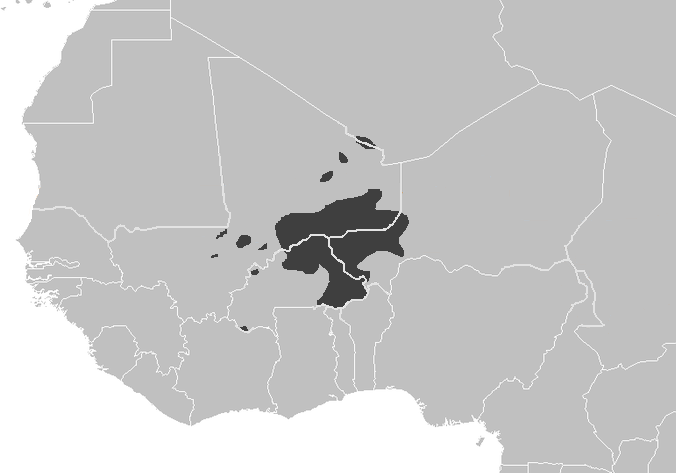
San is not Gao, Timbuktu, or Menaka. This is precisely why the decision matters. The region is located on the RN6 axis that connects Bamako to Segou, then to the center of the country and the approaches to Mopti. For a jihadist group, threatening San does not just mean harassing a garrison. It means complicating military, commercial, and administrative flows between the useful south of Mali and its central theater.
Marie Dubois would first look at the map, then the road. In this part of the country, the war is not won with press releases, but with the ability to move a column, evacuate a wounded person, supply a post, and hold the night. An indefinite curfew means that Bamako no longer considers these movements secure enough without drastically reducing civilian traffic. It is a control measure, but also a symptom of logistical tension.
The August 9 attack changed the scale
According to the Malian staff, the assault on the San camp began around 5:30 AM and involved heavy machine guns, kamikaze drones, cargo-dropping drones, and two armored vehicles. One of them reportedly breached the perimeter. This detail matters more than slogans. Breaching a wall with armor, infiltrating, and then retreating with the wounded implies preparation, reconnaissance, command means, and tactical discipline that go beyond an opportunistic raid.
- Attack on August 9 against the 23rd Infantry Regiment in San.
- Regional curfew imposed since August 24 from 10:30 PM to 6 AM.
- FAMa strike announced on August 18 and 19 about 35 km southwest of San and in the Kilimpo area.
JNIM claimed responsibility for the operation, while the army stated that it killed more than fifty assailants. We do not know the actual toll on the FAMa side, and this is a significant limitation. On the ground, press releases sometimes inflate enemy losses to mask a tactical shock. But even if we discount the announcement effect, the essential remains: armed groups have shown that they can strike San with a combination of means that were more readily associated with offensives in the more exposed areas of the center and north.
Why San matters in the central theater
For a year, Bamako's effort has focused on symbolic reconquests, precision strikes, and displaying military sovereignty after the French and UN withdrawal. The problem is that JNIM does not think in terms of administrative capitals. It thinks in corridors, in transit zones, in retreat depth. San provides a foothold to disrupt the connection between the political heart of the country and the combat spaces in the center.
The strikes carried out as part of Operation Dougoukoloko southwest of San and towards Bandiagara show that the FAMa have identified regroupings and shelters nearby. This confirms persistent pressure in the sector. But neutralizing about twenty fighters, even if the figure is accurate, is not enough to resolve a networking problem. In this war, destroying motorcycles and dispersing a camp can buy a few nights. It does not automatically restore freedom of movement on the axes.
What Bamako admits without saying
The curfew in San also reflects a political paradox. Bamako continues to assert that the state is regaining the initiative, but at the same time, it must impose a wartime discipline on a population in a region that was not supposed to shift to this level of constraint. It is a strong signal for traders, transporters, and farmers. When the state restricts nighttime movement in such a hub, it implicitly acknowledges that it cannot yet secure the area without reducing ordinary life.
On the ground, a curfew without an end is never just a police measure. It is proof that an army defends lines of movement as much as it defends territory.
One must also look east and south. The Malian center does not live in a vacuum: the proximity of Burkina Faso, community networks, and secondary routes provide the katibas with a favorable environment to bypass fixed points. San thus becomes a test. If pressure builds, Segou will cease to be a mere rear. And if Segou becomes nervous, Bamako will have to allocate more resources to protect the depth rather than project force.
The next test will be logistical and political
The useful criterion in the coming weeks will be simple. Will attacks shift towards the road, escorts, morning marches, and public services, or will the curfew succeed in breaking the cycle of enemy preparation? That is the real question. Not the announced number of neutralized terrorists, which no one can independently verify today.
From experience, when a garrison in central Mali must be protected by a regional nighttime closure, it is necessary to monitor the 30 to 50 kilometers around the city even more than the city itself. This is the area of assembly, resupply, and retreat. If Bamako fails to sustainably hold the routes there, San will remain vulnerable to a new complex attack. The danger is not the immediate fall of the city. The danger, more Sahelian and more insidious, is wear: a less secure road, a slower administration, a more defensive garrison, and a JNIM that advances without needing to plant its flag in the city center.
Malian authorities imposed a curfew in San from August 24, 2026, due to escalating security concerns following a complex attack on the 23rd Infantry Regiment on August 9. The attack utilized heavy machine guns, kamikaze drones, and armored vehicles, highlighting the logistical challenges faced by the government in maintaining security. The JNIM claimed responsibility for the assault, indicating a persistent threat in the region.
- A curfew was imposed in San from August 24, 2026, due to security concerns.
- The curfew follows a complex attack on the 23rd Infantry Regiment on August 9, 2026.
- The attack involved heavy machine guns, drones, and armored vehicles.
- The JNIM claimed responsibility for the attack, while the Malian army reported over fifty attackers killed.
- The situation indicates a significant logistical challenge for the Malian government.