
Zhuque-3 First Land Recovery of the One-Child Level: How Many Steps Does China’s Rocket Reusability Have Left to Catch Up with SpaceX?
 Li Minghui
Zhuque-3 First Stage Land Recovery: China’s Rocket Reusability Still a Few Steps Behind SpaceX
At 7:35 AM on August 19, the Zhuque-3 Yao-2 rocket from Landspace ignited and launched from the Dongfeng Commercial Aerospace Innovation Test Zone. About two minutes and 20 seconds later, the first and second stages separated, and the first stage turned around to return, deploying four landing legs on the landing pad in Minqin, Gansu, and landing steadily. This marks China’s first successful land recovery of a rocket's first stage and the first recovery using landing legs.
Stainless Steel Body with Liquid Oxygen and Methane: A Pragmatic Reusability Approach
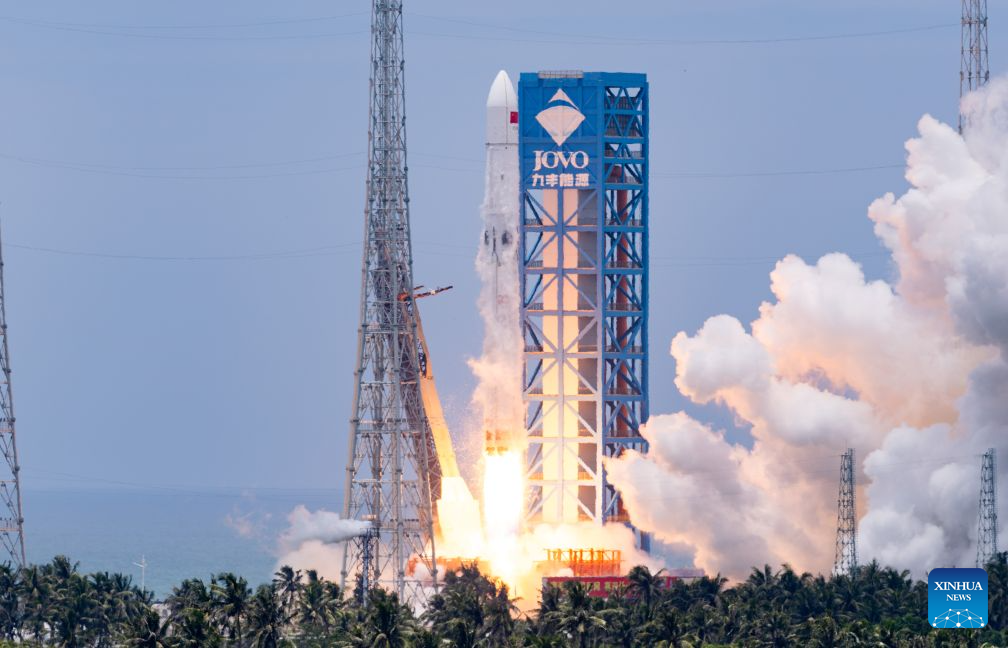
The Zhuque-3 rocket is 66.1 meters tall, with a core diameter of 4.5 meters. The first stage is equipped with nine Tianque-12A liquid oxygen and methane engines, with thrust adjustable between 40% and 110%—this wide throttling range is crucial for vertical recovery. The main structure of the rocket is made of stainless steel, following a "cheap materials for reusability" approach, similar to the early ideas of SpaceX's Falcon 9, but with a lower cost threshold.
The project leader provided a set of key figures: fuel costs account for only 1% to 3% of the launch cost, while the first stage costs make up 70% of the total rocket cost. In other words, as long as the reusability closed loop is successfully established, the cost per launch could theoretically be reduced by more than half. This calculation is more significant for China's space industry, which is competing in low Earth orbit constellations, than any technical metrics.
Two Recoveries in One Month, but the Difficulty is Not on the Same Level
Notable timeline: In July, the Long March 10B captured its first stage using a net recovery method in the South China Sea, marking a global first; in August, the Zhuque-3 completed a land recovery. Two breakthroughs in one month indicate that reusable rockets have moved from the "can it return" phase to the engineering verification stage of "can it be reused after returning."
However, do not confuse the two. The net recovery method has relatively loose requirements for landing accuracy, while land recovery with landing legs requires the rocket, weighing several tons, to land within a hundred-meter error margin on a designated pad, posing entirely different challenges for guidance, propulsion, and attitude control. The Zhuque-3 Yao-1 recovery failed last December, and this time the Yao-2 succeeded after an eight-month gap—this is precisely the most challenging aspect of rocket reusability: not just going up, but coming back down.
The Payload Capacity of Low Earth Orbit Constellations is the Essence of This Competition
As an analyst closely monitoring China's military-industrial supply chain, I am more concerned about the strategic implications behind this rocket. In April, the country deployed the "Six Networks" initiative, with satellite internet at the forefront; currently, China has about 400 satellites in orbit across its two major constellations, while Starlink has surpassed 10,000. The gap lies not in satellite manufacturing, but in launch capacity—how many times can it launch in a year, how many satellites can it launch at once, and how much does it cost per kilogram.
Reusable rockets directly rewrite this arithmetic problem. Starlink can deploy 10,000 satellites over ten years, not due to a technological miracle, but because the Falcon 9 has reduced the cost per kilogram of launch to the lowest in the world. For the PLA, the significance of low Earth orbit constellations goes beyond commercial broadband; it is also a foundational infrastructure for reconnaissance, communication, and navigation enhancement—whoever can replenish the network on a daily basis will hold the information advantage in wartime. This is also why the U.S. military relies so heavily on Starlink.
To Catch Up with SpaceX, There’s Still the Hard Metric of "Reuse Count"
To be fair, this success is significant, but the gap remains evident. SpaceX achieved land recovery of the Falcon 9 back in 2015, and now the first stage is reused an average of over a dozen times, with more than a hundred launches last year; Blue Origin also recovered New Glenn last year. China is currently pursuing two technical routes with the Long March 10B and Zhuque-3, having started a decade later; a single success can only prove the direction is correct, but it does not yet demonstrate economic viability.
The true metric that determines victory is the reuse count: how many times a rocket can fly, how long the refurbishment cycle is, and whether the Tianque-12A engine can be reignited directly after one recovery. There is almost no publicly available information on these data, yet they are precisely the foundation of the cost model.
Therefore, what is most worth watching now is not how accurately the Zhuque-3 Yao-2 landed this time, but rather that rocket that has already landed—when will it appear on the launch pad again?
On August 19, 2023, Blue Arrow Aerospace successfully landed the first stage of the Zhuque-3 rocket on land in Minqin, Gansu, marking China's first land recovery of a rocket stage using landing legs. This achievement highlights advancements in China's reusable rocket technology, which aims to reduce launch costs significantly. The rocket's first stage is powered by nine Tianque-12A engines, showcasing a shift towards more economical space launch capabilities.
- The Zhuque-3 rocket successfully landed on land for the first time in China.
- This event marks a significant step in China's reusable rocket technology.
- The rocket's first stage is equipped with nine Tianque-12A engines.
- The recovery method used landing legs, a first for China.
- The cost of fuel is only 1-3% of the total launch cost.