
无人担架轻松转运伤员 成体系无人智能设备让卫勤救援焕然一新
Search and rescue drones took to the skies for wide-area aerial reconnaissance, four-legged robotic dogs approached disaster sites for assessment, and tracked unmanned vehicles advanced to transport "injured personnel"… On September 9, the China-Laos "Peace Train-2026" humanitarian medical rescue joint exercise entered the mixed training phase, marking the first systematic combination of unmanned intelligent devices. Simultaneously, training was conducted for casualty search, transport, and supply delivery. The integration of unmanned devices on the training ground has revitalized the medical support and rescue model.
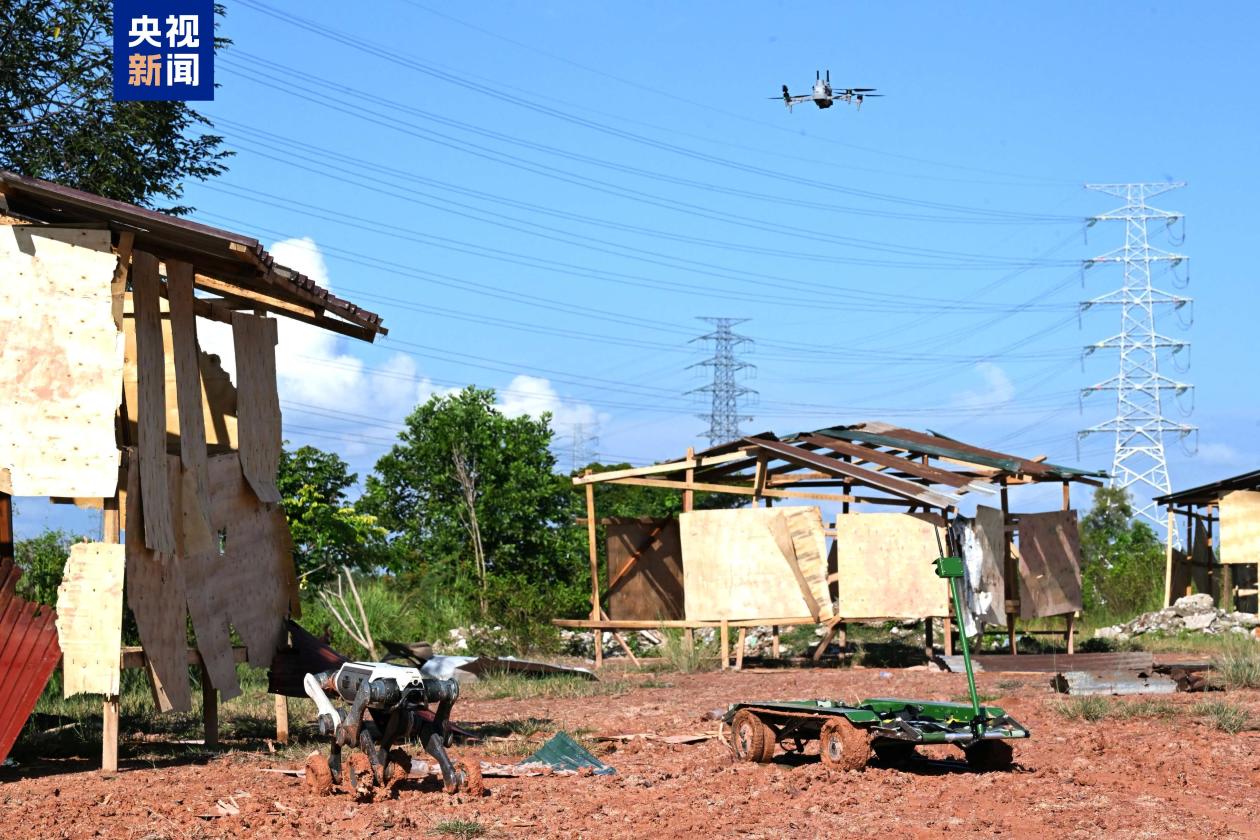
The China-Laos "Peace Train" exercise simulated a disaster scene, deploying small intelligent support vehicles, four-legged robotic dogs, and intelligent unmanned search and rescue systems for rescue drills.
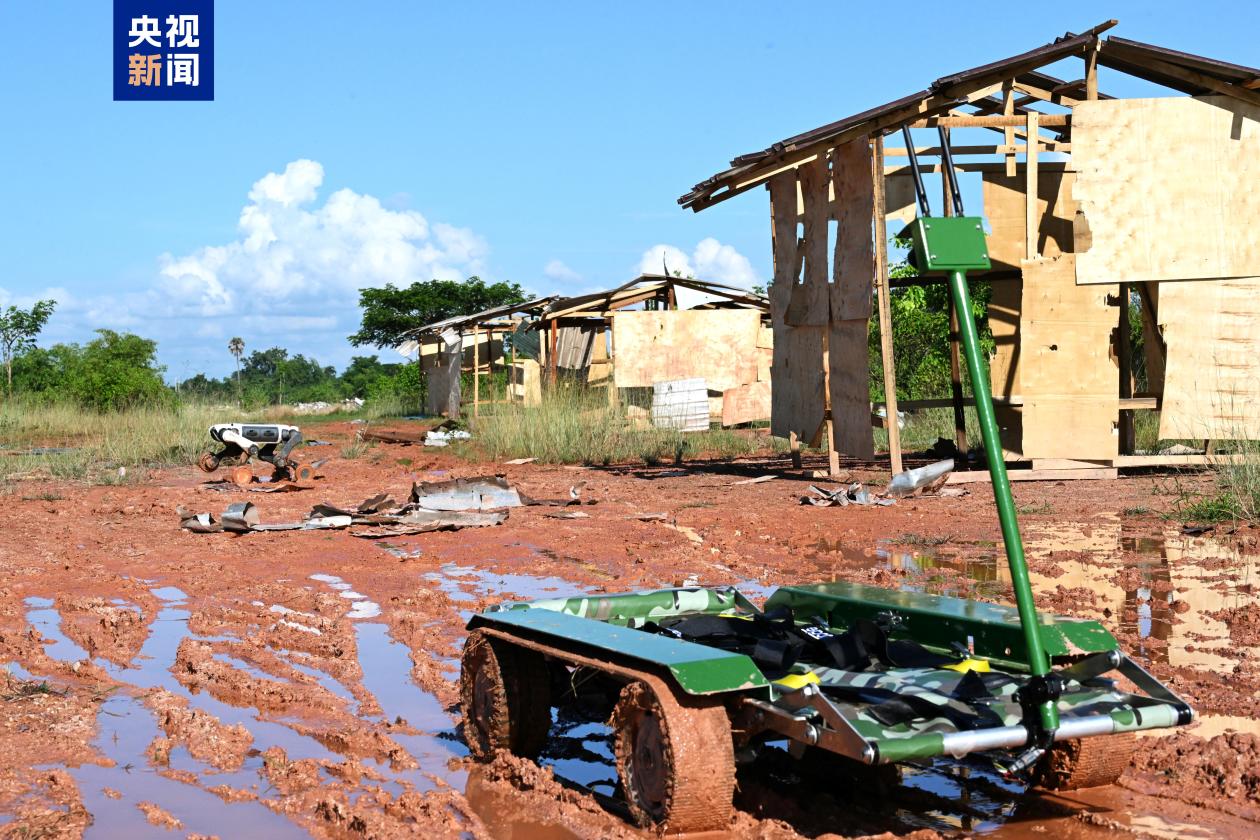
In the simulated disaster scene of the China-Laos "Peace Train" exercise, small intelligent support vehicles (near) and four-legged robotic dogs (far) conducted rescue drills beside the ruins.
Participating team member Xu Chao introduced that this training adhered to the principle of prioritizing human involvement while empowering with unmanned devices. Unmanned equipment was integrated throughout the entire rescue process, including frontline casualty search, precise delivery of emergency supplies, rapid transport of injured personnel, and subsequent treatment by rear medical institutions.
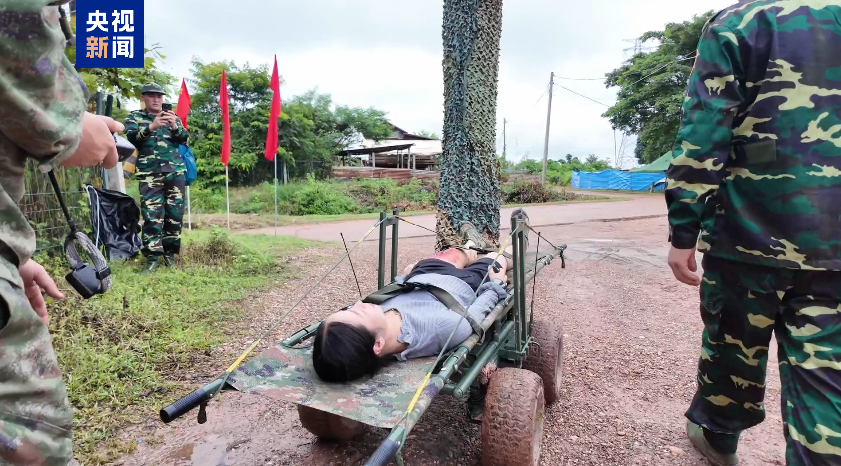
The deployment of unmanned devices such as drones, robotic dogs, and unmanned vehicles allows for deep penetration into hazardous areas to execute search and rescue missions, assisting rescuers in performing tasks quickly and efficiently. This meets the demands of various complex tasks, enhances the efficiency of casualty search and the capability for long-distance transport, reconstructs the timeliness system for casualty transport, and achieves real-time rapid discovery and response.
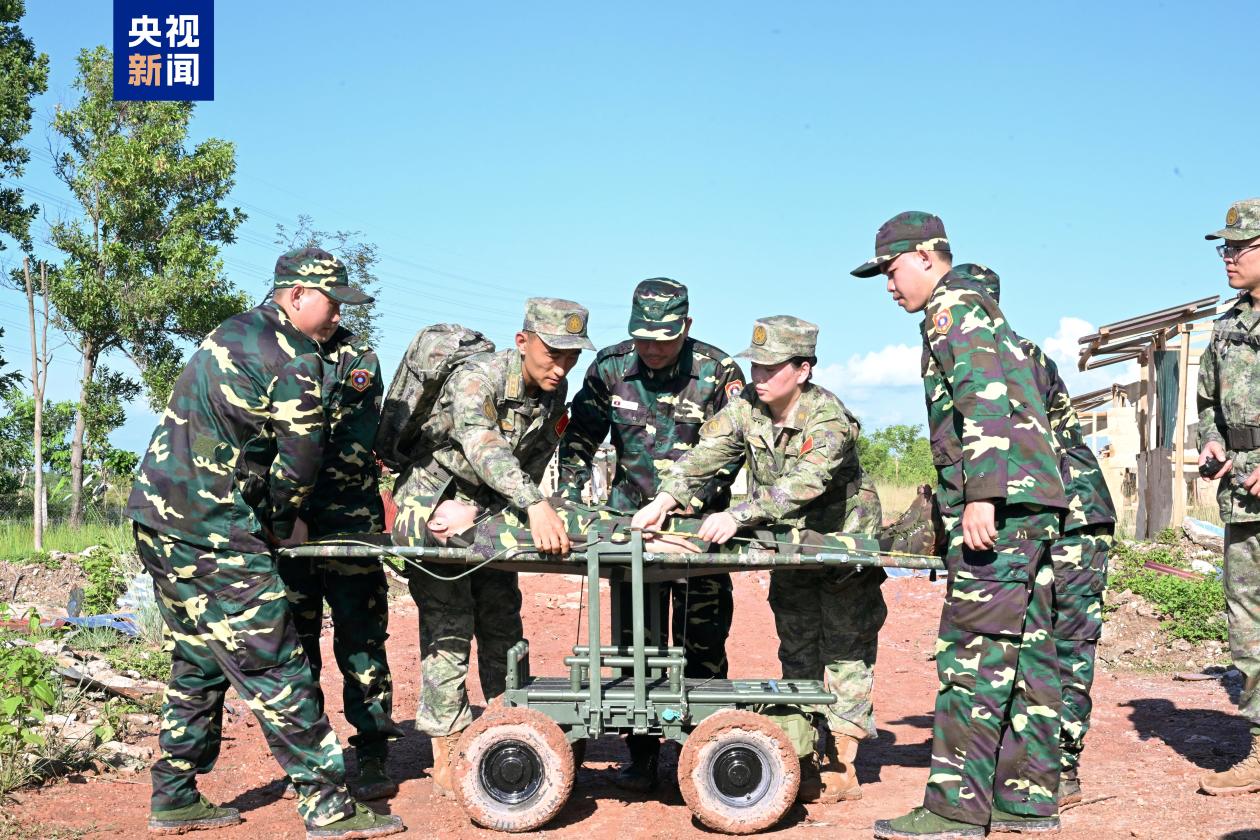
Medical team members from both China and Laos in the "Peace Train" exercise used a foldable unmanned stretcher to transport injured personnel to rear medical institutions.
"This unmanned device training marks a key step forward in our systematic application of unmanned intelligent medical rescue capabilities," said Chen Peizheng, deputy captain of the search and rescue team from a first-level medical institution. The China-Laos "Peace Train" is enhancing medical support capabilities through the systematic application of unmanned intelligent devices, accumulating practical experience for carrying out diverse humanitarian medical rescue missions.
(Total Station reporters Zhou Na and Liu Xiaowei)
中国和老挝医疗队于9月9日进行了一次使用无人智能设备的人道主义医疗救援训练。此次演习涉及无人机、机器人犬和无人驾驶车辆进行搜索和救援行动,标志着军事医疗支持能力的重大进步。训练强调了无人设备的整合,以提高伤员撤离和后勤的效率。
- 训练演习中使用了无人设备进行搜索和救援行动。
- 训练涉及中国和老挝医疗队。
- 演习于2026年9月9日进行。
- 部署了包括无人机和机器人犬在内的多种无人设备。
- 训练旨在提高医疗救援行动的效率。