

Summary and Key Points: USS John C. Stennis has been in its Refueling and Complex Overhaul since May 2021. The exit date slipped from August 2025 to October 2026, and as October ends the carrier is not ready, with sea trials, certifications, and crew training ahead and an early 2027 deployment in doubt.
USS John C. Stennis CVN-74: An Aircraft Carrier Delayed when the US Navy Needs it Most
The United States has long made the nuclear-powered aircraft carrier the centerpiece of its surface warfare capability.
By law, the US Navy must maintain a fleet of 11 aircraft carriers.
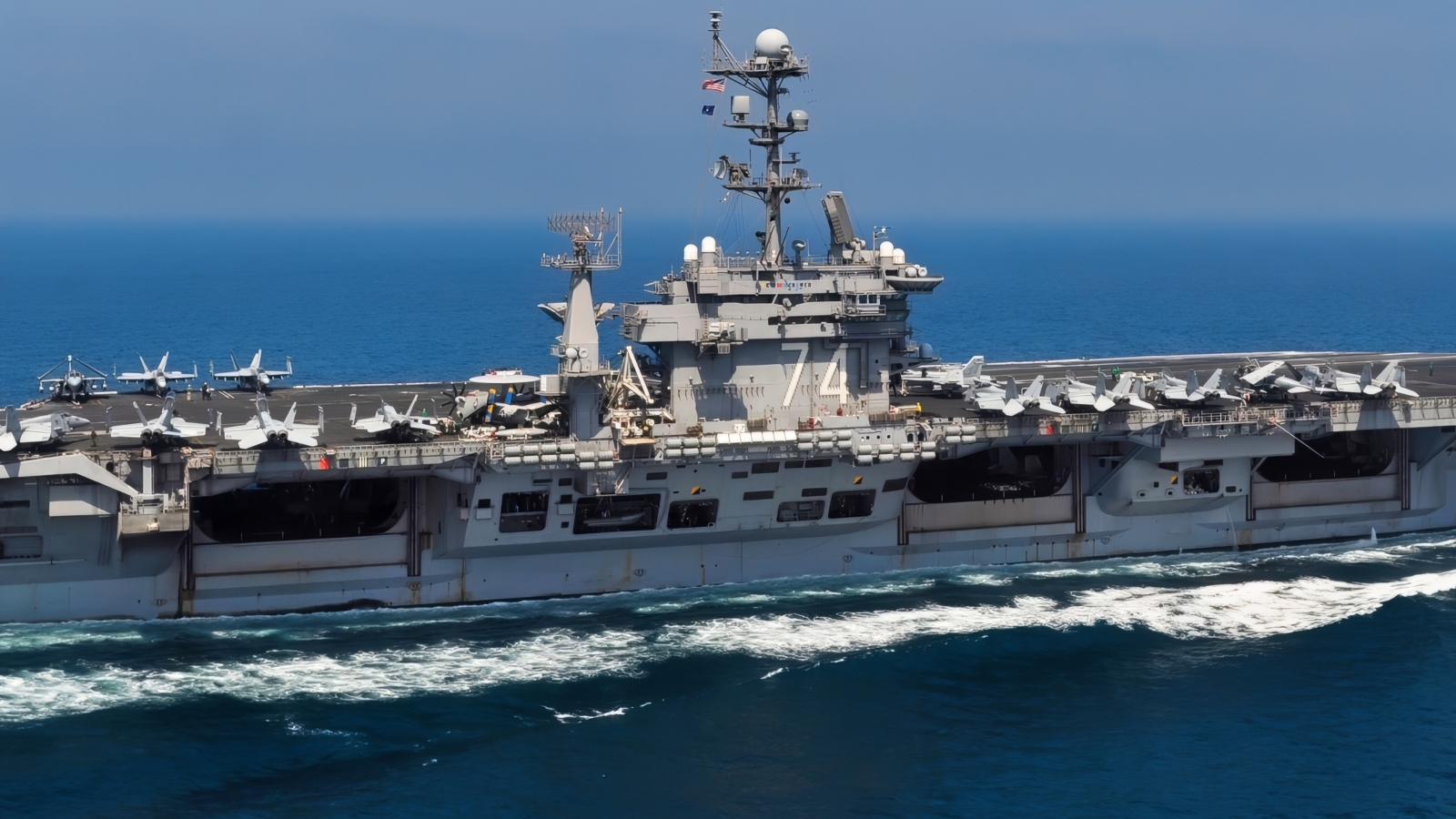
The aircraft carrier USS John C. Stennis (CVN 74) transits the Persian Gulf. John C. Stennis is deployed to the U.S. 5th Fleet area of responsibility conducting maritime security operations and support missions as part of Operations Enduring Freedom and New Dawn.
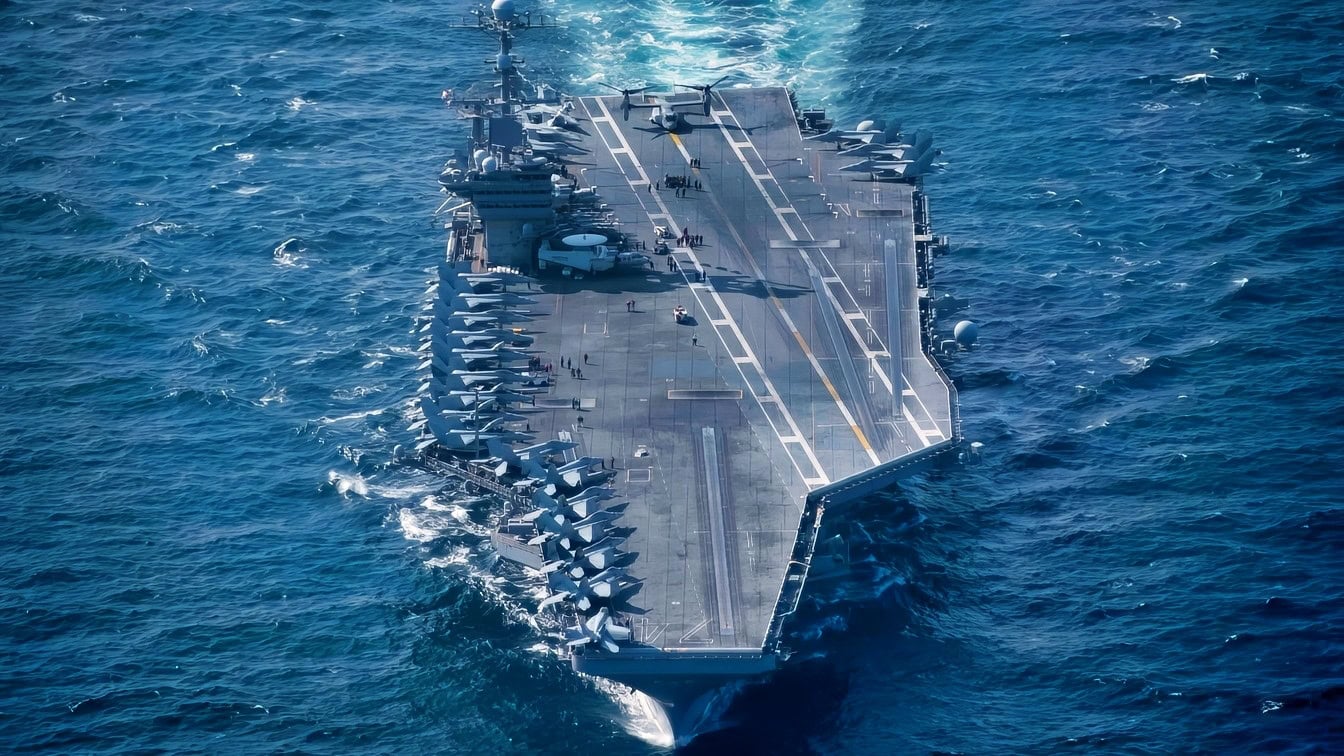
The aircraft carrier USS John C. Stennis (CVN 74) steams through the Arabian Sea, Dec. 14, 2018. The John C. Stennis Carrier Strike Group, Essex Amphibious Ready Group, and 13th Marine Expeditionary Unit are conducting integrated operations in the Arabian Sea to ensure stability and security in the Central Region, connecting the Mediterranean and the Pacific through the western Indian Ocean and three strategic choke points. (U.S. Navy photo by Mass Communication Specialist 3rd Class Connor D. Loessin)
But at any given time, far fewer are active.
Most are in some varying state of maintenance.
These maintenance cycles are compounded by the length of their deployments and any bottlenecks in the naval shipyards themselves.
As the Iran War continues, the Navy has been forced to extend its carriers’ deployment cycles to avoid gaps in availability during wartime.
Yet, the longer those carriers are deployed beyond their scheduled maintenance cycles, the longer those carriers will need to remain in maintenance–creating a cascade of delays.
That’s not to mention the various complications that have arisen in constructing the Navy’s newer Gerald R. Ford-class aircraft carriers.
Delays Upon Delays
One carrier that has been out of rotation for some time has been the USS John C. Stennis (CVN-74), a Nimitz-class nuclear-powered supercarrier.
The carrier entered its standard Refueling and Complex Overhaul (RCOH) cycle in May 2021.
It was supposed to complete the RCOH by August 2025. But that project encountered heavy delays. Its completion was pushed to October of this year, with a possible operational deployment by 2027.
It’s the end of October 2026, and the John C. Stennis is not ready.
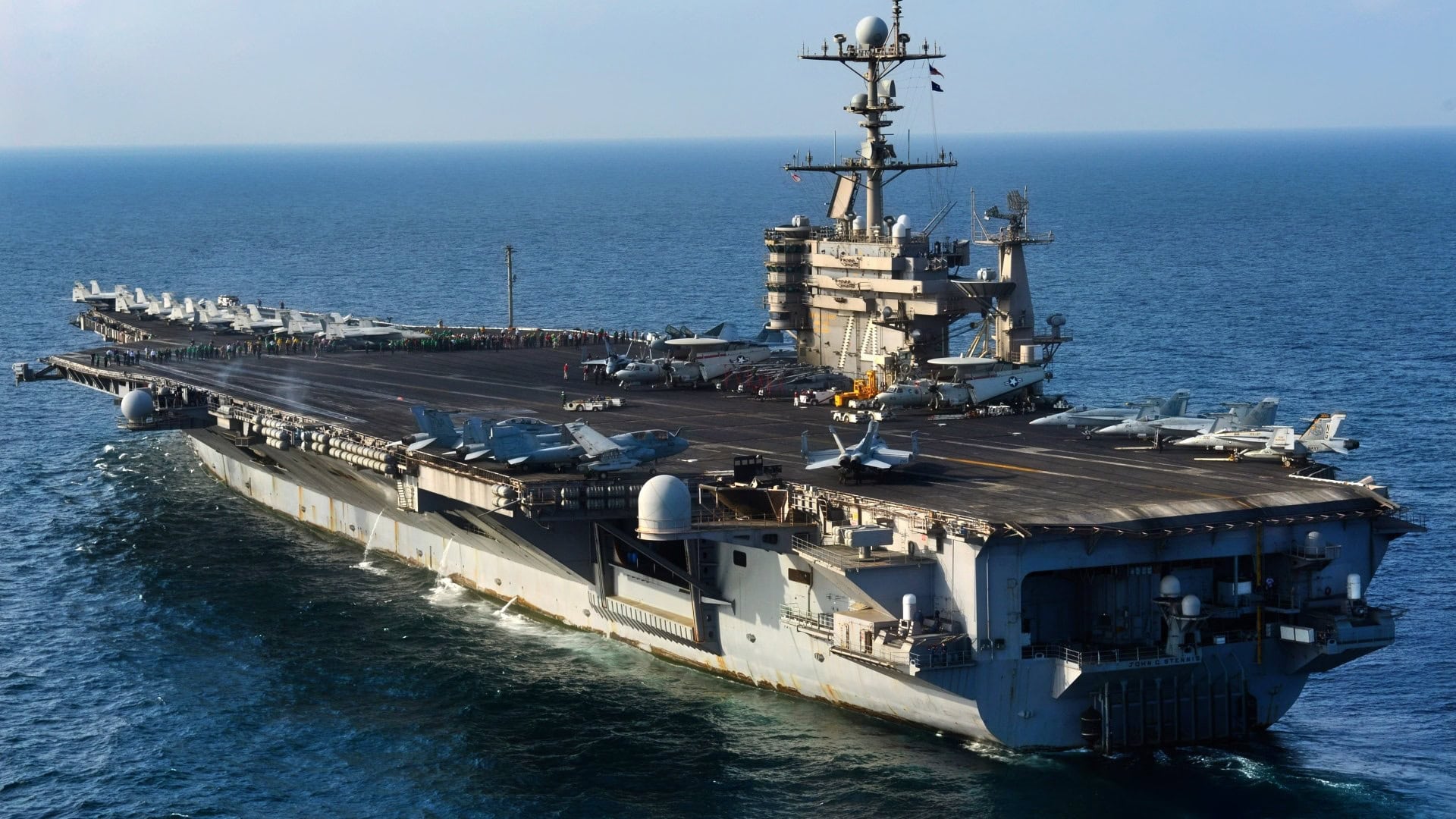
U.S. sailors perform a foreign object debris walkdown on the flight deck of the aircraft carrier USS John C. Stennis (CVN 74) Feb. 19, 2013, in the Arabian Sea. The ship was deployed to the U.S. 5th Fleet area of responsibility to conduct maritime security operations, theater security cooperation efforts and support missions for Operation Enduring Freedom. (U.S. Navy photo by Mass Communication Specialist 2nd Class Kenneth Abbate/Released)
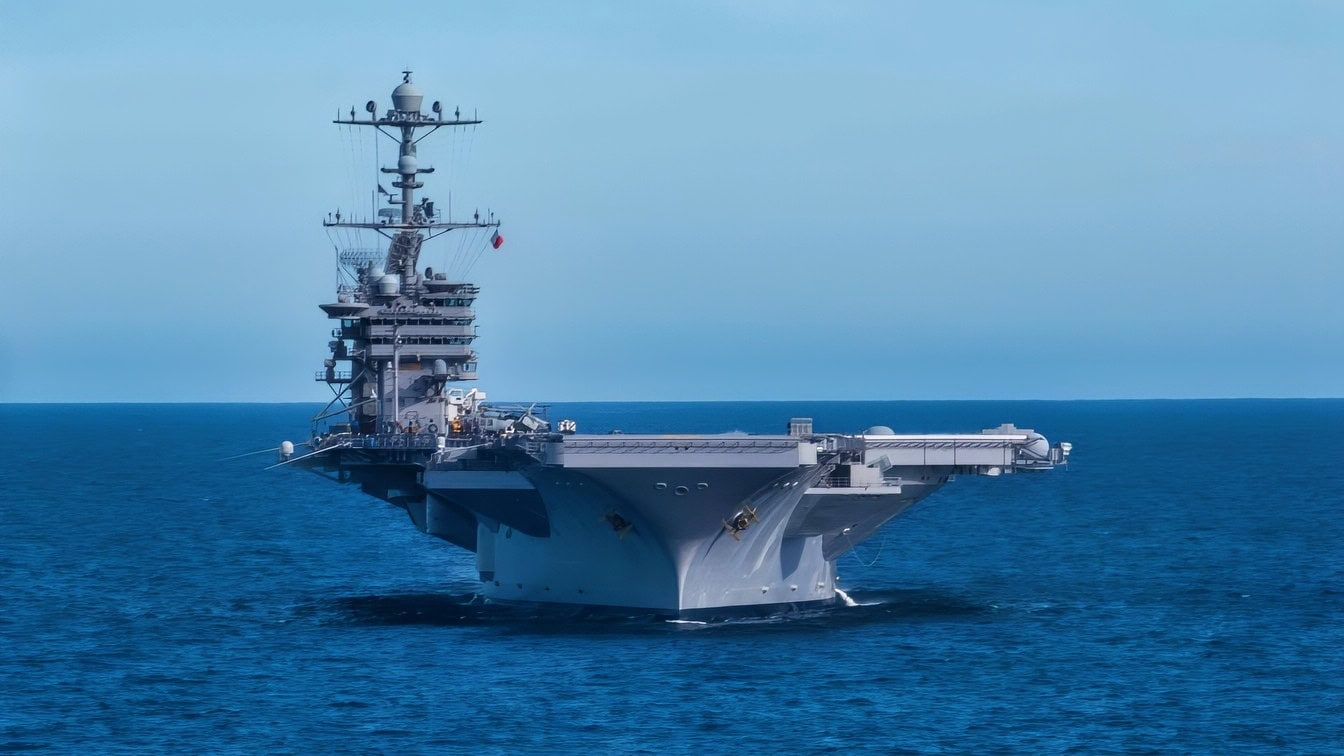
(Dec. 14, 2016) USS John C. Stennis (CVN 74) steams through the Pacific Ocean. John C. Stennis is underway to conduct routine training in the 3rd Fleet area of responsibility. (U.S. Navy photo by Petty Officer 3rd Class Dakota Rayburn/Released)
That means one of the United States Navy’s most powerful aircraft carriers has sat idle for more than five years.
The carrier is purportedly in the final stages of systems integration, component testing, and reassembly at the Newport News outfitting berth.
But the Navy is unlikely to meet its target window of having the carrier out of the shipyard by the end of this month.
Once the Navy formally completes the RCOH, the crew will begin basic movement and initial sea trials.
John C. Stennis will remain focused on passing safety certifications and conducting crew training well into next year.
So, no, the carrier will not leave the shipyard on time, nor will it deploy in early 2027 as the Navy has long insisted.
The Nimitz-class aircraft carrier uses two A4W nuclear reactors for power.
These reactors generate steam that drives the ship’s propulsion turbines and powers its enormous electrical needs.
A conventionally powered carrier can replenish its fuel tanks during a relatively brief underway replenishment or port visit.
But refueling a nuclear carrier is much more complex and difficult.
The ship’s nuclear reactors sit deep within its bowels. Accessing them for refueling and maintenance requires extensive dismantling of parts of the John C. Stennis.
Shipyard workers must create special access routes through the ship’s internal structures to open the reactor compartments.
So this isn’t just a matter of popping open a door and pouring in some juice.
And once those reactors are refueled, the impacted structure must be fully restored.
Then it must be inspected. After that, it requires testing to certify that it is operational.
As the RCOH is underway, the Navy modernizes the carrier’s electronics and updates any other systems that need upgrading.
It’s a one-stop shopping experience for the carrier.
While that helps keep the carrier relevant in a constantly evolving maritime combat domain, bottlenecks or shipyard workforce issues can significantly delay the carrier, which then impacts overall force readiness.
The modernization of the John C. Stennis includes 1,800 miles of electrical wiring, with hundreds of miles of piping supporting systems such as steam, firefighting, aviation fuel, freshwater, and even sewage.
Workers must therefore inspect these networks and their components and replace any damaged or deteriorating equipment.
Modern electronics need additional inputs, too.
Because they need greater electrical capacity, the upgraded electronics create challenges for an already strained naval shipyard workforce and further slow down the ship’s return to service.
An Aging Platform
And the John C. Stennis is getting old.
The Navy commissioned it on December 9, 1995. It’s not a new carrier. So, the Navy is rebuilding parts of the ship that are 25 years old.
That might be young for a human. For a nuclear-powered aircraft carrier, 25 years is midlife, heading to old age.
And the infrastructure supporting the carrier fleet has diminished since the height of the Cold War, when the Navy could reliably manage a large force of nuclear-powered aircraft carriers.
The carrier entered overhaul in May 2021 and completed the drydock section of the RCOH in April 2024.
But the modernization and testing of the ship–as well as the all-important certification process of that phase–delayed the ship significantly.
Taking Too Long
This isn’t the first time such problems have arisen.
The USS George Washington (CVN-73) encountered significant delays during its own RCOH that lasted an astonishing six years.
These extended maintenance periods have real, negative impacts on operational readiness.
That means every carrier delayed in the shipyard puts further strain on ships currently deployed (and needing their own maintenance).
With US Navy forces increasingly pulled toward the Middle East and Indo-Pacific, lacking an aircraft carrier because of maintenance woes is a problem.
Not having them available for five or six years is a national security crisis.
About the Author: Brandon J. Weichert
Brandon J. Weichert is the Senior National Security Editor at 19FortyFive.com. He also manages The Weichert Brief on Substack. Weichert is the co-host for The Mario Nawfal Show on Twitter/X. He is the author of four bestselling national security books, most recently A Disaster of Our Own Making: How the West Lost Ukraine (Encounter Books). His next book, Fortress Americas: A New Monroe Doctrine (Tucker Carlson Books), is due out December 8. Follow him via Twitter/X @WeTheBrandon.