

Summary and Key Points: Expert Harrison Kass revisits Theodore Roosevelt’s reported 1905 line at the University of Virginia that the Navy is the surest guarantee of peace and the cheapest insurance against war, rooted in Alfred Thayer Mahan and proven by the Spanish-American War and the 16-battleship Great White Fleet of 1907.
Teddy Roosevelt’s Line on the US Navy Makes Total Sense
In a 1905 speech at the University of Virginia, President Theodore Roosevelt reportedly declared: “Our Navy is the surest guarantee of peace and the cheapest insurance against war.” Roosevelt’s argument was straightforward: maintaining a powerful fleet in peacetime costs far less than fighting a major war after deterrence fails.
The statement reflected the strategic thinking of what was, at the time, an emerging global power.
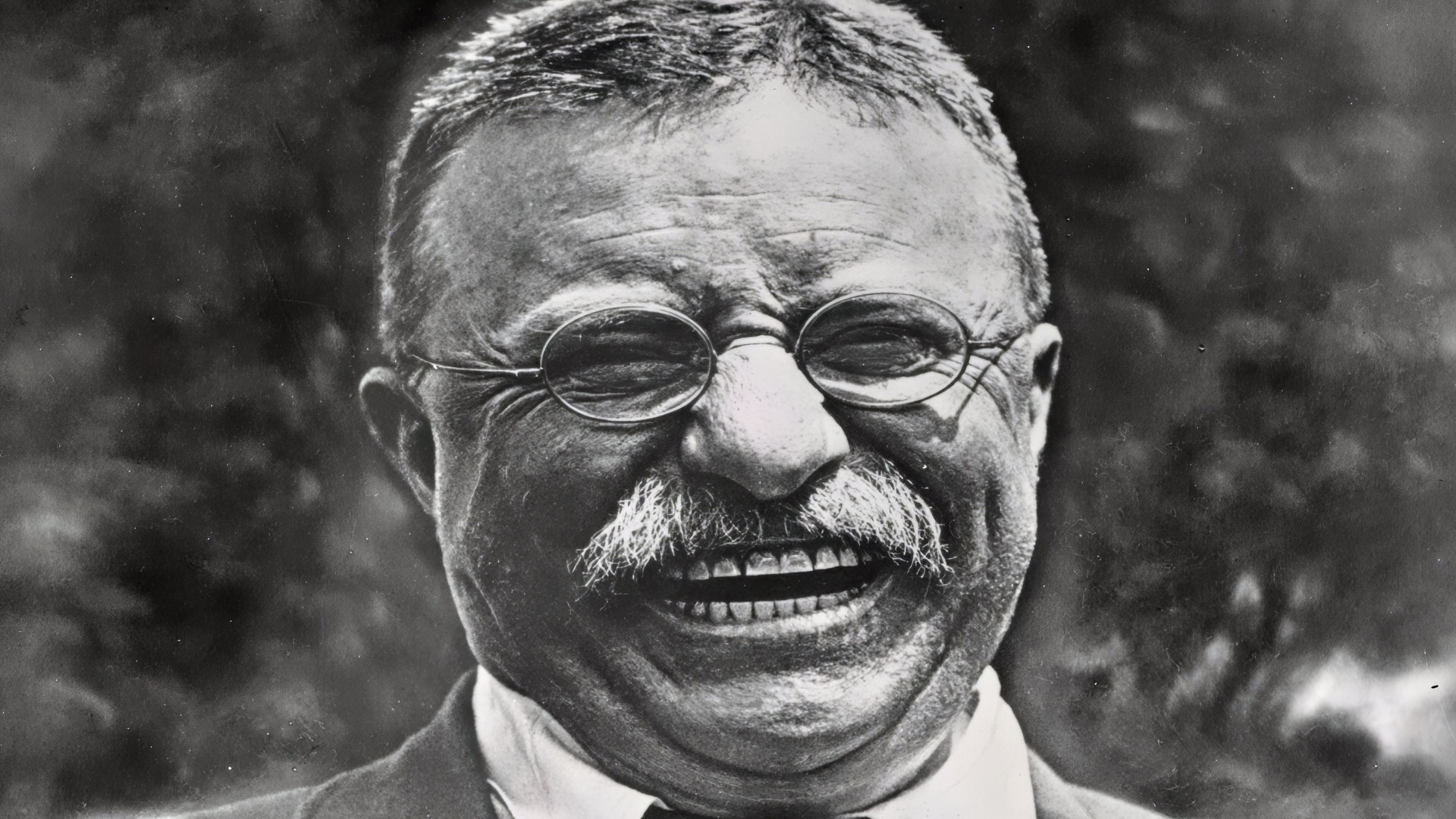
Theodore Roosevelt Laughing Creative Commons Photo
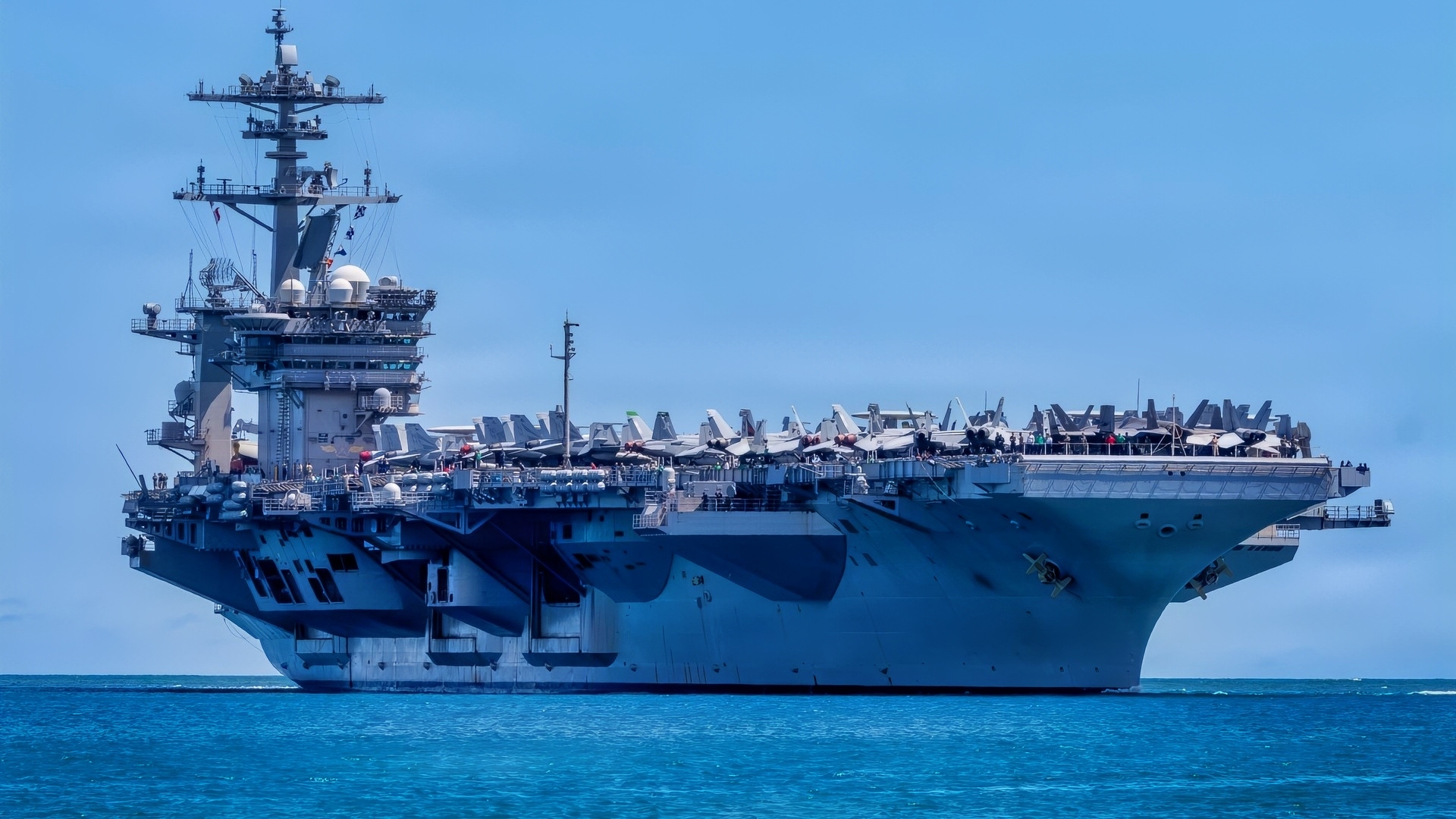
Nimitz-class aircraft carrier USS Theodore Roosevelt (CVN 71) returns to Joint Base Pearl Harbor-Hickam to participate in the final events of Exercise Rim of the Pacific 2026, July 28, 2026. Thirty nations, 30 ships, five submarines, 15 national land forces, more than 190 aircraft and more than 30,000 personnel are participating in RIMPAC in and around the Hawaiian Islands, June 24 to July 31. The world’s largest international maritime exercise, RIMPAC provides a unique training opportunity while fostering and sustaining cooperative relationships among participants critical to ensuring the safety of sea lanes and security on the world’s oceans. RIMPAC 2026 is the 30th exercise in the series that began in 1971. (U.S. Navy photo by Mass Communication Specialist Seaman Mark Bergado)
Today, twelve decades after Roosevelt’s statement, the United States maintains the world’s most capable blue-water navy, with global reach, nuclear-powered aircraft carriers, submarines, and advanced surface combatants.
Yet today, the Navy faces its most serious maritime competitor in generations, as China aggressively enhances its blue-water capabilities.
Roosevelt’s Philosophy
Roosevelt was a committed advocate of naval power long before becoming president.
As assistant secretary of the Navy in 1897–1898, Roosevelt pushed for greater readiness and modernization.
The Spanish-American War of 1898 demonstrated the strategic value of American naval forces, with Commodore George Dewey destroying the Spanish fleet at Manila Bay and American naval forces defeating a Spanish squadron off Santiago de Cuba.
Roosevelt was heavily influenced by naval strategist Alfred Thayer Mahan, whose 1890 book The Influence of Sea Power upon History argued that maritime strength was central to national power.
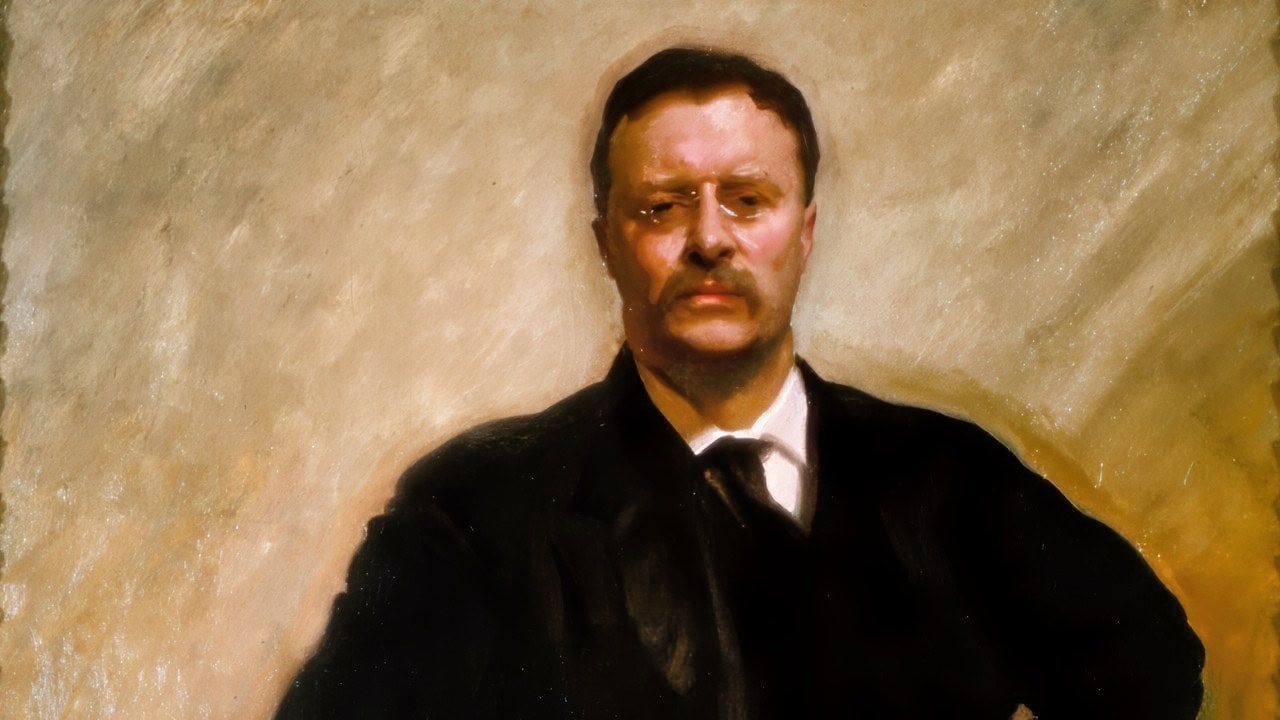
Theodore Roosevelt. Creative Commons Photo.
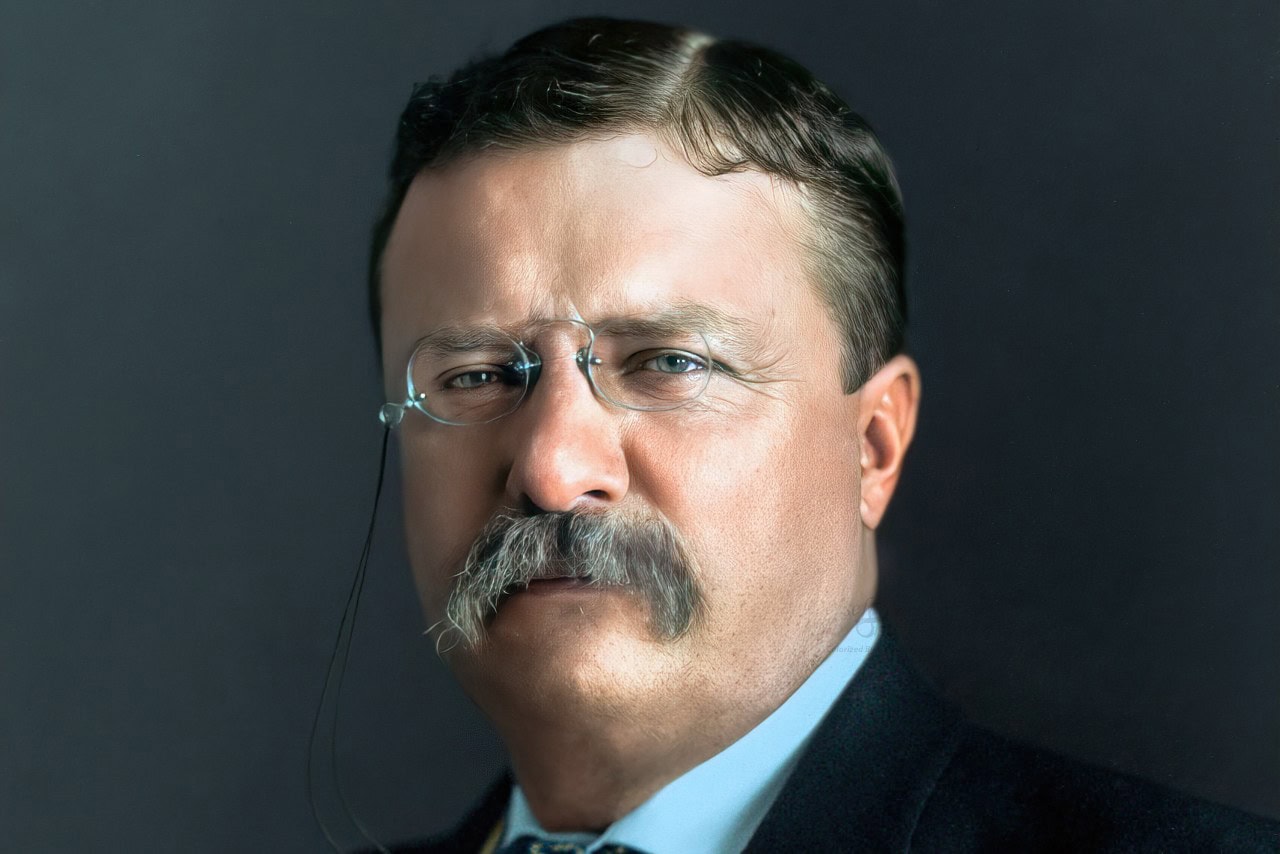
Theodore Roosevelt Quote of the Day. Image Credit: Creative Commons.
Roosevelt believed a strong fleet could defend American interests, support diplomacy, and deter potential enemies.
In 1907, Roosevelt dispatched the Great White Fleet—16 battleships—on a global voyage to demonstrate American naval capabilities. The voyage symbolized America’s emergence as a major maritime power.
The Naval Pillar
Geography makes naval power especially important to the US, as the country is separated from Eurasia by the Atlantic and Pacific oceans.
As a result, America depends on maritime access to influence events abroad.
The Navy provides capabilities that land-based forces cannot easily replicate, including power projection, sea control, strategic deterrence, expeditionary operations, and logistics.
Because a substantial portion of global merchandise trade moves by sea, maritime security is vital for economic reasons in addition to military ones.
Without naval superiority, the US’s ability to sustain operations across the Pacific and Atlantic would be hindered.
The Modern Navy
Today, the United States Navy is unmatched.
Operating 11 nuclear-powered aircraft carriers, the US provides a unique capacity for sustained carrier aviation.
Additionally, the fleet includes Arleigh Burke-class destroyers equipped with the Aegis combat system and capable of air and missile defense, Virginia-class attack submarines designed for intelligence gathering, anti-submarine warfare, and strikes against land targets, Ohio-class ballistic missile submarines which carry submarine-launched nuclear missiles, and America- and Wasp-class amphibious assault ships supporting Marine Corps operations.
The Navy’s global basing and logistics network allow American warships to operate far from home.
Unlike land-based military forces, naval forces can remain offshore during crises, offering policymakers military options without immediately committing ground troops.
This flexibility is central to Roosevelt’s argument.
Of course, some circumstances offer no substitute for ground troops; wars are not won solely through naval forces.
But the Navy is a central pillar of US foreign policy.
The China Challenge
The People’s Liberation Army Navy has undergone one of the most ambitious shipbuilding sprees in human history over the past two decades.
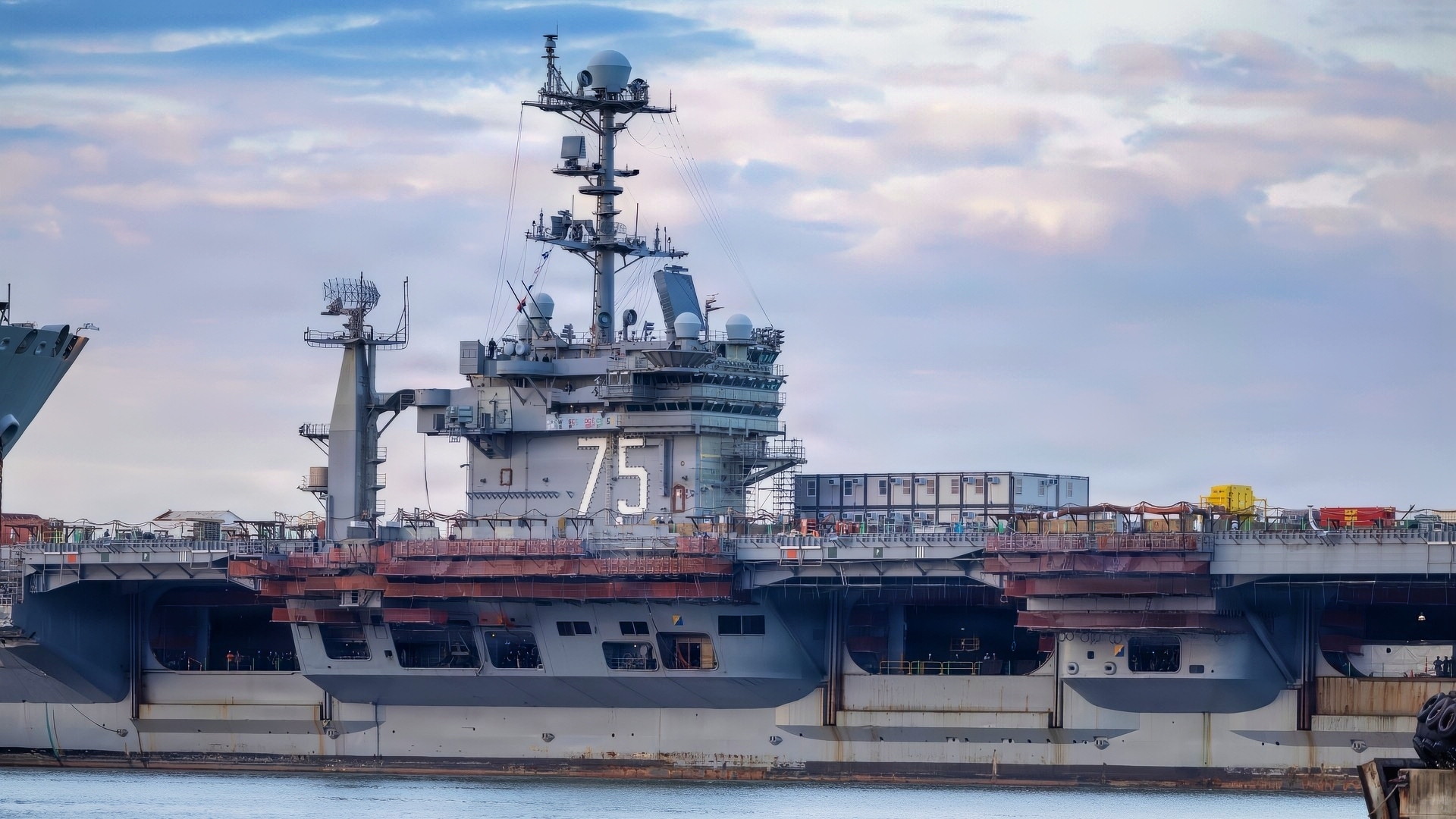
NORFOLK, Va. (Sept. 30, 2026) The Nimitz-class aircraft carrier USS Harry S. Truman (CVN 75) departs Naval Station Norfolk for Newport News Shipbuilding to begin the shipyard phase of its Refueling and Complex Overhaul (RCOH). RCOH is a once-in-a-carrier-lifetime maintenance and modernization period designed to prepare Truman for the second half of its planned 50-year service life. (U.S. Navy photo by Mass Communication Specialist Seaman Apprentice Jason Wernegreen)
Suddenly, China has the world’s largest navy by number of battle-force ships, though quantitative superiority doesn’t necessarily translate into overall combat capability.
Regardless, the expansion is concerning; Beijing has invested heavily in modern destroyers and frigates, aircraft carriers, conventional and nuclear-powered submarines, and anti-ship ballistic and cruise missiles.
China’s military modernization is particularly relevant to a potential confrontation over Taiwan.
Under such a contingency, the US would need to operate across enormous distances, while Chinese forces could fight close to home.
Meanwhile, China’s A2/AD capabilities would severely complicate American intervention.
The Cost of Deterrence
Roosevelt considered naval spending an investment against the much greater cost of war, but maintaining a modern fleet is incredibly expensive.
Nuclear-powered aircraft carriers cost billions of dollars to build, while advanced destroyers and submarines require substantial maintenance budgets.
Maintaining a top Navy also imposes an industrial burden; today, the Navy faces shipbuilding delays, maintenance backlogs, and constraints on America’s industrial capacity.
About the Author: Harrison Kass
Harrison Kass is a writer and attorney focused on national security, technology, and political culture. His work has appeared in Tablet, City Journal, The Hill, The Spectator, and The Cipher Brief. He holds a JD from the University of Oregon and a master’s in Global & Joint Program Studies from NYU. More at harrisonkass.com.