
172 ships in 13 days force Russia to withdraw drone units from the front.
 Dmitri Volkov
172 vessels in 13 days force Russia to withdraw drone units from the front
The most important figure in reports about the night strikes on July 18 is not the tonnage of damaged vessels or even the distance to Moscow. More important is another fact: Ukrainian commander of the Unmanned Systems Forces, Robert Brovdi, claims that 172 Russian sea and river vessels were hit in 13 days, and the Russian command had to withdraw up to 200 units from the "Rubicon" center from the land front to protect ships and port logistics. Even if this estimate is exaggerated by a factor of two, it still describes an unpleasant reality for Moscow: Ukraine has found a way to turn cheap long-range strikes into an expensive redistribution task for the Russian army.
Maritime logistics has become a front without a front line
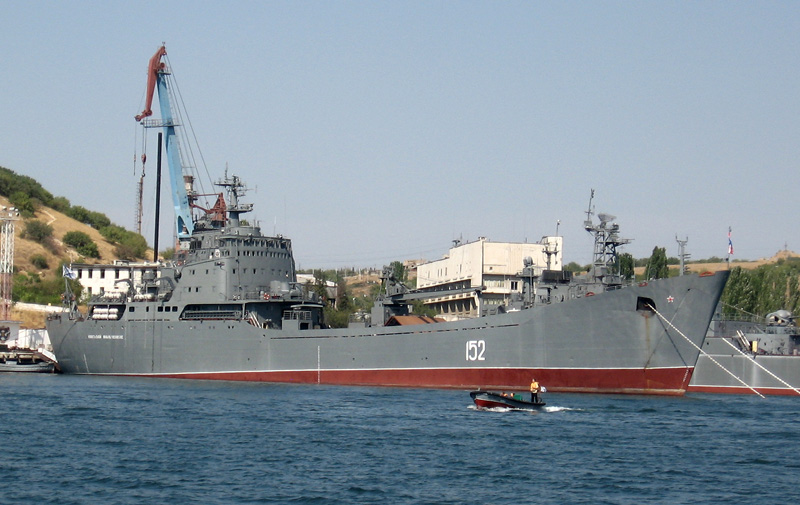
According to the Ukrainian General Staff and ISW reports from July 18, two tankers, two crane vessels, and a tug were hit in the Black and Azov Seas on the night of July 17-18. Brovdi provided a broader figure for the same cycle of strikes: eight bulk carriers, a gas carrier, a tug, two floating cranes, and an oil tanker. Ukrinform separately reported the destruction of 13 vessels of the Russian "shadow fleet" in the Black and Azov Seas, including eight bulk carriers, one tanker, one gas carrier, one tug, and two floating cranes. This is no longer a classic hunt for combat ships of the Black Sea Fleet, as in 2022-2024. This is pressure on the transport fabric of war — fuel, grain, crane capacities, ferry and river routes, without which Crimea and the southern grouping become more expensive to supply.
The official Russian response looks familiar: the Ministry of Defense reported through TASS that from 20:00 on July 18 to 08:00 on July 19, air defense intercepted and destroyed 140 Ukrainian drones over Russian regions, Crimea, the Black and Azov Seas. But the geography of this message speaks more than the victorious formula "intercepted and destroyed." If drones have to be shot down simultaneously over Belgorod, Bryansk, Voronezh, Kaluga, Kursk, Rostov, Moscow regions, Krasnodar Krai, Crimea, and the waters of two seas, then the defense is no longer covering individual objects. It stretches along the strategic perimeter, where each new line requires personnel, radars, electronic warfare assets, observers, vehicles, and nerves.
Why "Rubicon" is more important than the tankers themselves
The Center for Advanced Unmanned Technologies "Rubicon" has become one of the symbols of Russia's attempt to institutionalize the experience of drone warfare. Its units are needed at the front not for parades, but for everyday work: reconnaissance, interception, FPV strikes, fire adjustment, escorting assault groups. If Brovdi's data on the redeployment of up to 200 units is at least partially correct, Ukraine has achieved a rare effect — not just damaged several targets, but extracted qualified personnel from the tactical zone, where they create immediate combat results.
In the Soviet military school, this would be called impacting the "operation support system," rather than a single object. The difference is fundamental. A lost tug can be replaced, a damaged pier can be repaired, but a unit that knows how to work with drones and understands the front-line situation cannot be instantly cloned by an order from the General Staff. The Russian army has learned to mass-produce simple drone solutions over the past two years, but qualified operators, electronic warfare engineers, and commanders of small UAV groups remain a bottleneck. This is the very personnel cost of war that official reports usually remain silent about.
Strikes on energy and warehouses create a single pressure contour
The maritime campaign does not appear isolated. Ukrinform, citing Brovdi, reported that from July 1 to 18, Ukrainian Unmanned Systems Forces struck 83 electrical substations in occupied territories, including 12 facilities in the last three days. Among them are the 110 kV substations "Koktebel" and "Kerch," the 220 kV "Kamysh-Burun" and "Black Sea," as well as the "Kuban-Crimea" node. An evening statement by Volodymyr Zelensky added a second line: strikes on logistical facilities in the Moscow and Tambov regions, through which, according to the Ukrainian version, navigational equipment, components for drone production, and other supplies for the Russian army were transported.
Individually, these episodes can be attributed to the usual war of strikes. Together, they show a more mature model: Ukraine attacks not "symbols," but nodes where the Russian military machine intersects with civilian infrastructure. The oil depot in Noginsk, warehouses of Wildberries in Elektrostal, substations in Kerch and Mariupol, vessels in the Azov Sea — all these are different objects only on the map. In the economy of war, they belong to one class: distribution of fuel, electricity, components, equipment, and cargo. The Russian system is strong in centralized orders but weak where orders require constant local protection of thousands of objects.
Gerasimov speaks of an offensive, the rear demands defense
It is telling that this strike cycle coincided with another speech by Valery Gerasimov. Through TASS, the Russian General Staff announced advances on a broad front, battles in Podlyman, proximity to Kramatorsk, actions in the area of Dobropillya, and the "imminent" liberation of Krasny Liman. ISW noted on the same day that a significant part of these statements is not confirmed by available visual data, and Russian troops, in its assessment, were even losing territory in July at an average rate of about 1.6 square kilometers per day from July 1 to 17.
Here arises a typically Russian management paradox. The center demands an image of an advancing army, but the periphery of the war requires the defense of warehouses, ships, substations, oil depots, and civilian enterprises. Ukrainian intelligence, through Ukrinform, claims that Russian defense factories in the Kirov region were fined for failing to recruit "volunteers" for civilian anti-drone defense units. This is a minor, almost bureaucratic detail, but it better illustrates than many grand speeches where the war is heading: the state is shifting the protection of strategic objects onto the enterprises themselves and then fines them for a lack of personnel.
What this changes in the coming weeks
One should not exaggerate: a series of strikes on vessels and warehouses will not collapse the Russian military economy in a week. Russia still has land routes, railroads, repair capacities, large fuel reserves, and a habit of tolerating inefficiency. But the cost of this inefficiency is rising. If Crimea, as noted by Ukrainian and Western sources, requires about 5,000 tons of fuel per day just for civilian consumption, then any disruption in maritime and energy logistics becomes not a "media victory," but an accounting problem for the headquarters.
My forecast is cautious. In the coming weeks, Russia will not cease offensive actions due to strikes in the Black and Azov Seas, but will increasingly have to choose between two unpleasant expenses: keeping the best drone and air defense units at the front or spreading them thin over rear objects. Ukraine, judging by the July campaign, is precisely achieving this choice. The drone war has entered a phase where victory is measured not only by destroyed equipment but also by how many enemy specialists you forced to guard a pier instead of supporting an assault near Pokrovsk.
Sources: ISW Russian Offensive Campaign Assessment, July 18, 2026; TASS, July 18-19, 2026; Ukrinform, July 18-19, 2026; statements by Robert Brovdi and Volodymyr Zelensky.
Ukrainian forces struck 172 Russian maritime vessels over 13 days, prompting the withdrawal of up to 200 drone units from the front lines to protect logistics. This operation targeted key maritime assets in the Black and Azov Seas, impacting Russian supply chains. Concurrently, Ukrainian strikes on energy infrastructure in occupied territories further strained Russian military logistics.
- 172 Russian vessels were struck in 13 days
- Up to 200 drone units were withdrawn from the front
- Ukrainian forces targeted maritime logistics in the Black and Azov Seas
- Ukrainian strikes affected energy infrastructure and logistics in occupied territories
- Russian military claims interception of 140 drones during the same period.