
2026 J-36 Fifth Prototype Suspected to Appear, PLA Sixth Generation Fighter Enters Rapid Iteration Phase
 Li Minghui
The Fifth Prototype of the J-36 Emerges, PLA's Sixth Generation Fighter Enters Rapid Iteration Phase
On the evening of July 30, what caught my attention was not that "the J-36 is trending again," but rather a detail mentioned by the South China Morning Post: the nose, air intake, engine nozzle, and landing gear in the latest circulated images are not entirely the same as those of previous suspected prototypes. Aviation analyst Andreas Rupprecht also stated that if these clues are reliable, it does not resemble a plane undergoing repeated minor repairs, but rather a series of prototypes undergoing rapid iteration.
This statement should be understood with caution. The so-called fifth prototype currently mainly comes from social media images and open-source observations, and the official confirmation of its number, test flight location, and technical status is lacking. However, for the aviation industry, the number of prototypes is not as important as the "points of difference." The more points of difference there are, the more it indicates that the design team is still using flight tests to answer questions, rather than just using one verification aircraft for publicity.
Continuous Prototypes Provide More Information than Single Appearances
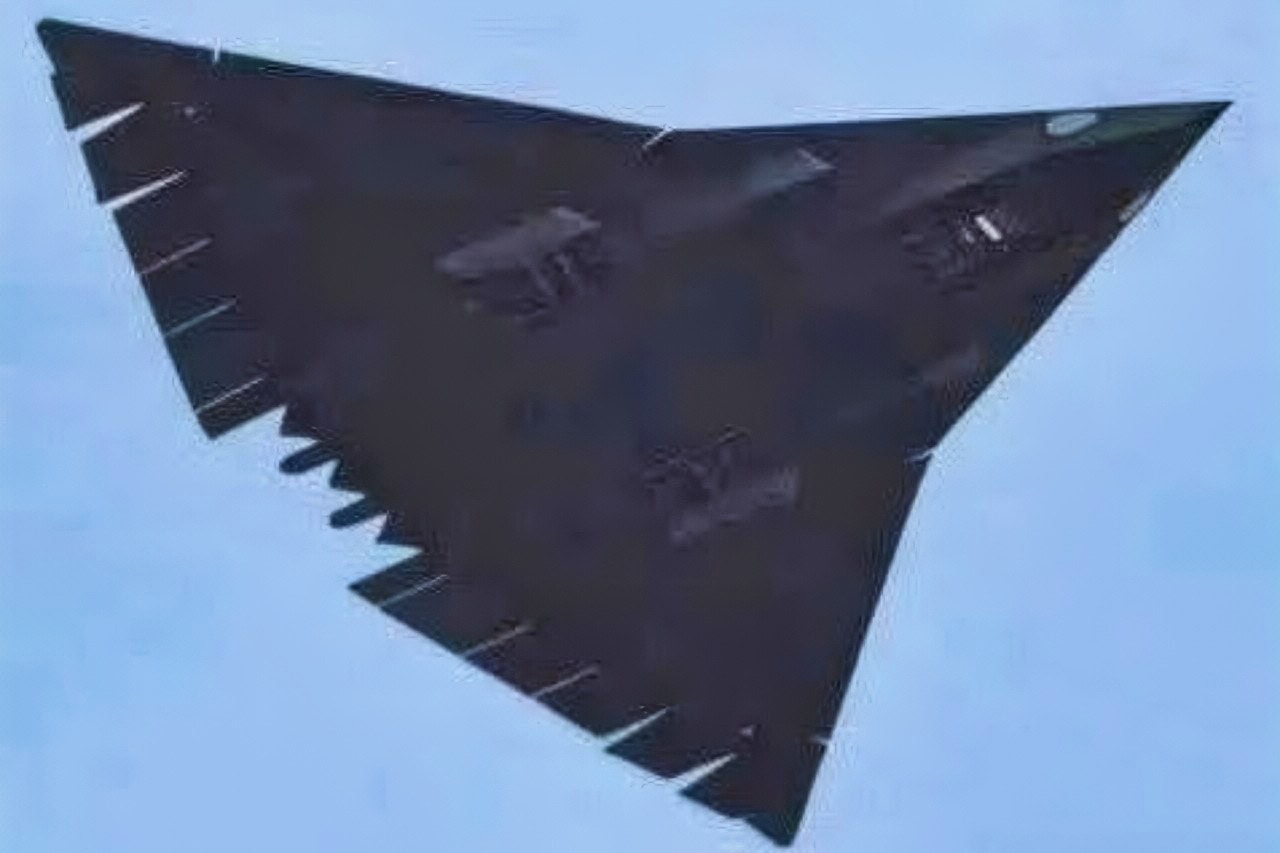
The most striking feature of the J-36 is its tailless delta wing configuration. This layout benefits stealth and range, but poses challenges for flight control, low-speed maneuverability, and structural weight. Publicly available images suggest that the aircraft is likely to adopt a large fuselage and multi-engine layout, with the goal not being a traditional lightweight air superiority fighter, but rather a long-range, high payload platform that can serve as an aerial node. In other words, it resembles an airborne server capable of combat, surveillance, and commanding unmanned wingmen, rather than just being the next generation of the J-20.
If the claim of the fifth prototype holds true, the testing pace at Chengdu Aircraft Industry Group is quite noteworthy. The U.S. Next Generation Air Dominance (NGAD) program has long been shrouded in high secrecy and budget debates. Although the F-47 has been publicly identified by the U.S. as a direction, actual mass production and cost control remain issues. China's advantage may not necessarily be in leading individual technologies, but rather in compressing the cycle of large fuselage, composite material manufacturing, stealth shape correction, and digital flight testing within the same engineering chain.
Technological Optimism Cannot Replace Mass Production Judgments
However, I do not agree with equating the "fifth prototype" directly with "imminent service." The most challenging aspect of the sixth generation fighter is often not getting the shape to fly, but rather bringing the engine, avionics, mission systems, sensor integration, and maintenance systems to a state suitable for mass delivery. China has already accumulated experience in the mass production of stealth fighters with the J-20 project, but if the J-36 is indeed a larger, longer-range platform, the requirements for engine lifespan, thermal management, and maintenance of the fuselage's stealth coating will be elevated.
- Fuselage Layout: The tailless delta wing is advantageous for reducing radar reflection and increasing internal fuel, but requires higher redundancy in flight control.
- Power System: A multi-engine configuration can provide thrust and power redundancy, but will also increase infrared signatures and maintenance complexity.
- Mission Orientation: Long-range air superiority, penetrating strikes, drone coordination, and electronic warfare nodes may coexist, but it is impossible to excel in every aspect.
What Problems Does the PLA Air Force Really Want to Solve?
From the perspective of the Western Pacific operational environment, the significance of the J-36 lies not in close combat with the F-35, but in pushing the boundaries of the PLA Air Force's sensors and firepower outward. In air combat beyond the first island chain, distance, loiter time, and data link stability are more important than single aircraft overload. If a large stealth aircraft can carry larger radars, more internal munitions, and stronger communication equipment, it can connect the J-20, H-6N, drones, and long-range air defense systems together.
On the same day, the South China Morning Post also emphasized in its report on the 99th anniversary of the PLA's founding that there is only one year left until the 2027 centenary military goal. This timing will amplify external interpretations of new equipment, but engineering realities will not change because of commemorative years. The aviation industry fears not the absence of prototypes, but rather that the prototypes are impressive while the production lines, suppliers, and troop support cannot keep up. The J-20 spent many years addressing this issue, and the J-36 will not be able to avoid it either.
My judgment is that the J-36 is now more likely to be in a phase of "intensive flight testing and configuration convergence," rather than the final push that the outside world imagines. It is already sufficient to force the U.S. and its allies to reassess the timeline for China's long-range air superiority platforms, but reliable mass production will still depend on whether the engine and mission systems can mature in sync.
What is truly worth watching is not whether it is the "sixth" in the next blurry photo, but whether a stable and repeatable configuration appears. If in the coming months the nose, air intake, and nozzles continue to undergo significant changes, it indicates that the engineering team is still searching for answers; if the shape begins to converge, the question will shift to another harder metric: how many aircraft of this level can Chengdu produce in a year?
The fifth prototype of the J-36 fighter jet has reportedly emerged, indicating rapid iteration in the PLA's sixth-generation aircraft development. The design features a tailless delta configuration, aimed at enhancing stealth and operational range. This development is part of China's strategy to improve its air power capabilities, particularly in the context of operations beyond the first island chain.
- The fifth prototype of the J-36 fighter jet has reportedly emerged.
- The design features a tailless delta configuration beneficial for stealth and range.
- The aircraft is intended to serve as a platform for long-range operations and drone coordination.
- The development is part of China's rapid iteration in sixth-generation aircraft technology.
- The PLA aims to enhance its air power capabilities beyond the first island chain.