
2026 Keen Sword: NMESIS First Deployment, Yonaguni Island Becomes the Frontline of the Japan-U.S. Maritime Interdiction Network
 Tanaka Takashi
First Deployment of NMESIS at Keen Sword 2026: Yonaguni Island Becomes the Frontline of the Japan-U.S. Maritime Denial Network
In the Japan-U.S. joint integrated exercise Keen Sword 2026, which began on October 19, the U.S. Marine Corps' NMESIS (Naval and Marine Expeditionary Ship Interdiction System) and MADIS (Marine Air Defense Integrated System) will be deployed for the first time on Yonaguni Island, approximately 110 kilometers from Taiwan. This exercise does not prominently feature Japan's Maritime Self-Defense Force vessels. Instead, it involves land-based missile units dispersed across the islands, closing off the strait and shipping routes from the side.
Range and Unit Deployment
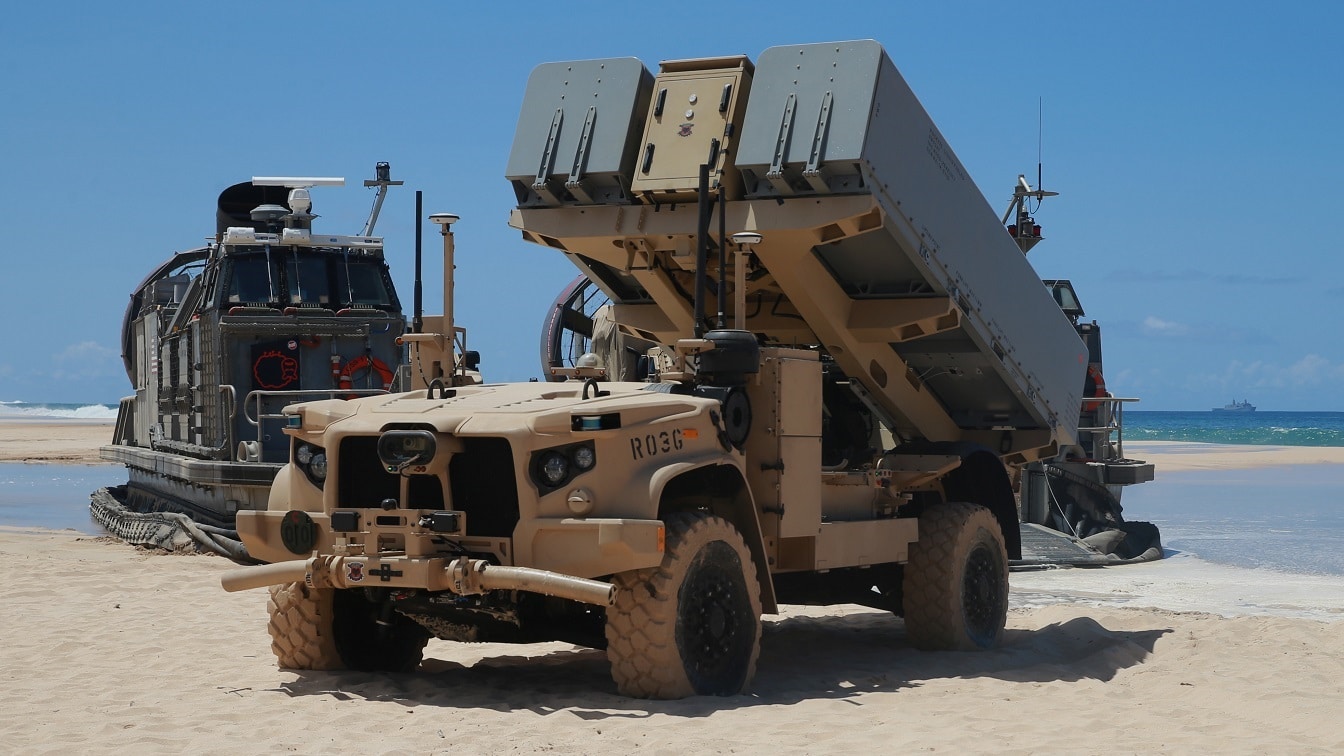
According to Defense News, NMESIS has a range of approximately 115 miles (about 185 kilometers) and possesses the capability to deny access to vessels operating in surrounding waters. MADIS is responsible for close-range air defense, targeting small unmanned aerial vehicles. The Japan Ground Self-Defense Force will also participate in the exercise with the Type 25 anti-ship guided missile, Type 88 anti-ship missile, and Type 03 medium-range surface-to-air guided missile, all of which have a range of about 1,000 kilometers and were deployed to the southwestern islands starting in March. The exercise is expected to involve around 45,000 personnel from nine countries and will continue until the 29th.
The Reality of Carrier Absence
This time at Keen Sword, the presence of aircraft carrier strike groups, which have been seen in the past, is notably diminished. This is due to U.S. Navy aircraft carriers being redirected to the Middle East. Rather than indicating a weakness in the alliance, this highlights the need to train in a posture that does not rely on large ships during peacetime. If NMESIS, the JGSDF's Type 25, and the U.S. Army's HIMARS are dispersed across the islands, an adversary attacking a single base would not be able to incapacitate the entire sea lines of communication (SLOC).
Issues Remaining Between Capability and Intent
However, placing missiles does not equate to being able to execute maritime denial. If communication and resupply for target detection, identification, and joint engagement are interrupted, a range of 185 kilometers becomes just a number. Yonaguni Town has expressed concerns regarding the use of civilian roads, ports, air routes, and the island's capacity to accommodate these operations. A dispersed deployment lacking the understanding of local residents could create political friction on the first day of a crisis. In the author's view, the true litmus test of this training is not the performance of the launchers, but whether the entire island, including civilian infrastructure, can be operated as part of SLOC defense.
References
The U.S. Marine Corps deployed the NMESIS and MADIS systems on Yonaguni Island during the Keen Sword 2026 joint military exercise, which began on October 19, 2026. Approximately 45,000 personnel from nine countries are participating in the exercise, which will continue until October 29. The NMESIS system, with a range of 115 miles, enhances naval denial capabilities in the region.
- The NMESIS and MADIS systems are deployed for the first time on Yonaguni Island during the Keen Sword 2026 exercise.
- The exercise involves approximately 45,000 personnel from 9 countries and runs until October 29, 2026.
- The NMESIS has a range of about 115 miles, providing denial capabilities against naval vessels.
- The exercise does not feature a carrier strike group due to U.S. Navy deployments in the Middle East.
- Concerns exist regarding the use of civilian infrastructure on Yonaguni Island during the exercise.