
U.S. Air Force tests shipping military cargo by rocket
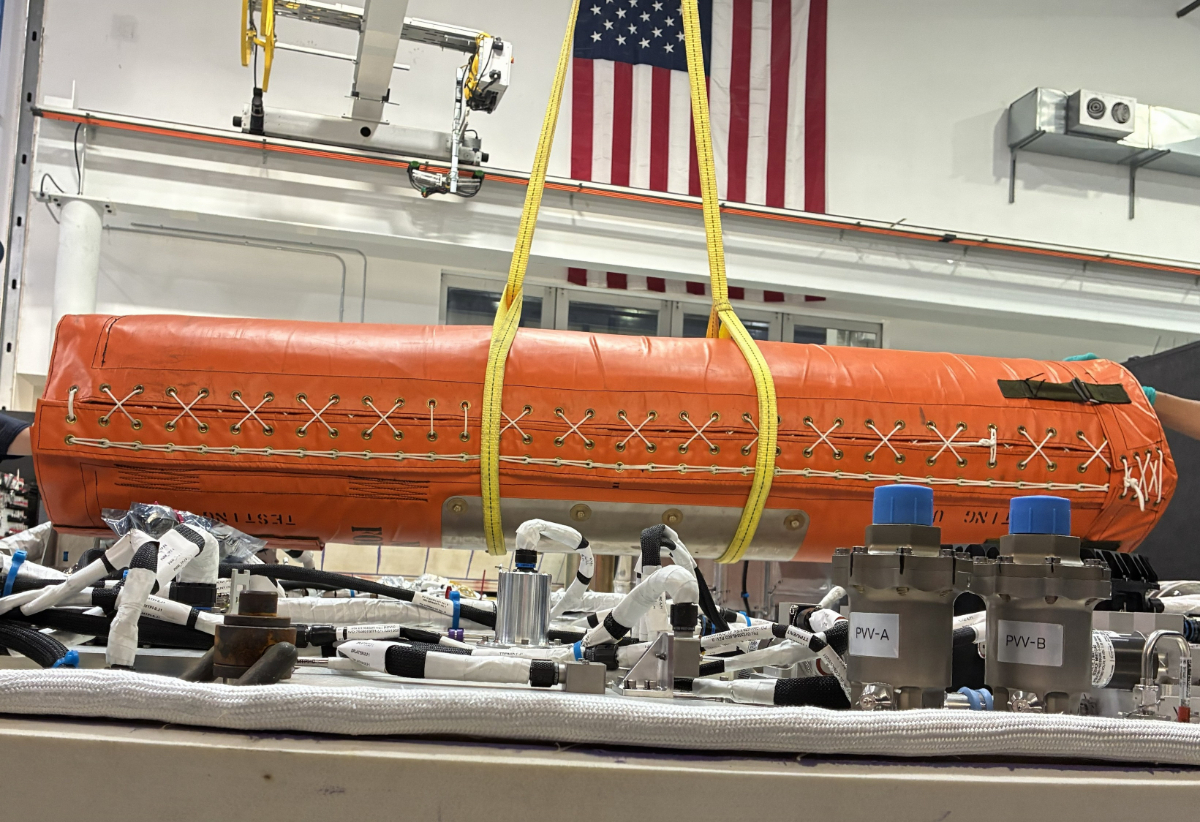
The U.S. Air Force has sent military-style cargo into space and back aboard a SpaceX Starfall capsule as it tests whether rockets could one day deliver supplies to troops anywhere on Earth within hours.
The Air Force Research Laboratory flew its own cargo pods inside the capsule on a commercial rideshare launch from Cape Canaveral Space Force Station on Oct. 20, packing them with satellite trackers, batteries, survival gear, a water desalinator and emergency medical equipment to see how they would hold up through launch, spaceflight and the plunge back through the atmosphere.
The flight was part of Rocket Cargo, an AFRL project studying whether large commercial rockets can move materiel around the world on tactical timelines, and the capsule carried sensors that recorded the temperature, shock and vibration the cargo experienced along the way. Engineers paid particular attention to how electronics and survival equipment came through the ride, and they also checked whether a UNI-PAC III life raft would fit inside the capsule for future tests, which hints at missions such as dropping rescue kits to downed aircrew or stranded sailors far from any base.
“Any day you launch a rocket is a good day, but today was more than just another big rocket launch,” said Brig. Gen. Douglas P. Wickert, Department of the Air Force Technology Executive Officer and AFRL commander. “Today’s launch was another demonstration of how AFRL is partnering with industry to burn down risk, collect hard data and deliver war-winning technologies for the operational force.”
Starfall is SpaceX’s new uncrewed reentry capsule, a squat disk about 3.1 meters (10 feet) across that weighs roughly 2,100 kg (4,600 pounds) and can bring back up to 1,000 kg (2,200 pounds) of payload under parachutes, with recovery planned in the Pacific Ocean. SpaceX flew the first Starfall demonstration in June, and regulatory documents describe the capsule as a way to support both rapid point-to-point cargo delivery and a commercial market for products made in orbit and returned to Earth.
The Air Force’s ambitions for Rocket Cargo are much bigger than a single capsule, since AFRL says the concept stands apart from other fast-delivery efforts because a large rocket could carry tens of tons per launch to places with no runways or roads. The service has said it wants rocket-delivered cargo to reach almost any point on Earth within about an hour and a half and eventually to move loads comparable to a C-17 transport, and in June it awarded Colorado-based Geneva Technologies $4.3 million to help design the rocket cargo system.
AFRL sees uses ranging from resupplying forces in contested areas and expeditionary operations to rescue missions, disaster relief and responding to chemical, biological, radiological or nuclear incidents, and it is working with a long list of companies to get there, including SpaceX, Blue Origin, Rocket Lab, Sierra Space, Anduril, Inversion Space and Outpost Space. In August, the Air Force expanded Blue Origin’s role in the program with a study contract now worth about $13 million.
“This was a critical achievement to demonstrate the potential of Rocket Cargo delivery for point-to-point rapid global mobility for the Future Force,” said Adam Remaly, director of the AFRL Technology Transition Office.
AFRL plans further tests with commercial rockets and reentry capsules as it gathers data on how cargo survives the trip, and it is also looking at how the military could benefit from commercial investment in capsules built to return products manufactured in space.
Content preview only. Full article available at source. View Full Article
The U.S. Air Force tested military cargo delivery using a SpaceX Starfall capsule on October 20, 2023, from Cape Canaveral Space Force Station. The test involved sending cargo pods containing survival gear and medical equipment into space and back to assess their durability. This initiative aims to enable rapid delivery of supplies to troops globally within hours, as part of the Rocket Cargo project.
- U.S. Air Force tested military cargo delivery using a SpaceX Starfall capsule.
- The test occurred on October 20, 2023, from Cape Canaveral Space Force Station.
- Cargo included survival gear, medical equipment, and satellite trackers.
- The goal is to enable rapid global mobility for military supplies.
- The project is part of the Rocket Cargo initiative by the Air Force Research Laboratory.