
DARPA wants smart nuclear reactor for space and bases
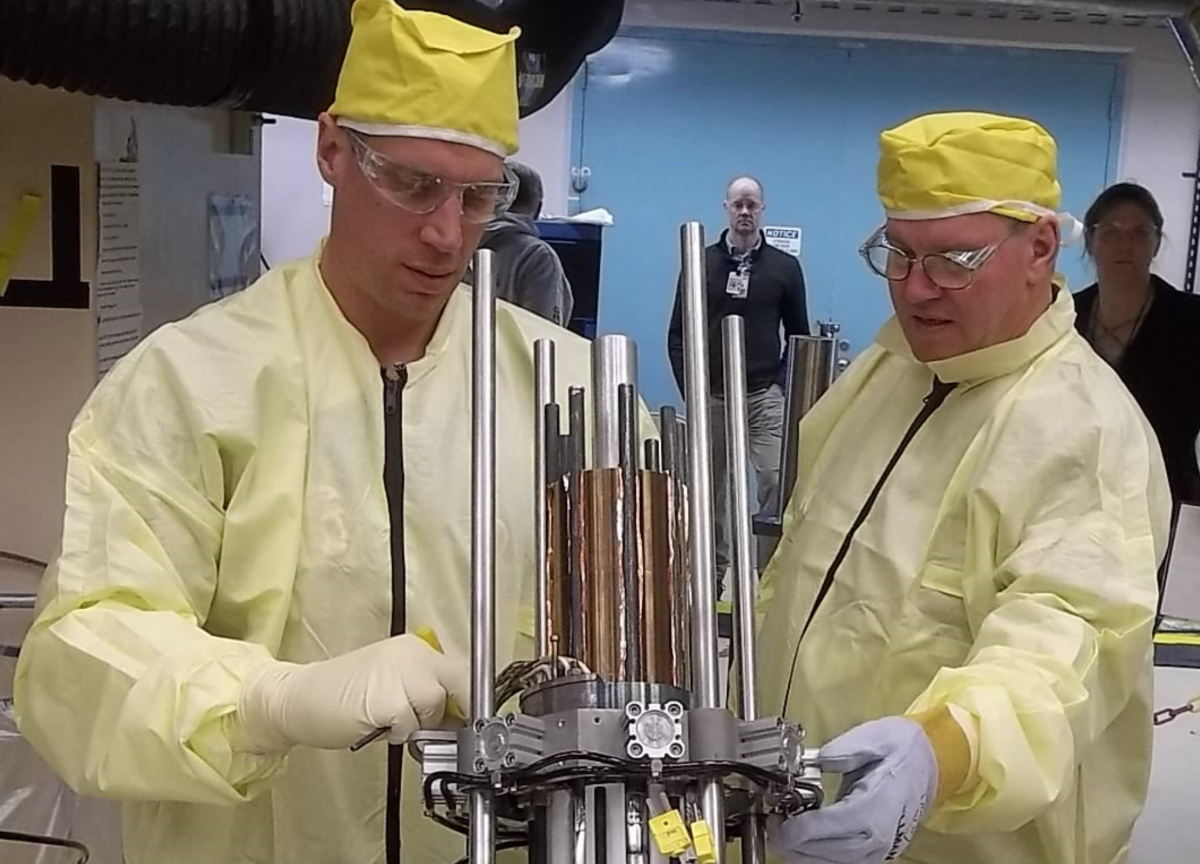
The Pentagon’s top research agency wants a nuclear reactor that can run itself, and it has hired the team that built America’s last space reactor to prove it can be done. DARPA has awarded Space Nuclear Power Corporation, a small Los Alamos, New Mexico, company known as SpaceNukes, an agreement to build a Kilopower reactor with self-adjusting control rods and switch it on in a full nuclear ground test, the company announced on Oct. 21.
DARPA, the Defense Advanced Research Projects Agency, was created in 1958 after the Soviet Union launched Sputnik, with a mandate to make sure the United States would never again be caught off guard by a rival’s technology. The agency does not build weapons itself; it funds high-risk ideas that the military services and industry consider too uncertain to pay for, and its bets have included the ARPANET network that grew into the internet and early stealth aircraft research. The new work falls under a DARPA program called Fast Capacitance, or Fat Cat, run by program manager Tabitha Dodson in the agency’s Defense Sciences Office, which is looking for ways to let reactors operate on their own for national security missions.
The reactor at the center of the project has already worked once. Between November 2017 and March 2018, engineers from Los Alamos National Laboratory and NASA ran a test called KRUSTY, short for Kilopower Reactor Using Stirling Technology, at the Nevada National Security Site, powering up a reactor built around a solid cast uranium-235 core about the size of a paper towel roll. Sodium heat pipes carried heat from the core to Stirling engines that turned it into electricity, and the reactor ran at full power for about 28 hours while engineers deliberately cut power, shut down engines and disabled heat pipes to see whether it would keep going, which it did.
That test used a passive design, in which the reactor’s own physics kept it stable without moving parts adjusting the reaction. The new version will add active control rods that move to raise or lower the reactor’s output, giving it the ability to change power on demand and respond quickly to shifting needs, which SpaceNukes says opens the technology to a much wider range of missions. A reactor that manages itself matters most in places where no operator can reach it quickly, such as a spacecraft, a base on the Moon or a remote military outpost, where power needs can change suddenly and a human may be minutes or hours away.
“There is no substitute for demonstrated technology when American national security objectives are at stake,” said Andy Phelps, CEO of SpaceNukes. “This award lets us advance the work begun in the KRUSTY program and bring another tested capability forward for the nation.”
SpaceNukes is essentially the KRUSTY team reassembled as a company. Chief technology officer David Poston and chief operating officer Patrick McClure led the reactor work at Los Alamos, chief engineer Marc Gibson ran the program at NASA’s Glenn Research Center, and the company holds a license from Los Alamos for the Kilopower design. Gibson will lead integration of the new test hardware at the company’s workshop in Medina, Ohio, and the program will move through design, procurement and integration stages before the reactor goes critical in a joint test with Los Alamos.
“This award recognizes the maturity and continuity of the team that designed, built, and tested KRUSTY in 2018,” said Patrick McClure, chief operating officer of SpaceNukes.
The project lands as Washington is pushing hard to get reactors into space and onto military bases. A White House policy memo in April directed the Pentagon and NASA to compete designs for space reactors, with an orbital demonstration targeted as early as 2028 and a reactor on the Moon as early as 2030, while on the ground the U.S. Army has committed up to $2.2 billion to build nuclear microreactors at five military bases. The KRUSTY reactor was designed to deliver between 1 and 10 kilowatts of electricity continuously for at least a decade, and the DARPA test will produce flight-relevant hardware that has actually been run on nuclear power, along with the engineering basis for reactors that can control themselves.
Content preview only. Full article available at source. View Full Article
DARPA awarded Space Nuclear Power Corporation a contract to develop a self-operating Kilopower nuclear reactor, with testing scheduled at the Nevada National Security Site. This technology aims to enhance military operations in remote locations, including the Moon, and follows successful tests of the KRUSTY reactor. The project aligns with U.S. efforts to advance nuclear capabilities for national security.
- DARPA awarded Space Nuclear Power Corporation a contract for a self-operating nuclear reactor.
- The reactor will be tested at the Nevada National Security Site.
- The project aims to support military operations on the Moon and in remote locations.
- The reactor technology is based on previous successful tests of the KRUSTY reactor.
- The U.S. Army has committed funding for nuclear microreactors at military bases.