
Pentagon extends Raytheon deal for missile defense radars
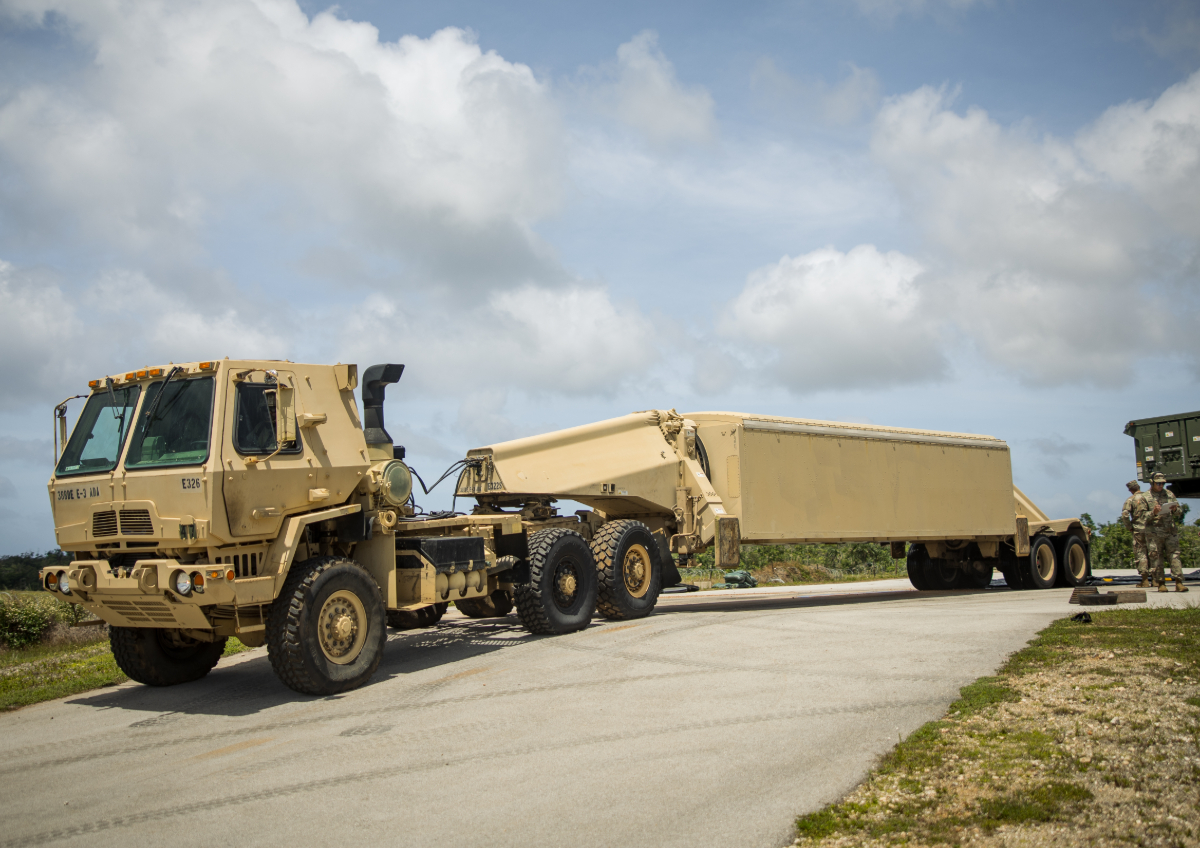
The Missile Defense Agency has extended Raytheon’s contract to operate and maintain the U.S. military’s AN/TPY-2 missile defense radars for two more years, adding $394 million to the deal and lifting its ceiling to nearly $3 billion, the Department of War announced.
The sole-source modification raises the maximum value of the contract from about $2.6 billion to $2.999 billion and keeps the ordering period open until Oct. 31, 2028, with $112.3 million in fiscal 2027 operations and maintenance, research and development, and procurement funds obligated at the time of award.
The AN/TPY-2 is a transportable X-band radar that sits at the heart of the Terminal High Altitude Area Defense system, better known as THAAD, and also serves as a standalone early warning sensor for U.S. ballistic missile defense. The radar can work in two ways: deployed far forward to spot ballistic missiles shortly after launch and pass tracking data to other defenses, or as part of a THAAD battery to track an incoming warhead and guide interceptors to hit it as it descends.
Under the extension, Raytheon will continue to run and support the radars from its facility in Woburn, Massachusetts, and at radar sites in the United States and overseas, where the company’s field teams help keep the sensors operating around the clock. The work combines cost-plus-incentive-fee, cost-plus-fixed-fee and firm-fixed-price contract items, and the Missile Defense Agency at Redstone Arsenal, Alabama, is also extending the task orders that fund individual radar sites.
The U.S. Army fields eight THAAD batteries, each with one AN/TPY-2 radar, including units at Fort Bliss, Texas, in South Korea and on Guam, while forward-based radars have been stationed at sites including the Shariki area in Japan, Türkiye, Israel and Qatar. The radar is also sold abroad, and in 2020 the Missile Defense Agency awarded Raytheon a production contract worth up to $2.3 billion for seven AN/TPY-2 radars for Saudi Arabia, built with gallium nitride components that extend the radar’s range and sensitivity.
The radars have come under direct fire during the war with Iran this year, and satellite images analyzed by CNN showed that a THAAD radar at Muwaffaq Salti Air Base in Jordan was apparently destroyed by an Iranian strike in early March, along with damage at radar sites near Prince Sultan Air Base in Saudi Arabia and in the United Arab Emirates. Each AN/TPY-2 costs hundreds of millions of dollars and takes years to build, which makes keeping the existing fleet working a priority for the Missile Defense Agency while new radars are produced.
The original contract was awarded to Raytheon on a sole-source basis in 2018 as the radar’s designer and builder, and the extension was likewise issued without competition. The new ordering period gives the Missile Defense Agency two more years to keep the current support arrangement in place before it decides how to handle long-term sustainment of the AN/TPY-2 fleet beyond October 2028.
Content preview only. Full article available at source. View Full Article
The Missile Defense Agency extended Raytheon's contract for the AN/TPY-2 missile defense radars by $394 million, raising the total contract value to nearly $3 billion. This extension allows Raytheon to continue operating and maintaining the radars until October 31, 2028, supporting eight THAAD batteries across various locations, including Fort Bliss and South Korea. The radars have faced damage during the ongoing conflict with Iran.
- Raytheon's contract for AN/TPY-2 radars extended by $394 million
- Total contract value raised to nearly $3 billion
- Contract ordering period extended until October 31, 2028
- Eight THAAD batteries fielded by the U.S. Army
- Radars have been damaged during the war with Iran