
2026 Taiwan Strait Military Aircraft Activity Decreases by 52%: How Mass Production of Taiwan's Ching Tien Missiles Changes PLA Pressure
 Li Minghui
How the Mass Production of Taiwan's Ching Tien Missiles Changes the Pressure on the PLA with a 52% Decrease in Military Aircraft Activity in the Taiwan Strait by 2026
An Easily Overlooked Numerical Change
Statistics released by Taiwan's defense department on September 19 show that from 6 AM the previous day to 6 AM that day, Taiwan detected 20 PLA military aircraft, 11 naval vessels, and 3 civilian ships, of which 13 military aircraft crossed the median line of the Strait. Looking at just the 20 aircraft, this is not an especially exaggerated number; however, when placed in the cumulative trend for 2026, the change becomes apparent. Public statistics indicate that the number of Chinese military aircraft entering Taiwan's air defense identification zone in the first seven months of this year has decreased by 52% year-on-year, while the activity of PLA naval vessels has only decreased by 7%.
This is not a "reduction in pressure" by the PLA, but rather an adjustment in the method of applying pressure. Deploying military aircraft requires pilots, maintenance windows, and significant training resources, while maintaining a naval presence around the Taiwan Strait is more suitable for creating low-intensity, long-duration gray zone pressure. A report from Taiwan News on September 19 also mentioned that as of that time in the month, Taiwan had recorded 175 instances of Chinese military aircraft activity and 186 instances of naval vessel activity.
Taiwan Shifts Response Focus to Unmanned Systems and Long-Range Firepower
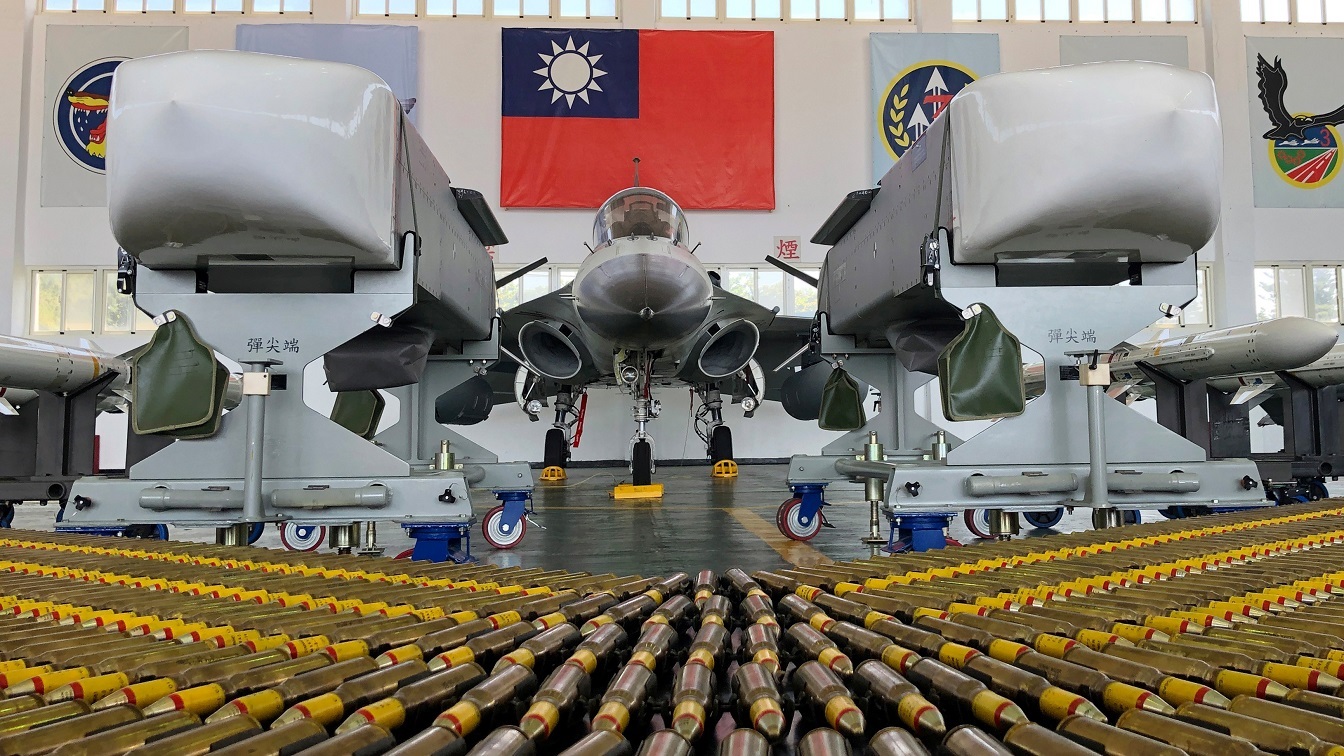
The Institute for the Study of War reported on September 11 that Taiwan's executive branch proposed an additional defense budget of approximately 145.7 billion New Taiwan dollars, of which about 55.9 billion New Taiwan dollars is allocated for unmanned systems. The plan includes over 600 reconnaissance drones, more than 40,000 attack drones, and over 100 small suicide unmanned boats. If the budget is approved by the legislative body, Taiwan's defense industry will receive funding to expand production earlier than the original long-term budget.
The same analysis also revealed that Taiwan's defense budget for the fiscal year 2027 has shown that the Ching Tien I has entered service and is in mass production, with a maximum range of about 1,500 kilometers and a speed of approximately Mach 3; the subsequent Ching Tien II is said to increase the range to about 2,000 kilometers and shift to mobile launch. However, public information on the number of missiles, hit accuracy, and survivability remains insufficient, and paper metrics cannot be directly equated with reliable wartime deterrence.
The Real Variable is Production Capacity, Not Individual Missiles
From the PLA's perspective, the combination of Taiwan's drones and long-range missiles does not increase the threat of a single weapon, but rather the target list and battlefield uncertainty. If the PLA intends to implement large-scale precision strikes, it must simultaneously consider fixed positions, mobile launch vehicles, dispersed drone production lines, and whether wartime communications can still be maintained. For the defender, 40,000 attack drones sound enormous, but the real challenge is whether navigation, data links, warheads, pilot training, and continuous replenishment can form a closed loop.
The author believes that the 52% decrease in military aircraft activity in the Taiwan Strait cannot be simply interpreted as a decrease in risk. On the contrary, the mere 7% decrease in naval activity indicates that a normalized maritime presence remains the main foundation; Taiwan is attempting to shift the costs to the aggressor using unmanned systems and long-range firepower. In simple terms, both sides are shifting from "how many platforms can be displayed" to "can we continuously exhaust the opponent." The question is whether the Ching Tien II can truly achieve mobile deployment, and how many of Taiwan's drone production lines will remain after a blockade and initial strikes; currently, there is no public evidence for either of these answers.
Sources
- Taiwan News, September 19, 2026, Taiwan military releases data on military aircraft and naval vessel activity in the Taiwan Strait.
- Institute for the Study of War, China & Taiwan Update, September 11, 2026, Taiwan's additional defense budget and Ching Tien missile analysis.
- GlobalMilitary.net, August 2026, trends in Taiwan Strait activities based on routine reports from Taiwan's defense department.
Chinese military aircraft and naval vessels operated in the Taiwan Strait on September 19, 2026, with 20 aircraft and 11 ships detected. Taiwan reported a 52% decrease in Chinese aircraft activity in its air defense identification zone this year, while naval activity decreased by only 7%. Taiwan is increasing its defense budget to enhance unmanned systems and long-range missile capabilities, including the Ching Tien missile, which is now in mass production.
- Chinese military aircraft activity in Taiwan's air defense identification zone decreased by 52% in the first seven months of 2026.
- Chinese naval vessel activity decreased by only 7%.
- Taiwan plans to increase its defense budget significantly, focusing on unmanned systems and long-range missiles.
- The Ching Tien missile is entering mass production with a range of approximately 1500 km.
- Taiwan's military strategy is shifting towards unmanned systems and remote firepower.