
U.S. Air Force tests drones for runway damage checks
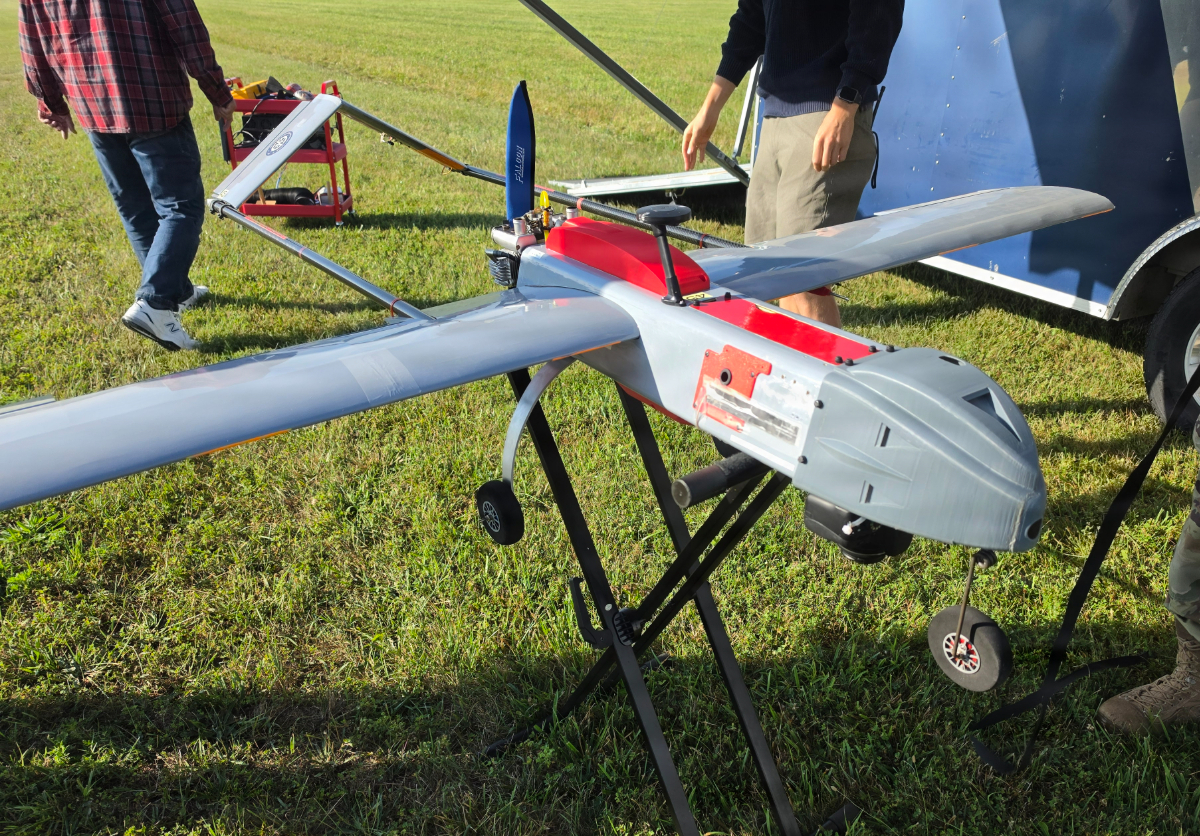
U.S. Air Force officers studying at the Air Force Institute of Technology (AFIT) are testing whether small drones can scout a damaged airfield before engineers walk onto it.
The research targets a job that still depends mostly on people. After an attack, U.S. Air Force civil engineers have to reopen runways while dealing with unexploded ordnance, possible chemical or biological contamination, cratered pavement and debris. AFIT says they often start without a clear picture of those hazards, which raises the risk to the engineers and slows the Air Force’s ability to get combat power back.
Today, airfield hazards are mostly spotted by eye. An engineer on the ground describes what they see over the radio, and command and control assembles the picture from those spoken reports. AFIT says the method works but is often slow or incomplete.
The drone project is led by Capt. Ross C. Jurek, a graduate engineering management student. His team of Civil Engineer graduate students, backed by faculty in developmental and digital systems engineering, builds on more than a decade of Air Force Civil Engineer work on airfield reconnaissance with small unmanned aircraft. This group adds a fixed-wing aircraft alongside multirotor systems. Jurek says drones can help airmen quickly map unfamiliar locations, assess runways and routes, identify hazards and build situational awareness before committing people and equipment.
The research is tied to two existing Air Force capabilities, Integrated Base Response and Recovery and Rapid Airfield Damage Repair, which underpin how the service recovers after an attack.
“The goal is to put the sensor into the uncertain environment first and get the best possible information to the decision-maker as quickly as possible,” said Capt. Ross C. Jurek.
The two aircraft types do different jobs. The multirotor, the focus of Jurek’s graduate research, can launch from almost anywhere, hover and change viewing angle. It can work through confined, unpredictable routes that Damage Assessment and Response Teams (DARTs) would otherwise have to enter physically first.
The fixed-wing aircraft is the subject of a separate developmental engineering project that Jurek runs with Capts. Peter Stobinski, Nicholas Rife and Spencer Peters. It gives up maneuverability for endurance and reach, and sweeps runways, taxiways and parking aprons for craters, spalls (broken chunks of pavement) and debris over much larger areas. AFIT says the two could work as layers, with one covering a wide area while the other inspects confined or hazardous spots.
“Speed, precision, and usability are key to this effort,” said Capt. Nicholas Rife, a systems engineering student on the fixed-wing team.
Jurek’s thesis, advised by Lt. Col. Daniel Weeks, sets drone reconnaissance against conventional DART routes on three measures: speed, accuracy and safety. It also evaluates the whole process, from mission planning and flight execution to camera coverage, imagery collection and the time an analyst needs to turn footage into a usable picture of hazards. AFIT says the case for fielding the drones ends if an aerial first look cannot get accurate information to Civil Engineer leaders faster than current DART methods.
The students are also asked to look past the aircraft. Their coursework follows an operational problem from concept through requirements, design and testing toward fielding, and it accounts for the sensor, the communications link, software, the training pipeline, approvals and the operator.
“The biggest impact is safer Airmen and faster, higher-quality information,” said Jurek.
AFIT did not say when Jurek’s thesis will be finished, what the tests have shown so far, which drones the team is using or whether the Air Force plans to field them. The research is ongoing.
Content preview only. Full article available at source. View Full Article
U.S. Air Force officers at the Air Force Institute of Technology are testing drones to assess airfield damage before engineers enter potentially hazardous areas. The project, led by Capt. Ross C. Jurek, aims to improve safety and efficiency in reopening runways after attacks. Two types of drones, multirotor and fixed-wing, are being evaluated for their ability to quickly map locations and identify hazards. The research is ongoing and focuses on enhancing situational awareness for Air Force operations.
- U.S. Air Force is testing drones for airfield damage assessment.
- Drones aim to improve safety and efficiency for engineers after attacks.
- The project is led by Capt. Ross C. Jurek at the Air Force Institute of Technology.
- Two types of drones are being tested: multirotor and fixed-wing.
- The research is ongoing and aims to enhance situational awareness.