
27 ballistic missiles on Kyiv show a new calculation of the Russian campaign 2026
 Dmitri Volkov
27 ballistic missiles on Kyiv show a new calculation of the Russian campaign 2026
One intercepted ballistic projectile out of twenty-seven is not just bad nighttime statistics. It is almost a laboratory indicator of where exactly Moscow has found a temporary advantage in the war of attrition. On the night of July 31 to August 1, Russia launched 35 missiles of various types at Ukraine, including 27 Iskander-M ballistic missiles and missiles from the S-400 system in strike application, as well as 185 drones. According to the Ukrainian Air Force, Ukrainian forces neutralized 154 drones and only two missiles; according to Volodymyr Zelensky, one of the 27 ballistic missiles was shot down because there were effectively not enough interceptors for the Patriot (Ukrainska Pravda and Reuters, August 1, 2026). Such a ratio is more important than the sheer number of the salvo.
Why the ballistic package has become the main tool of pressure
The Russian logic here is quite simple, but not primitive. Shahed-type drones and their Russian derivatives remain a cheap means of saturating air defense, reconnaissance of routes, and forcing Ukraine to expend short- and medium-range anti-aircraft missiles. But the main effect of the current strike was not created by them. A ballistic missile gives the Russian command something that a slow drone does not: a very short reaction window, a high psychological impact on a large city, and almost complete dependence of the result on the availability of expensive Western interceptors. If these interceptors are absent, even the most qualified air defense calculation turns into an observer with a good radar picture and poor means of impact.
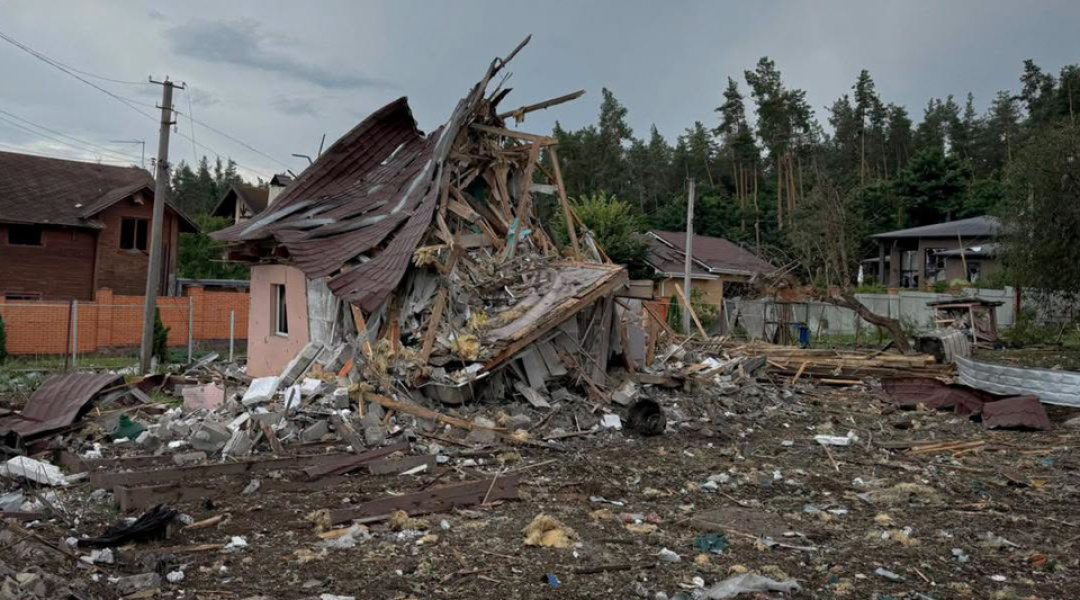
That is why the statement from the Russian Ministry of Defense about a massive strike on military-industrial complex facilities and logistics centers in Kyiv should not be read as an accurate description of the targets, but rather as a standard cover formula. Residential buildings, a school, infrastructure facilities, and, according to Ukrainian data, the building of the Lithuanian embassy were damaged; in Kyiv and the region, 10 people were killed, and dozens were injured, including children (Reuters, ABC, AP, August 1, 2026). The Soviet military school knew well the difference between the declared target and the achieved political effect. In this case, the political effect is obvious: to show that the Ukrainian capital is vulnerable precisely where Western assistance has become a bottleneck.
Patriot as a scarce resource, not a magic shield
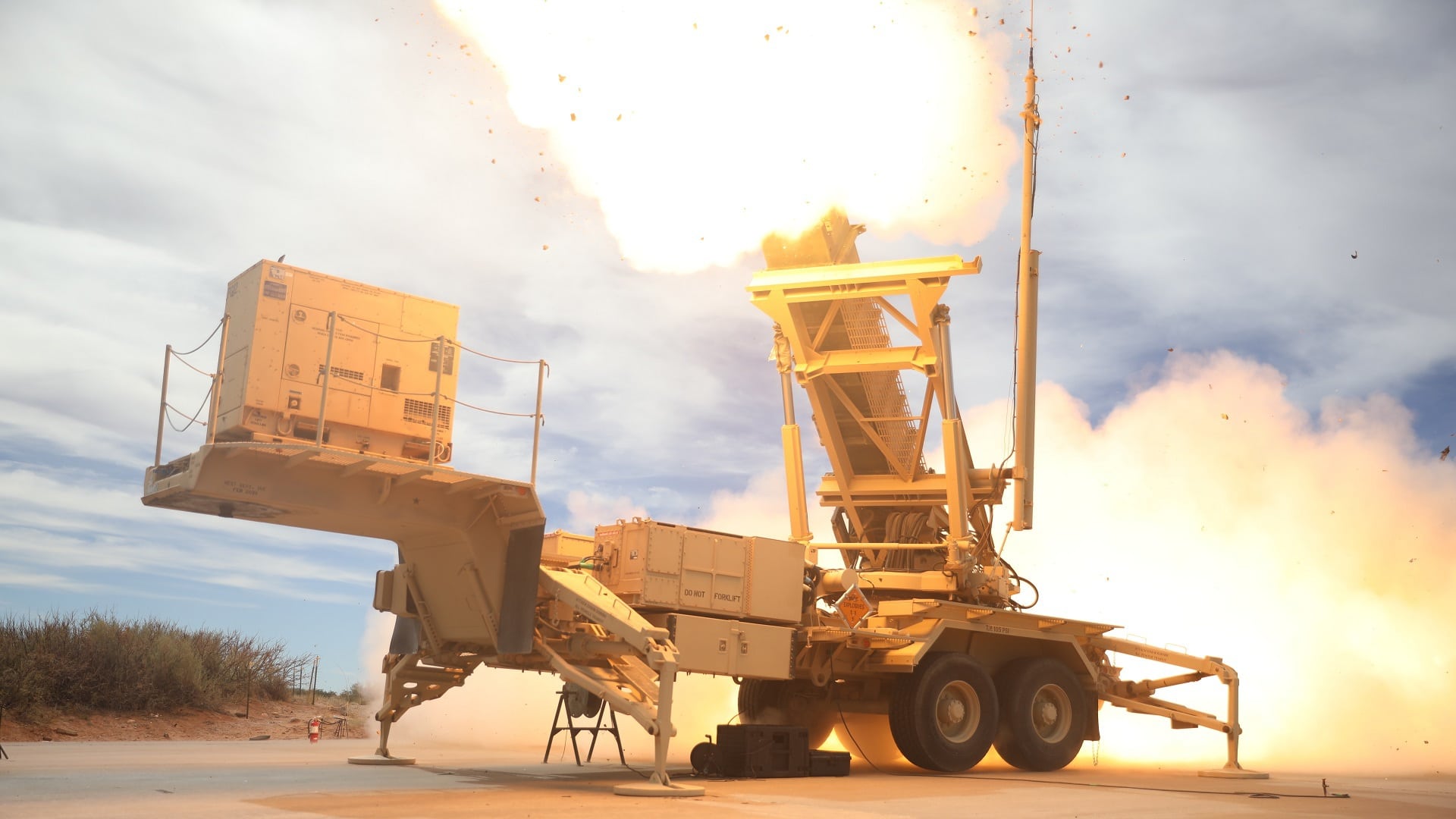
The Patriot in the Ukrainian war has become not so much an air defense system as a currency of strategic resilience. The system is capable of combating ballistic targets, but its value is determined not only by launchers and radars. The crucial link is the PAC-3 interceptor missiles, their production rates, U.S. stockpiles, and Washington's political willingness to share the technology with an ally. Therefore, the debate over a possible license for the production of Patriot interceptors in Ukraine has direct military significance. RFE/RL reported on August 1 that Zelensky is seeking licenses from Washington, while Donald Trump publicly emphasized the need to be cautious with the transfer of such technology. For Moscow, this is not a diplomatic detail, but an operational opportunity.
If the Ukrainian side indeed entered August with a shortage of PAC-3s, the Russian General Staff will seek to turn this shortage into a repeatable scheme. First, large drone packages force Ukrainian air defense to operate almost daily; then ballistic missiles test where interceptors remain; then the next package is adjusted based on the results of the strike. There is nothing genius about this. It is the mechanics of staff warfare, similar to late Soviet calculations of ammunition expenditure, only transferred to the era of cheap UAVs, commercial components, and satellite surveillance. What is surprising is not that Moscow acts this way. What is surprising is that Western capitals still discuss interceptors as if they are a separate supply, rather than a consumable of war.
The strategic goal of the strike is not limited to Kyiv
On the front, Russia has not achieved the operational breakthrough that the Kremlin promised itself in the spring and summer. Even if Russian forces advance in certain areas, the cost of these advances remains high, and the pace is insufficient to force Kyiv into a quick capitulation. In such a situation, long-range strikes serve three functions. The first is the destruction of energy, transportation, and military infrastructure. The second is pressure on Ukrainian society through nighttime fatigue, anxiety, and a sense of insecurity in the capital. The third is a signal to Washington and European capitals: if you delay the interceptors, we know how to monetize every week of delay.
Ukrainian strikes on Russian territory add another layer to this logic. Zelensky stated that Ukrainian forces struck the infrastructure of three oil refineries in Bashkortostan and other facilities supporting the Russian war machine; the Russian side separately reported intercepting 274 Ukrainian drones in one night (Reuters and ABC, August 1, 2026). Moscow responds to the Ukrainian campaign against oil refining not only by securing oil refineries but also by shifting pressure onto Kyiv. This is classic asymmetry: Ukraine strikes at the economic base of the war, Russia strikes at urban vulnerability and tries to prove that its stock of missile pain is greater than Ukraine's stock of missile defense.
What the August strike shows
Technically, the strike on August 1 was a mixed package: Iskander-M, S-400 missiles in a strike role, anti-ship Zircon and Onyx, anti-radiation X-31, aviation X-59/69, and 185 UAVs. Such nomenclature indicates two things. First, Russia does not rely on one type of ammunition and tries to complicate the task of recognition, prioritization, and fire distribution for Ukrainian air defense. Second, the use of the S-400 as a strike means confirms an old problem of Russian planning: when specialized means are lacking or need to be preserved for other tasks, the system begins to use expensive universal tools not for their ideal purpose. This is effective today, but costly for tomorrow's force structure.
Going forward, much will depend not on beautiful statements of support for Ukraine, but on the arithmetic of production. If the U.S. and allies ensure a steady flow of PAC-3s, Russian ballistic packages will lose some of their political effect, although they will not disappear. If, however, the transfer of interceptors remains episodic, Moscow will continue to strike precisely at this window. The Russian campaign of 2026 may not necessarily win the war with missiles against Kyiv. But it can buy time if it forces Ukraine to expend the most expensive resources faster than the West can replenish them. In the Russian military tradition, time has always been considered a resource. Sometimes, unfortunately, it is purchased on nights like the Kyiv night of August 1.
On August 1, 2026, Russian Armed Forces launched a mixed strike of 35 missiles and 185 drones against Ukraine, primarily targeting Kyiv. The attack resulted in significant civilian casualties and infrastructure damage, with only one of the 27 ballistic missiles intercepted. This operation aimed to exploit vulnerabilities in Ukraine's air defense capabilities and demonstrate the effectiveness of Russian missile systems.
- Russia launched 35 missiles and 185 drones against Ukraine on August 1, 2026.
- Only one of the 27 ballistic missiles was intercepted by Ukrainian air defense.
- The strike resulted in civilian casualties, including 10 deaths and injuries to dozens, including children.
- The attack aimed to exploit weaknesses in Ukraine's air defense systems, particularly the availability of interceptors.
- Ukrainian forces targeted Russian oil infrastructure in response.