
30 PLA Aircraft and 100 Naval Vessels Conduct Simultaneous Activities, Taiwan Strait Pressure Shifts from Military Drills to Normalized Control Measures
 Li Minghui
30 PLA Aircraft and 100 Ships Conduct Simultaneous Activities, Pressure in the Taiwan Strait Shifts from Military Exercises to Normalized Control
On November 13, Taiwan reported detecting 30 PLA aircraft and 11 naval vessels within 24 hours, of which 23 aircraft crossed the so-called median line of the strait or entered airspace defined by Taiwan. Almost simultaneously, Reuters cited Taiwanese officials stating that China conducted military activities in the Western Pacific without prior notice, with the number of related vessels and government ships estimated to exceed 100. The numbers are significant, but what truly warrants analysis is why these actions are dispersed across different maritime areas and formations.
From a Single Exercise to Multi-Point Coordination
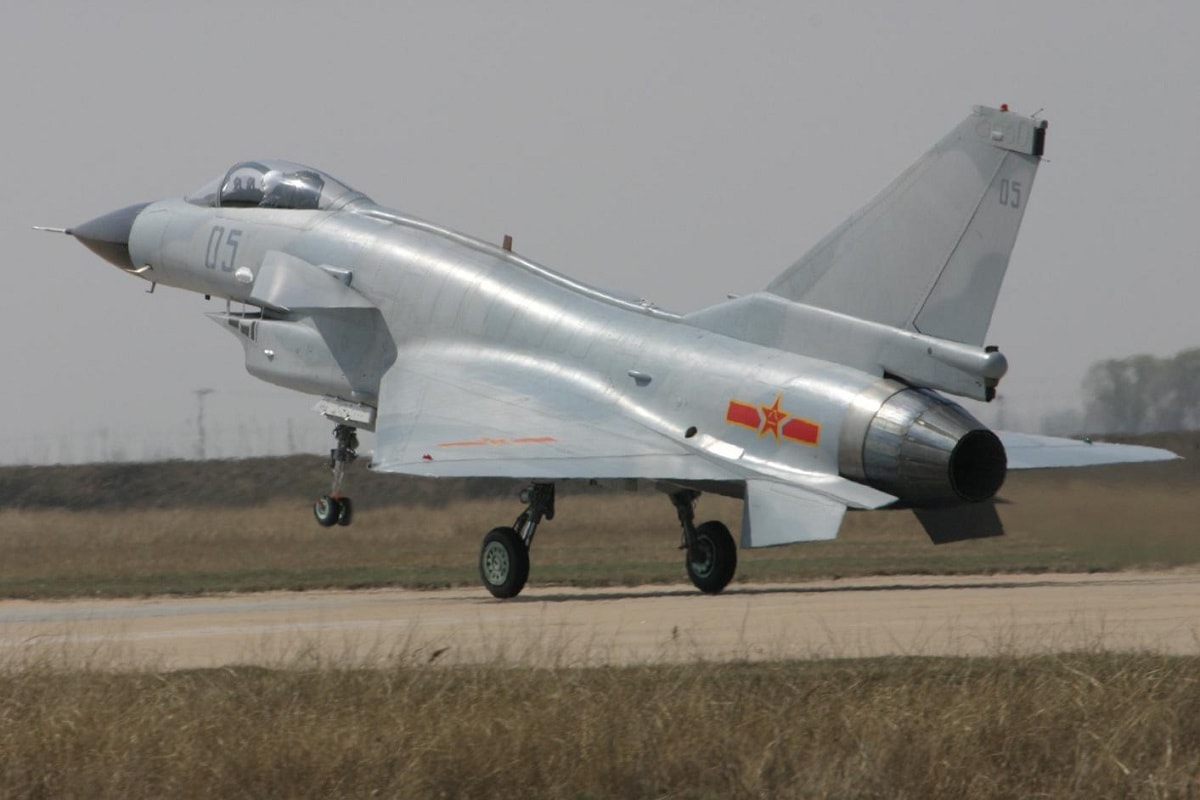
Public reports indicate that this round of activities did not adopt the typical exercise format of starting and ending on specific dates, but rather involved military aircraft conducting patrols, naval formations, coast guard vessels, and other government ships operating separately. The 30 aircraft reported by Taiwan do not equate to 30 planes being deployed simultaneously, and the 100 vessels may not all belong to the PLA Navy; these two figures are based on different statistical criteria and cannot be simply added together. However, from an operational perspective, aerial reconnaissance, maritime vigilance, long-range navigation, and law enforcement vessels accompanying these actions are increasingly resembling a repeatable pressure test.
This reflects a change in the PLA's training methods in recent years. In the past, external observers tended to focus on the individual capabilities of aircraft carriers, destroyers, or fighter jets; now, the more important factor is whether these platforms can quickly form networks without long-term mobilization signals. Military aircraft are responsible for expanding surveillance, surface vessels maintain maritime presence, while coast guard and government ships push the boundaries of military action into law enforcement and gray areas. In simple terms, the cost of pressure in the Taiwan Strait is shifting from a concentrated investment in a large-scale military exercise to a continuous consumption of multiple batches with low visibility.
Actual Impact on Taiwan's Defensive Depth
If we only consider the 30 aircraft, the Taiwanese Air Force can still intercept and identify them by sorties; however, when aerial activities coincide with the eastern side of Taiwan, the Bashi Channel, and even further into the Western Pacific routes, the defense issue is no longer a simple air defense matter. Taiwan must assess which are reconnaissance and deterrence missions, and which formations may provide cover for subsequent maritime control. The frequency of air defense aircraft sorties, the continuous operation time of ground radar, and the patrol cycles of naval vessels will all be forced to extend.
The lack of prior notice mentioned by Reuters is particularly noteworthy. Lack of prior notice does not mean the PLA is completely unprepared, but rather compresses the warning time to a level where Taiwan finds it difficult to adjust deployments based on political signals in advance. For the PLA, this can test routine combat readiness, inter-service communication, and maritime resupply; for Taiwan, it means that reliance solely on exercise warnings and satellite surveillance to arrange troop deployments is insufficient. The United States and Japan will also pay attention to such actions, as once the eastern waters of Taiwan are continuously included in surveillance and patrol ranges, the safety assumptions of reinforcement routes need to be recalculated.
Judgment on Blockade Exercises Still Requires Flexibility
Some reports directly describe the 100 vessels as a rehearsal for a blockade of the Taiwan Strait; this judgment has some logic, but current public information is insufficient to prove that the PLA has conducted a complete blockade exercise. A blockade requires a stable command chain, continuous resupply, anti-mine capabilities, long-range air defense, and identification control over commercial shipping traffic; having many ships is only one necessary condition, not a sufficient one. It is especially important to distinguish between main battle naval vessels, coast guard ships, local government vessels, and commercial ships, as their missions and wartime availability differ.
I believe this round of actions resembles a test of a normalized control template with low notice, multi-directional, and mixed formations, rather than a fully formed invasion exercise. Its political signal is also clear—before and after important diplomatic meetings, Beijing can create a military presence without announcing large-scale military exercises, while simultaneously raising the costs of Taiwan's response. What truly warrants further inquiry is whether the next similar action will further incorporate long-range missile units, drone swarms, or maritime resupply nodes; if these elements emerge, how much of a boundary remains between routine patrols in the Taiwan Strait and the prelude to a crisis?
References
- Reuters, November 13, 2026, report on China's unannounced military activities in the Western Pacific.
- Taiwan News, November 13, 2026, report on Taiwan detecting 30 Chinese military aircraft and 11 ships.
- Institute for the Study of War, "China & Taiwan Update," November 13, 2026.
- Daily updates from Taiwan's defense department on PLA aircraft and ship activities.
On November 13, 2026, the People's Liberation Army (PLA) conducted simultaneous military activities involving 30 aircraft and over 100 vessels in the Taiwan Strait and Western Pacific. These operations included crossings of the median line and incursions into Taiwan's airspace, indicating a shift from traditional military exercises to a sustained presence aimed at increasing pressure on Taiwan. Taiwan's defense strategy is challenged as it must assess the nature of these activities and adapt accordingly.
- 30 PLA aircraft detected in the Taiwan Strait
- 100 vessels, including military and coast guard ships, reported in the Western Pacific
- Activities included crossing the median line and entering Taiwan's airspace
- Military operations are transitioning from exercises to a normalized state of pressure on Taiwan
- Taiwan must adapt its defense strategy in response to these activities.