
300 Ground Self-Defense Force Personnel Deploy Type 88 Launchers in Training on the Sakishima Islands, Testing Japan-U.S. Command Systems
 Tanaka Takashi
Ground Self-Defense Force Deploys 88-Type Launchers and Tests Japan-U.S. Command Structure in Sakishima Islands Training
The vehicles of the Ground Self-Defense Force that arrived at Ishigaki Port clearly demonstrate the nature of this training. According to Yomiuri Shimbun, the GSDF began a six-day joint training exercise on the three islands of Miyako, Ishigaki, and Yonaguni in Okinawa Prefecture starting May 17. The scale of participation includes about 300 GSDF personnel gathered from across the country and approximately 20 U.S. Marines stationed in Okinawa. Rather than being large-scale, this training should be viewed as a focused exercise on movements that are truly necessary in the southwestern region.
The Significance of the 88-Type Launcher in Ishigaki
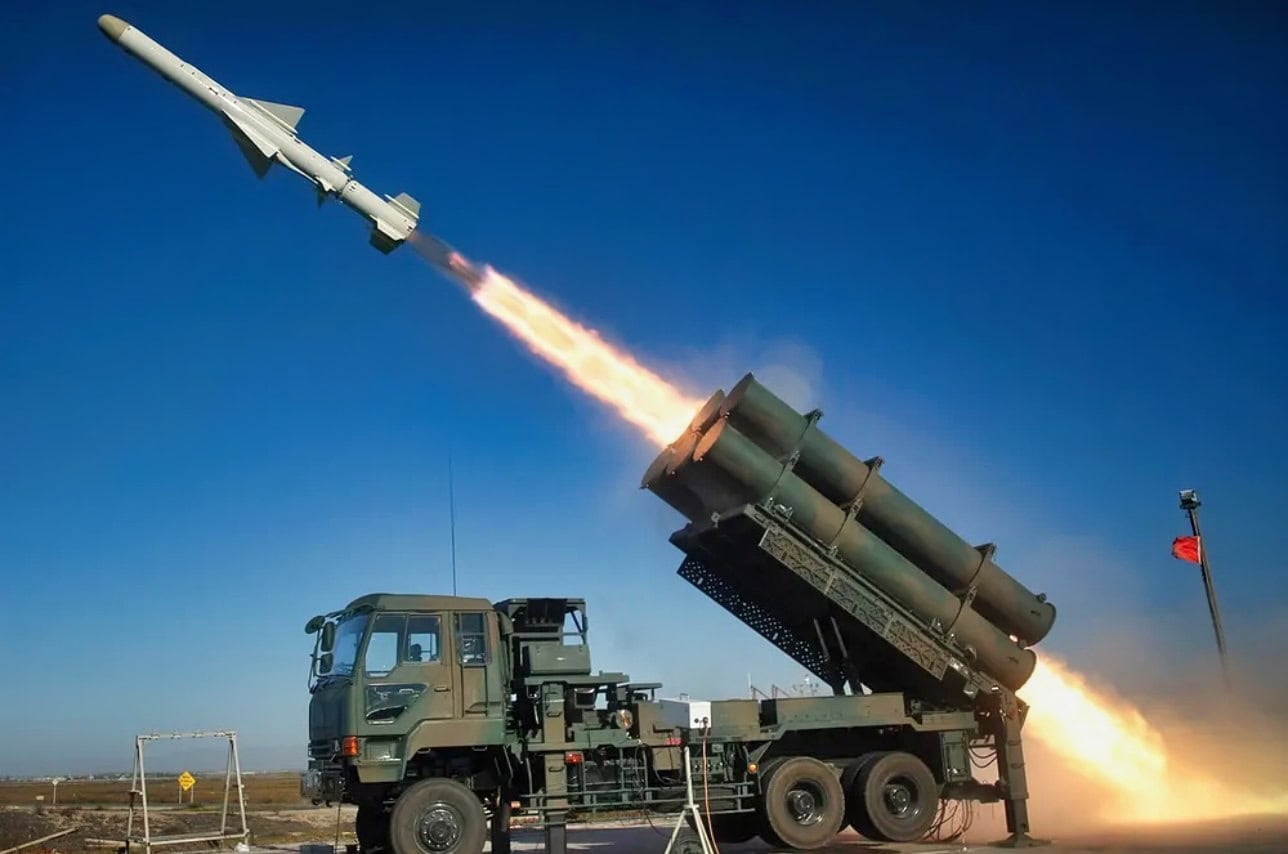
Noteworthy is the inclusion of the deployment of the 88-Type anti-ship guided missile launchers and logistics transport in the training items on Ishigaki Island. The 88-Type is an older piece of equipment compared to the new 12-Type enhanced version, and discussions about its range and guidance methods tend to be understated. However, in island defense, the core capability lies not just in whether the equipment is old or new, but in the ability to move the launchers from the port to the positions, conceal them, resupply them, and keep them operational for the necessary duration.
When considering the defense of the southwestern islands on paper, attention is often drawn to missile range and warhead weight. However, on the ground, the priority comes from coordinating the use of civilian ports, road widths, fuel, communications, and resident evacuations. The government's plan to evacuate approximately 120,000 residents of the Sakishima Islands to Kyushu and Yamaguchi in the event of an emergency also points to the same issues. The launchers and evacuation transport are not separate matters; they compete for the same port, the same roads, and the same time.
Coordination Center in Miyako and 20 U.S. Marines
A joint coordination center for Japan-U.S. operations has been established on Miyako Island, where command structure operations are said to be trained. The participation of the U.S. Marines is limited to about 20 personnel. However, this small number should not be underestimated. In the southwestern region, the focus in actual combat will be on how quickly the U.S. military can establish points of connection for information, communications, firepower coordination, and logistics, rather than maintaining large forces on the front lines.
From the perspective of someone with a background in the Maritime Self-Defense Force, this training is not solely about the GSDF. The line connecting Ishigaki, Miyako, and Yonaguni runs along the flank of the SLOC (Sea Lines of Communication) that extends from the East China Sea to the east of Taiwan and further into the Philippine Sea. The anti-ship missiles do not close the strait; rather, they buy time for the MSDF, ASDF, and U.S. forces to move. This is where the practical significance of this training lies.
Unmanned Reconnaissance Aircraft and Changes in Combat Methods in Yonaguni
On Yonaguni Island, flight training for unmanned reconnaissance aircraft is planned. A revision proposal for the security document by the Liberal Democratic Party, reported by Yomiuri Shimbun on May 16, pointed out that the combat landscape is beginning to change with the use of unmanned systems and AI for "new methods of warfare." This training is an effort to translate that abstract policy document into the island's terrain.
However, simply flying unmanned aircraft does not immediately improve situational awareness. The imagery from small aircraft is affected by weather, radio signals, and terrain. Furthermore, who interprets the information obtained, who connects it to shooting decisions, and who avoids conflicts with civilian vessels and evacuation actions are critical questions. If these issues are not addressed, unmanned aircraft may not reduce the burden on the field but could instead increase delays in decision-making.
Field Operations Moving Ahead of Institutional Reforms
Interestingly, the same week, there were reports of proposals to align the Self-Defense Forces' rank titles more closely with international standards. UPI reported on May 17 that the Ministry of Defense is moving towards changing the titles for generals, colonels, and lieutenants through the 2027 budget request and amendments to the Self-Defense Forces Law. This is a symbolic reform, but the training in the Sakishima Islands is outpacing institutional changes at a much faster rate.
In a crisis, the speed at which orders, information, and supply requests reach the other party at the joint coordination center is far more critical than aligning rank names with English.
The term "deterrence" with China in mind often resonates loudly in Tokyo. However, in the Sakishima Islands, it breaks down into small, cumbersome issues such as where to position the 88-Type launchers, which terminal to connect the 20 U.S. Marines to, and how to avoid interference with the evacuation plans for 120,000 people. In my view, the value of this training lies there.
The remaining risks are clear. The training will conclude in six days, but the friction of an emergency will not end in six days. The true weakness lies not in the number of missiles but in the political procedures for simultaneously utilizing the limited transportation capacity of the islands for operations, logistics, and resident protection.
Sources
- The Japan News, 17 May 2026, GSDF training on Sakishima Islands.
- The Japan News, 16 May 2026, LDP recommendation on security document revision.
- UPI, 17 May 2026, Japan plan to restore military-style SDF ranks.
Japan Ground Self-Defense Force conducted a joint training exercise with U.S. Marine Corps on Ishigaki, Miyako, and Yonaguni islands from May 17, 2026, for six days. The exercise involved the deployment of Type 88 anti-ship missile launchers and coordination of command systems. Approximately 300 Japanese personnel and 20 U.S. Marines participated, focusing on logistics and operational readiness in the region. Plans for civilian evacuation were also addressed during the training.
- 300 Japan Ground Self-Defense Force personnel and 20 U.S. Marines participated in the exercise.
- The exercise took place on Ishigaki, Miyako, and Yonaguni islands in Okinawa Prefecture.
- Type 88 anti-ship missile launchers were deployed during the training.
- The training included coordination of command systems between Japanese and U.S. forces.
- Plans for civilian evacuation in case of emergency were discussed.