
30,000 North Korean Soldiers for Russia Show the Personnel Limit of War 2026
 Dmitri Volkov
30,000 North Korean Soldiers for Russia Indicate the Personnel Limit of War 2026
The difference between 221,000 recruits and nearly 225,500 losses over the year looks small only on paper. Four and a half thousand people is not an army, but several battalions. However, it is in this difference that the main problem of the Russian military machine in the summer of 2026 is visible: it is still capable of drawing people into the war, but it can no longer do so with the previous political and financial quietness. Vladimir Zelensky's statement on July 25 that Russia is preparing to accept another 30,000 servicemen from North Korea in the Voronezh region should be read not as an exotic news item about Pyongyang, but as an indicator of a shortage in the Russian recruitment system itself (Kyiv Independent, July 25, 2026; Reuters via Google News, July 25, 2026).
Numbers That Break the Familiar Rhetoric
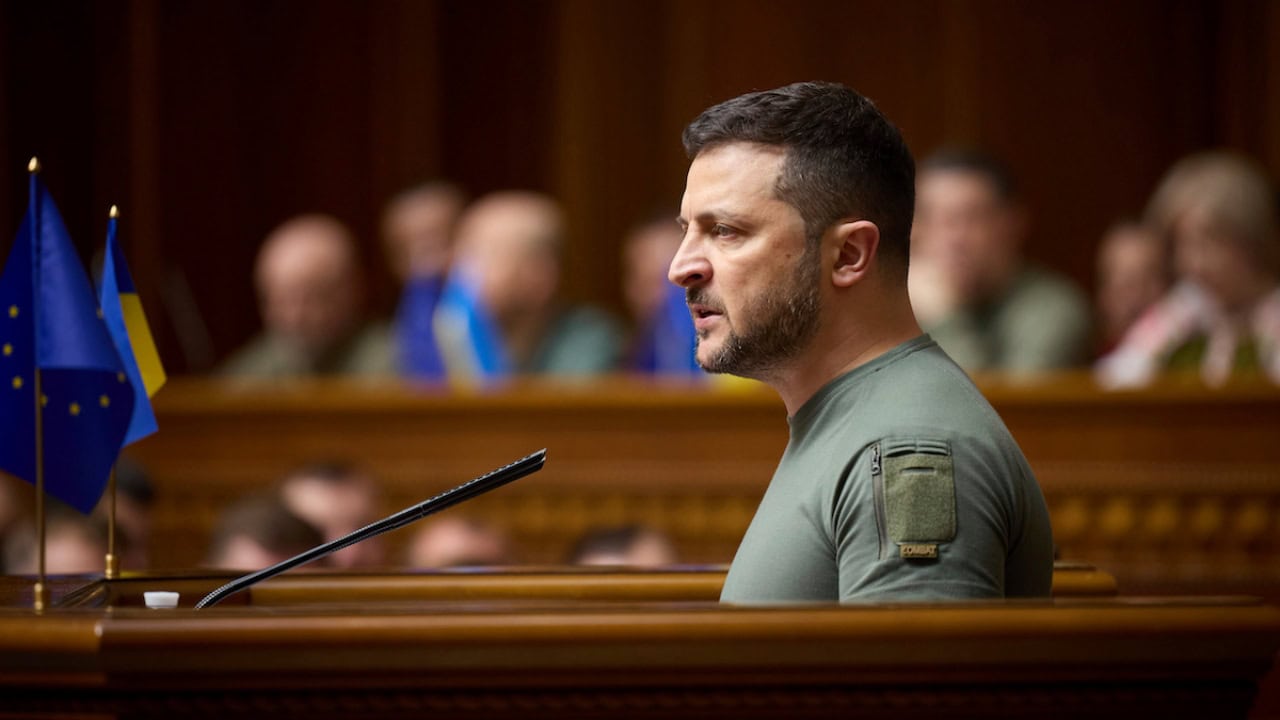
According to data provided by Zelensky, citing Ukrainian intelligence, Russia has recruited 221,000 people into its armed forces since the beginning of 2026, while losses during the same period amounted to nearly 225,500, including 131,000 killed and about 93,000 wounded. The Ukrainian General Staff separately reported on July 26 about 1,438,990 Russian losses since February 2022 and 1,440 losses in the last day. These figures require caution: Kyiv is a warring party, and Moscow systematically does not disclose its real losses. However, what matters is not absolute accuracy down to the last person, but the ratio of inflows. Even if Ukrainian estimates are significantly inflated, the very logic of a war of attrition becomes less convenient for Russia: the voluntary-contract model ceases to provide the reserve that allowed the Kremlin to simultaneously avoid large mobilizations in the capitals and maintain pressure on the front.
In Soviet military literature, it was often said that the mobilization resource is not only demographics but also organization. Today, this formula is returning in an unpleasant form for Moscow. Russia's demographics have not disappeared, but the organization of their use is becoming more expensive. Regional payments to contractors in 2024-2025 have already created a kind of internal market for military labor, where poor federal subjects competed with rich ones, and the federal center bought social silence through monetary bonuses. By the summer of 2026, this market shows signs of saturation. If in the first three months of the year, according to previous reports from Ukrainian intelligence and estimates by Janis Kluge from SWP, there were fewer contracts than in the same period of 2025, the problem is not in one month or in poor advertising from military enlistment offices. The problem is that the margin of human resources is falling: each subsequent contract costs more, and the political risk of coercion is increasing.
Why the North Korean Contingent
The claim about preparing to accept 30,000 North Korean servicemen in the Voronezh region has not yet been confirmed by independent visual evidence in the public domain. But it fits well into the already visible trajectory of Russian-North Korean military exchange. Ukraine previously stated that about 12,000 North Korean soldiers participated in Russian operations in the Kursk region in 2024. Now it is not about a symbolic political gesture or a few engineering units, but about a scale comparable to a full operational reserve for one front direction. Thirty thousand people do not determine the outcome of the war, but they can close several unpleasant gaps: rear security, replenishment of exhausted units, assault groups in secondary areas, engineering work, maintenance of warehouses, and possibly limited participation in combat operations.
For Russia, the attractiveness of such a scheme is obvious. A North Korean soldier does not require a regional payment at the level that Russian contractors are currently forced to promise. His death does not create immediate social pressure in Belgorod, Irkutsk, or Tatarstan. His training and ideological processing are outside the Russian bureaucratic system, meaning Moscow receives not so much quality as a manageable expendable resource. There is a grim continuity with the Soviet practice of using allied regimes as a strategic buffer, only now the buffer supplies not territory but people. The difference is significant: the USSR exported security to clients, while today's Russia imports soldiers from one of the most isolated states in the world.
The Voronezh Node and the Logistics of a Foreign Army
The mention of the Voronezh region is important. This is not a random geographical detail. Voronezh is far enough from the front line to be used as a rear reception area, and close enough to the Ukrainian theater to quickly distribute personnel further — to the Kursk, Belgorod, Luhansk, or Donetsk directions. But the logistics of a foreign contingent do not boil down to railway convoys. Translators, communicators, medical sorting, a unified supply system, rules of subordination, information filtering, and separate counterintelligence work are needed. The Russian army, which struggled to integrate the mobilized from 2022 into existing units, now has to integrate units with a different doctrine, language, disciplinary culture, and combat experience.
Here a paradox arises. The North Korean army is disciplined, but its training has been built for decades around the defense of the Korean Peninsula, massed artillery, fortified areas, and political control. The Ukrainian front of 2026 is a field where drones, electronic warfare, distributed artillery, and small assault groups destroy any large and poorly camouflaged formations. If North Koreans are thrown into assaults according to Russian templates, losses will be rapid. If they are used as a rear and engineering resource, the military return will be lower, but the political cost for Moscow will be more acceptable. Therefore, the most likely model is mixed: part of the personnel will go for support and security, while part will take on limited combat tasks after a short adaptation.
Pyongyang Gains More Than Currency
For North Korea, this deal, if it occurs on the stated scale, is valuable not only in money, food, or technology. Zelensky separately warned that North Korea is preparing to transfer additional launchers for ballistic missiles to Russia, while Moscow is helping Pyongyang gain real combat experience. This is a key point. Combat experience cannot be bought from a catalog; it is gained through blood, mistakes, and adaptation. North Korean officers observing the Russian war against Ukrainian air defense, drones, and Western intelligence systems return home with material that is directly applicable to planning on the Korean Peninsula. For Seoul and Tokyo, this is not a Ukrainian periphery but a future problem for their own security.
Russia, in turn, pays for people and ammunition not only with raw materials or diplomatic protection. It pays with the transfer of tactical knowledge, possibly — technical consultations on missiles, air defense, satellite communications, and ammunition production. This is why this story goes beyond the Ukrainian front. A market of military interdependence is forming between states under sanctions pressure, not an alliance of equals. And the longer the war demands people, shells, and missiles from Russia, the more Moscow will be forced to pay with technologies and experiences that in the Soviet tradition were considered too valuable for such partners.
What This Says About Russian Strategy
The Kremlin is likely not facing an immediate personnel collapse. That would be too simple and therefore incorrect an explanation. Russia still has a large demographic reserve, an extensive system of coercion, and money to buy contracts, albeit at an increasing price. But the emergence of the North Korean component means something else: Moscow seeks to maintain the intensity of the war without transitioning Russian society into a mode of open mass mobilization for as long as possible. Internal mobilization is postponed not because it is impossible, but because it is politically more expensive than importing a manageable foreign resource.
If the data about 30,000 North Korean servicemen is confirmed, it will not be a sign of the strength of the Russian coalition, but an accounting record of a deficit that the Kremlin prefers to cover outside its own social system.
In the coming months, attention should be paid not only to whether North Koreans appear on the front lines but also to Russian regional payments, age limits for contractors, the activity of military enlistment offices, and the relocation of training bases in the western regions of Russia. It is these mundane indicators that will reveal more than loud statements. The Russian army will continue to fight, but it will increasingly do so at the expense of a combination of money, coercion, and external human imports. Such a system can last a long time. Its weakness will not manifest in one dramatic day, but in a gradual decline in troop quality, an increase in dependence on partners, and an expansion of the war beyond the Ukrainian theater.
North Korea is preparing to send 30,000 soldiers to Russia, as reported by Ukrainian intelligence in July 2026. This move indicates a significant shift in Russia's military strategy, reflecting challenges in domestic recruitment and the need for foreign troops. The North Korean contingent is expected to support various military operations in the region, particularly in Voronezh Oblast.
- Russia has recruited 221,000 soldiers since the beginning of 2026, while losses are reported at nearly 225,500.
- Ukrainian intelligence claims that 30,000 North Korean soldiers are being prepared for deployment in Voronezh.
- The North Korean soldiers are expected to fill gaps in Russian military operations.
- The report highlights a significant issue in Russia's military recruitment and mobilization strategy.