
China's 24-Hour Taiwan Strait Live Fire Exposes Median Line Fatigue
 Marcus Chen
China's 24-Hour Taiwan Strait Live Fire Exposes Median Line Fatigue
Twenty-six Chinese military aircraft crossed Taiwan Strait median line sectors in two reporting periods around Beijing's latest live-fire notice. That is the number that matters more than the shells fired near Dongshan Island.
China's Zhangzhou Maritime Safety Administration announced two live-fire windows from 6 a.m. to 6 p.m. on July 23 and again from 6 a.m. to 6 p.m. on July 24 in waters off Dongshan Island, Fujian. The South China Morning Post, citing the notice coordinates, reported that the zones sat within roughly 12 kilometers, or 7.4 miles, of the mainland coast. Reuters described the drill as taking place in parts of the Taiwan Strait near Fujian. Beijing's Global Times framed the exercise as routine training and a warning to Taiwan independence forces.
Routine is doing too much work there.
The Drill Area Was Small But the Signal Was Not
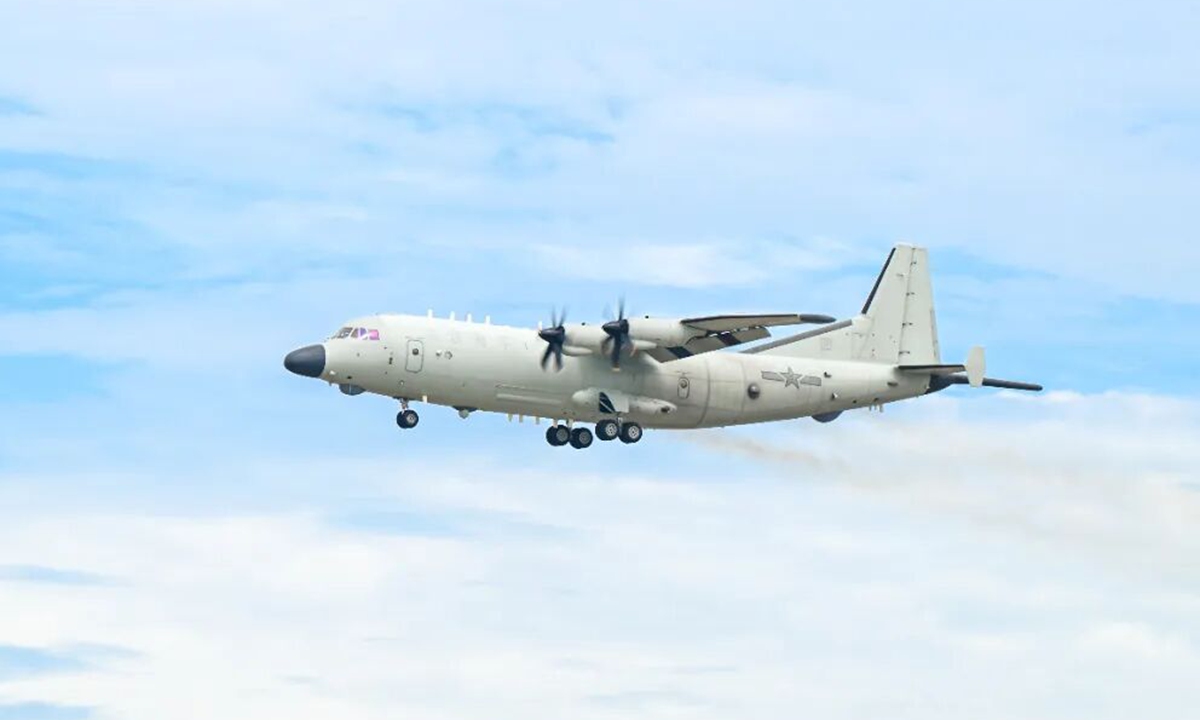
On paper, a nearshore live-fire zone south and east of Dongshan Island is not a blockade rehearsal. It is not an amphibious landing rehearsal either. The exercise area was close to Fujian, and on Friday the announced rectangle was even closer to Dongshan's coastline. No serious military planner would confuse that with a full encirclement operation around Taiwan.
But Taiwan does not experience these events as isolated notices. Its Ministry of National Defense said it tracked 21 PLA aircraft, six PLA Navy vessels and two official ships around Taiwan between 6 a.m. Wednesday and 6 a.m. Thursday. Twenty of those 21 aircraft crossed the median line in Taiwan's northern and southwestern air defense identification zone. In the next reporting period, Taiwan tracked eight aircraft, six naval vessels and four official ships; six aircraft crossed the median line in northern, southwestern and eastern ADIZ sectors.
That makes the operational picture sharper. Beijing fired live rounds in declared coastal zones while maintaining air and maritime pressure around Taiwan. The guns were not the main event. The main event was scheduling Taiwan's air force, navy and missile crews into another forced response cycle.
Median Line Crossings Are Now a Readiness Tax
The median line used to be a useful crisis-management buffer. It was never a treaty border, but it reduced the number of tactical decisions pilots had to make under stress. Beijing has spent years making that buffer less usable. A single crossing no longer shocks anyone. Twenty crossings in a day do something more practical: they impose cost.
Every intercept decision burns pilot hours, fuel, maintenance capacity and command attention. Taiwan can respond with combat air patrols, naval shadowing and coastal missile readiness, as it said it did during the July 23 and July 24 activity. But response is not free. Fighter aircraft need inspection cycles. Air defense crews need rotation. Radar operators get tired. Ships at sea consume parts and fuel faster than ships at the pier.
That is the logic of a readiness tax. China does not need to start a war to make Taiwan spend readiness. It can keep shifting the baseline until what once looked like an incident becomes another Wednesday morning watch bill.
Anyone who has stood a combat information center watch on a destroyer understands the difference between seeing a track and living with the track. A symbol on a screen is easy to brief. A contact that keeps changing bearing, crossing a political line and forcing commanders to decide whether this one is different is harder. Multiply that over weeks, and the problem becomes endurance.
The Geography Favors Pressure From Fujian
Dongshan Island sits in southern Fujian near the entrance to the Taiwan Strait. It is close enough to mainland military infrastructure that China can announce short training windows, control the range, and keep logistics simple. The narrowest part of the Taiwan Strait is roughly 130 kilometers across. From Fujian's coast, Beijing can stage air, missile, maritime militia, coast guard and navy activity without putting every asset at the edge of its sustainment envelope.
That matters. Long-range power projection is hard. Nearshore coercion is cheaper. A 12-hour live-fire window near Dongshan does not require a carrier strike group. It does not require tankers orbiting deep in the Pacific. It requires range control, ammunition, airspace coordination and the political willingness to make commercial shipping and Taiwan's defense establishment adjust.
The equipment mix around Taiwan also tells the story. Taiwan News, citing the MND, reported that Taiwan deployed aircraft, naval ships and coastal-based missile systems to monitor the PLA activity. Those are the right tools for the job, but they are also the tools Taiwan would need in a real crisis. If Beijing can make Taipei cycle them repeatedly for gray-zone events, it gains data. It watches response times, sensor activation patterns, sortie habits and command discipline.
Washington Has a Math Problem Too
The United States has spent years telling Beijing that coercion against Taiwan will carry costs. That message is credible only if the U.S. military can arrive with useful combat power quickly enough and sustain it long enough. Median line fatigue complicates that assumption.
A carrier in the Philippine Sea can send a signal. A destroyer transit can send a signal. None of that erases the fact that Taiwan's first hours are Taiwan's hours. If China compresses warning by mixing live-fire notices, air incursions and maritime pressure, Washington may not get the clean decision window it wants. It may get a cluttered operating picture where every event looks just below the threshold until it does not.
That is why this drill deserves attention despite its limited geography. The People's Liberation Army did not need to demonstrate a new missile. It did not need to reveal a new ship. It demonstrated a process: announce a nearshore firing zone, push aircraft across the median line, keep ships and official vessels around Taiwan, and force Taipei to react without giving Washington a neat crisis label.
What To Watch Next
The key indicator is not whether China announces another exercise. It is whether the combined pattern becomes denser. Watch for three things: larger live-fire boxes farther from Fujian, more simultaneous pressure in Taiwan's eastern ADIZ, and official Chinese vessels operating in ways that force Taiwan to divide navy and coast guard attention.
The eastern piece is especially important. Taiwan can survive pressure from the west. It has planned for that problem for decades. Pressure that regularly reaches the east complicates dispersal, resupply and the assumption that Taiwan's far side remains a relative sanctuary. Even a small number of aircraft crossing into eastern ADIZ sectors is worth tracking if it becomes routine.
Beijing's July 23-24 drill was not the opening move of a war. It was something more patient and, in some ways, more useful to China. It made Taiwan spend readiness in response to a limited event. It rehearsed the administrative mechanics of closing water and airspace. It reminded U.S. planners that deterrence in the Taiwan Strait is not just about how many ships INDOPACOM can surge after a crisis starts.
The math is ugly. China can generate pressure from its own coastline. Taiwan has to answer from a much smaller force. The United States has to cross an ocean, then operate inside missile range. A 24-hour live-fire drill near Dongshan Island does not change that balance by itself. It shows how Beijing intends to keep charging interest on it.
Sources
- Reuters reported China's announcement of two days of live-fire drills in the Taiwan Strait near Fujian on July 23.
- The South China Morning Post mapped the announced Dongshan Island zones and reported that they stayed within roughly 12 kilometers of the mainland coast.
- Taiwan News, citing Taiwan's Ministry of National Defense, reported PLA aircraft and ship counts around Taiwan on July 23 and July 24.
- Global Times cited China's Maritime Safety Administration notice and Chinese commentary describing the drills as routine training and a warning.
The People's Liberation Army (PLA) conducted live-fire drills near Dongshan Island, Fujian, on July 23-24, 2023, with 26 military aircraft crossing the Taiwan Strait median line. Taiwan's Ministry of National Defense tracked 21 PLA aircraft and 6 naval vessels during this period, indicating increased military pressure. The drills were characterized as routine training by Beijing, but they imposed significant operational costs on Taiwan's defense forces.
- 26 Chinese military aircraft crossed the Taiwan Strait median line in two reporting periods.
- Live-fire drills were conducted near Dongshan Island, Fujian.
- Taiwan tracked 21 PLA aircraft and 6 naval vessels around Taiwan during the drills.
- The drills were framed by Beijing as routine training and a warning to Taiwan.
- The exercises imposed a readiness tax on Taiwan's military forces.