
"4,100 Japan Maritime Self-Defense Force Personnel Participate in Variant Shield 26, Japan-U.S. Alliance Moves Toward Multi-Domain Air Defense"
 Tanaka Takashi
4,100 Personnel from the Japan Maritime Self-Defense Force Participate in Valiant Shield 26, Japan-U.S. Alliance Moves Toward Multi-Domain Air Defense
On June 21 in the Philippine Sea, the U.S. aircraft carrier George Washington strike group and Japan's Maritime Self-Defense Force vessels sailed in formation with wide spacing rather than in a single line. The description of photos showing U.S. Navy aircraft and U.S. Air Force F-35As passing overhead illustrates the nature of this Valiant Shield 26 exercise well. This is not merely a goodwill sailing. It is training that places sea, air, space, land, and cyber on the same operational map.
Scale of Participation Indicates Japan's Focus
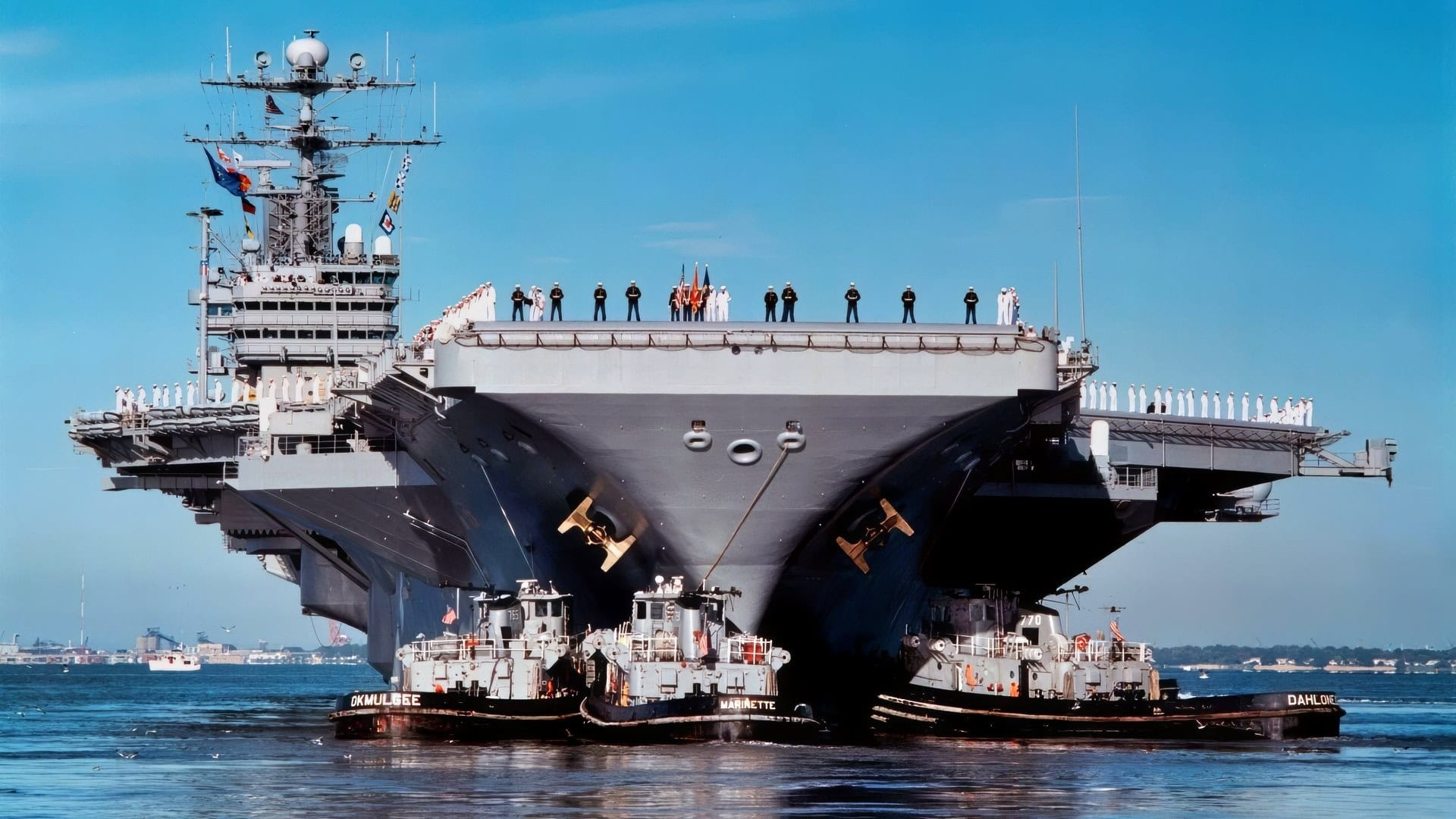
According to the U.S. Navy, Valiant Shield 26 will take place from June 22 to July 1 in the Northern Mariana Islands, Guam, Japan, and surrounding waters. This exercise, which began in 2006, marks the 11th iteration and will transition to a multilateral joint exercise format after 2024. This is only the second time Japan has fully planned and participated in the exercise.
According to a report by Stars and Stripes citing a spokesperson from Japan's Joint Staff Office, approximately 4,100 personnel, 150 vehicles, and 60 aircraft will participate from Japan. Confirmed assets from the Japan Maritime Self-Defense Force include the helicopter carrier "Kaga," the destroyer "Fuyuzuki," and the submarine "Jingei," while the U.S. side is accompanied by the George Washington, the cruiser Robert Smalls, the destroyers Benfold and Shoup, and the attack submarine Virginia.
Training for Distributed Target Detection Rather than Carrier Escort
Notably, the U.S. Pacific Fleet's announcement describes the training objective as the ability to "detect, locate, track, and engage targets across sea, air, space, land, and cyber." This differs from the Cold War-era concept of forming a circular formation centered around an aircraft carrier. Instead, it resembles an operation where each sensor and shooter is positioned separately, without fixed roles for who detects and who engages.
The Australian Department of Defence's announcement reflects a similar direction. Australia is sending P-8A patrol aircraft, air domain management personnel, and integrated air and missile defense personnel, explaining that participating nations need to detect, locate, track, and engage common threats. With Canada and New Zealand also joining, the focus of the training shifts from demonstrating fleet maneuvers to the speed of information exchange.
Connection to Southwest Islands Defense
In my view, the significance of this exercise is not just the participation of the "Kaga." Rather, it raises the question of how to integrate the range and sensors of the U.S. Marine Corps, Japan Ground Self-Defense Force, Japan Air Self-Defense Force, and Japan Maritime Self-Defense Force alongside the Resolute Dragon 26 exercise occurring in Japan at the same time. In the Southwest Islands, resources such as runways, ports, fuel, ammunition, and communications are not abundant. Therefore, it becomes crucial to enable dispersed units to reach the same decision quickly rather than concentrating forces at a single large base.
In this regard, the Japan-U.S. Fleet Synthetic Training Joint 26-71 conducted in March in Yokosuka and elsewhere cannot be overlooked. In that training, the U.S. 70th Task Force, the U.S. destroyer Shoup, and Japan's "Maya" and "Kirishima" practiced ballistic missile defense coordination in a computer-generated environment. While the real-world Valiant Shield and the virtual FST-J may appear to be separate events, they actually address the same command and control issues.
Strengthening Deterrence and Overlooked Weaknesses
Valiant Shield 26 sends a clear deterrent message to China and North Korea. The George Washington is a forward-deployed aircraft carrier based in Yokosuka, while the "Kaga" symbolizes Japan's efforts to enhance its capabilities for operating F-35Bs. The significance of these two vessels operating together in the Philippine Sea is not insignificant.
However, it is also important not to overestimate the situation. Multi-domain operations are strong when communications are maintained. However, if satellite communications, data links, and land-based command centers are simultaneously disrupted, the scale of participation of 4,100 personnel alone will not be a solution. What truly needs to be measured is not the number of participating forces, but how well each ship's captain and each unit leader can maintain the same operational objectives after communications are interrupted. The next challenge for the Japan-U.S. alliance may lie not in equipment shortages, but in decision-making in a silent communication environment.
Sources
- U.S. Navy, Allies come together in the Indo-Pacific Valiant Shield 26, 22 June 2026.
- Stars and Stripes, US, Japan navies make early start to exercise Valiant Shield, 22 June 2026.
- Australian Department of Defence, Australia joins Exercise Valiant Shield 26 in the Pacific, 23 June 2026.
- U.S. Navy, Japan, U.S. forces conduct Fleet Synthetic Training Joint 26-71, 4 March 2026.
Japan Maritime Self-Defense Force participated with 4100 personnel in the Valiant Shield 26 military exercise in the Philippine Sea from June 21 to July 1, 2026. The exercise involved U.S. Navy assets, including the USS George Washington, and focused on multi-domain operations across sea, air, space, land, and cyber. This marks Japan's second significant participation in the exercise, emphasizing enhanced deterrence against regional threats.
- Approximately 4100 Japanese personnel are participating in the exercise.
- The exercise takes place from June 22 to July 1, 2026.
- Japan is deploying 150 vehicles and 60 aircraft for the exercise.
- The exercise involves coordination between naval, air, space, land, and cyber domains.
- The exercise serves as a deterrent message to China and North Korea.