

Summary and Key Points: As Operation Epic Fury intensifies in March 2026, the Iranian Air Force (IRIAF) has reached its absolute nadir. Defense reporter Caleb Larson details the systematic dismantling of Iran’s aerial assets, most notably the storied F-14 Tomcat fleet.
-Originally 79-strong in 1979, the remaining “swing-wing” fighters are now being eliminated alongside modern Yak-130 trainers and Su-22s.
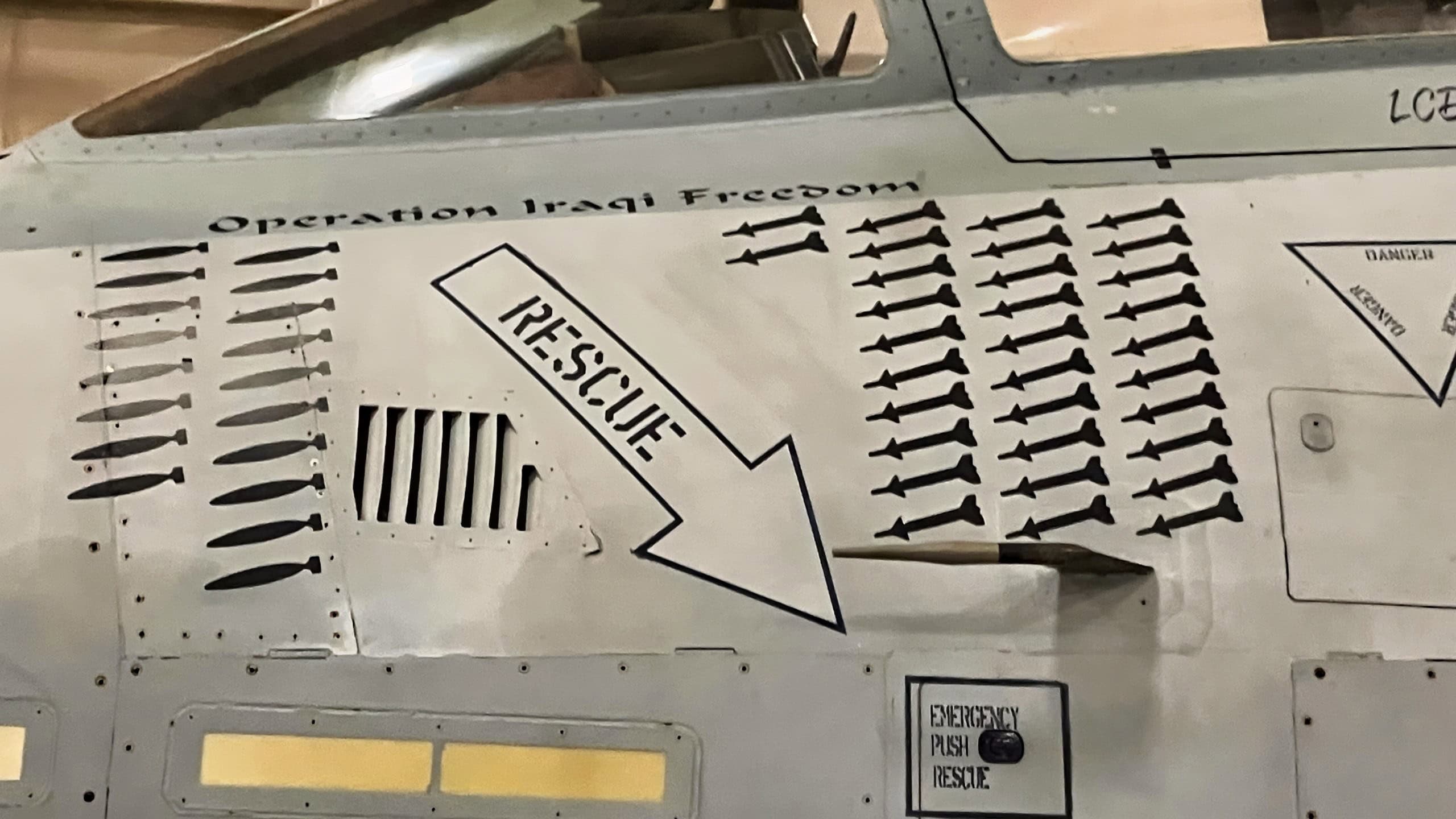
F-14 Tomcat at Aviation Museum of Kentucky. Taken on March 1, 2026. By Christian D. Orr.
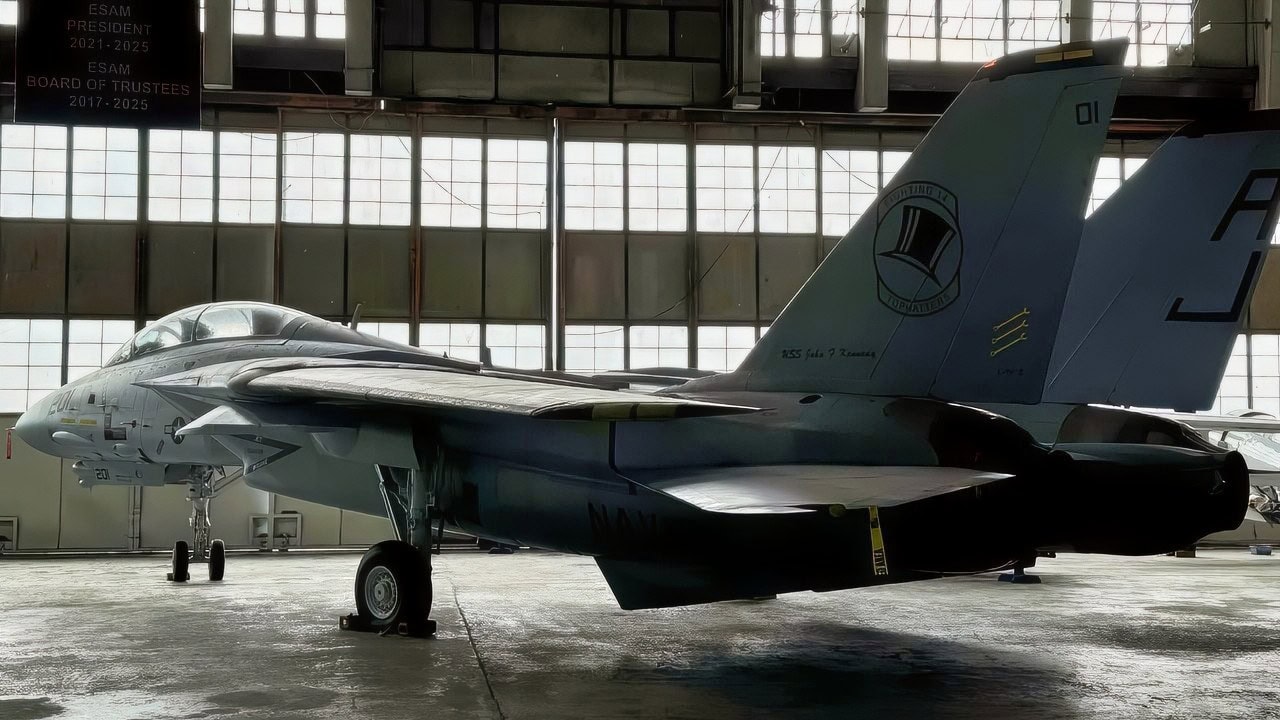
F-14 Tomcat Fighter In a Museum Hanger
-High-profile strikes include the destruction of “Iran Force One”—Ali Khamenei’s Airbus A340—at Mehrabad Airport.
-These losses, coupled with decades of sanctions, signal the end of Iranian air power as a regional threat, leaving the regime with no capacity for sustained aerial warfare.
-Bonus: All videos and photos in this article come from 19FortyFive’s various F-14 Tomcat visits to various museums over the years.
The End of the Tomcat: Why Operation Epic Fury is Grounding Iran’s F-14 Fleet
As part of the ongoing strikes against Iran, dubbed Operation Epic Fury, attacks against important military and political targets have been significant.
The strikes to Iran’s fleet of aircraft — modest though they are — have been crippling, with fighter jets of both new and old vintage destroyed, along with tanker aircraft, transports, and other aircraft too.
But the strikes also herald what is very likely the end of some of Iran’s most storied aircraft: American-made F-14 Tomcat swing-wing fighter jets.
The exact number of remaining F-14 Tomcats is an open question — but however many are left, even fewer are thought to be flyable, and even fewer still are thought to be combat effective. Their story has been long — but it seems to have come to an end.
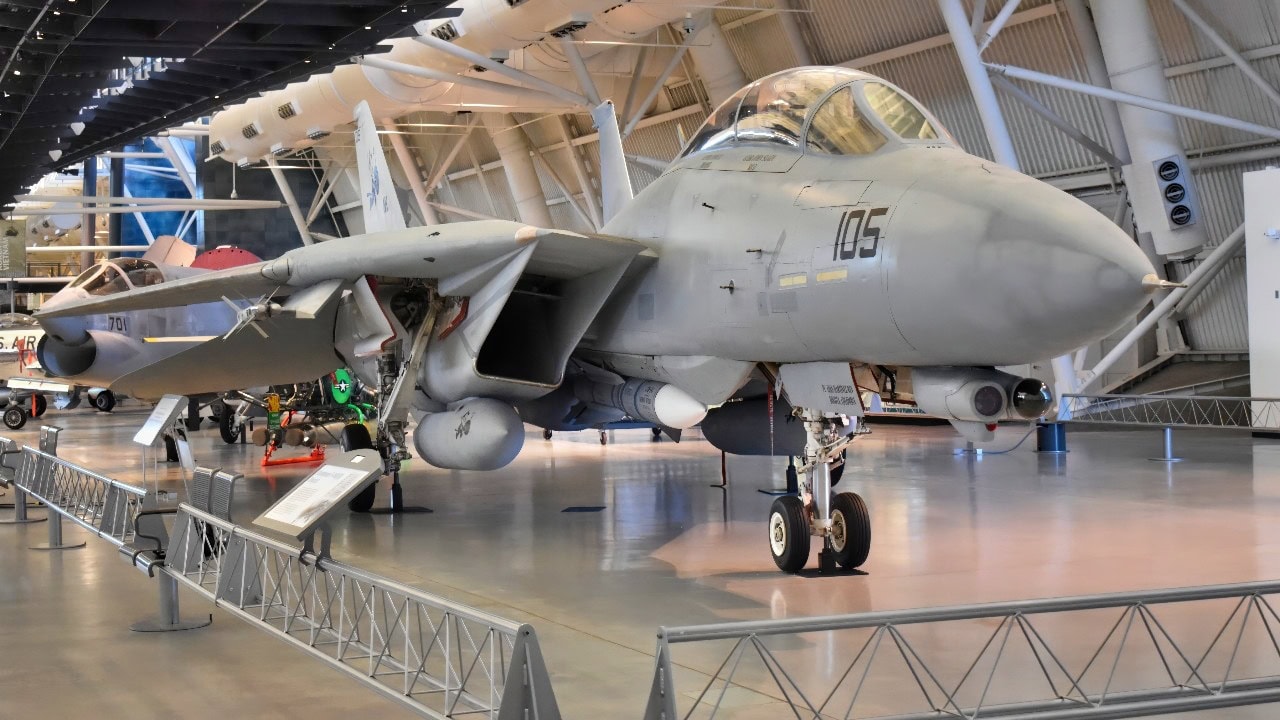
F-14 Tomcat. Image by 19FortyFive.com

F-14 Tomcat Fighter in USS Intrepid Deck. Image taken late on 2025 by Jack Buckby for 19FortyFive. All Rights Reserved.
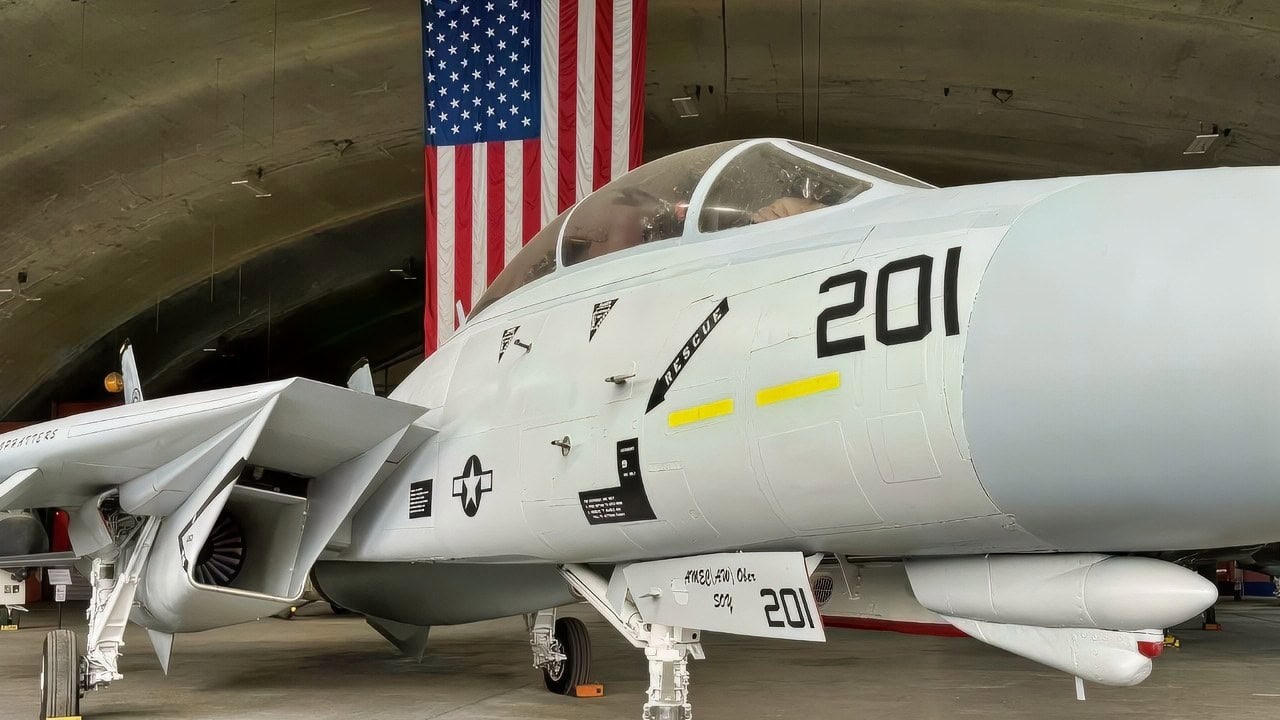
F-14 Tomcat Fighter U.S. Navy. 19FortyFive Field Research Image.
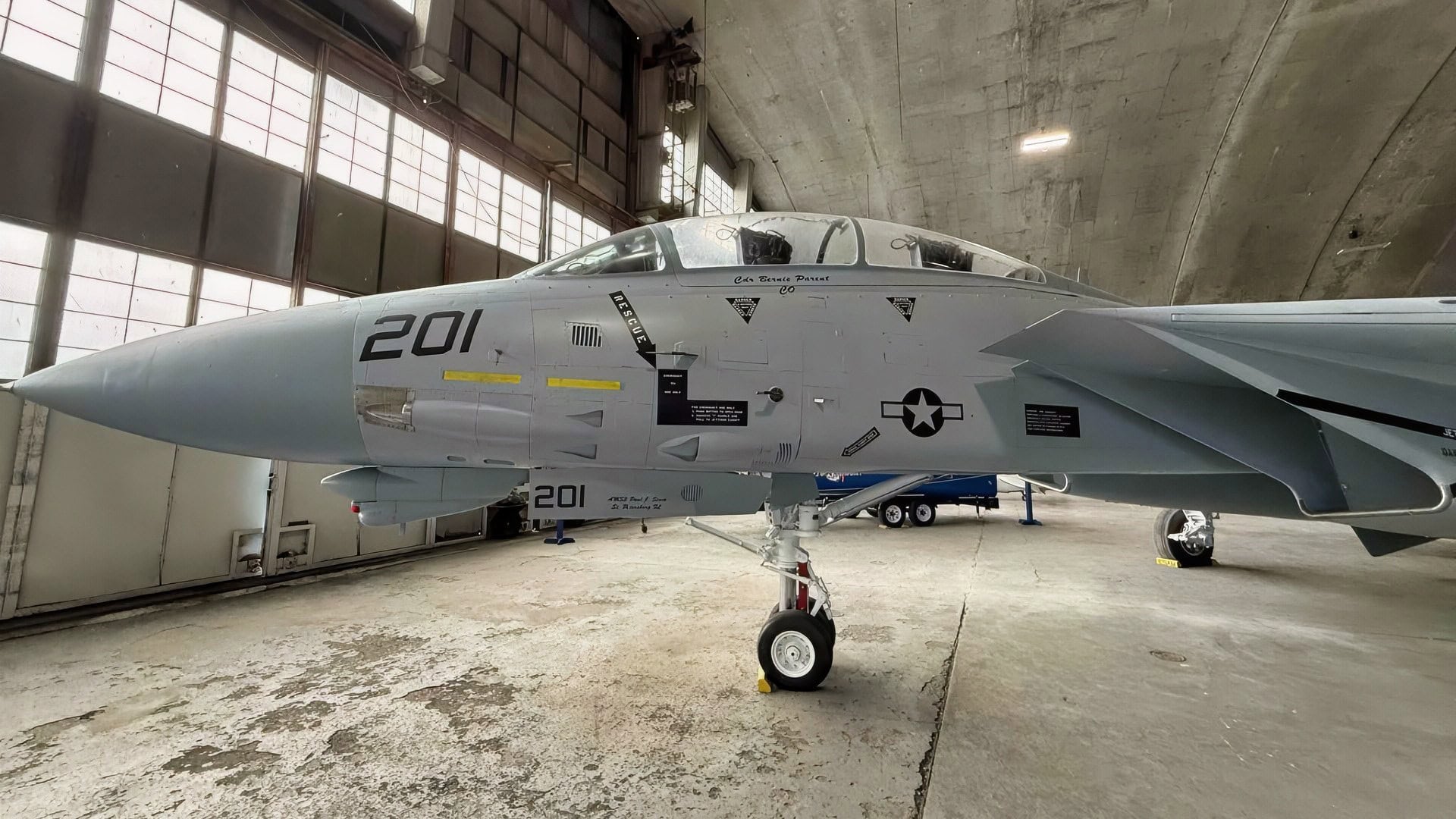
F-14 Tomcat in Museum. Image was taken by Jack Buckby for 19FortyFive.com. All rights reserved.
79 Back in 1979
The United States delivered a total of 79 F-14 Tomcats to Iran before the Iranian revolution and fall of the Shah in 1979, and the only two F-14 operators were the United States Navy and the Iranian Air Force.
Though the U.S. Navy retired the last of its F-14s in 2006, Iran retained the American fighter jets, though the exact size of the Iranian F-14 fleet — as well as its combat effectiveness — has been somewhat of a question mark.
Iran almost assuredly had fewer than the original 79 F-14s in service, with some airframes cannibalized for parts to sustain the rest of the F-14 fleet.
While the physical condition of Iran’s F-14 fleet is, at best, highly questionable, other factors detrimental to its combat effectiveness include the condition of its sensor suite and the weaponry it has available.
Though once cutting-edge, the F-14’s AN/AWG-9 fire control radar is likely significantly degraded. It is likely that before Operation Epic Fury, not all of Iran’s F-14s had functional radar.
Under the Shah, Iran purchased weapons for the F-14 fleet, a mix of AIM-7 Sparrow and AIM-54 Phoenix air-to-air missiles. How many of those munitions Iran retained — and if they were functional — were thought to be rather low at best.
Iran’s F-14 suffered several losses during the 12 Day War last year, when Israeli warplanes struck air defense batteries, radars, and aircraft across the country. Footage released by the Israel Defense Forces shows that at least five of Iran’s F-14s were destroyed. During this round of fighting, other Iranian aircraft were shot down as well.
Footage released by the IDF as part of Operation Roaring Lion, the name given by the Israelis to the ongoing air campaign against Iran, shows the moment an Israeli Air Force F-35I shot down an Iranian Yak-130 trainer jet.
Myriad other Iranian aircraft have also been destroyed, including one II-76, two C-130s, and two Su-22s. Several other aircraft, in hardened aircraft shelters and out in the open, were also destroyed, as seen in footage shown by U.S. Central Command.
Iran Force One
One of the more notable Iranian aircraft that Israel destroyed is known colloquially as Iran Force One.
In a post on X, formerly Twitter, the Israeli Air Force’s page wrote that the country’s air force “destroyed the plane of the leader of the Iranian terror regime at the “Mehrabad” airport in Tehran – the plane was used by Ali Khamenei, leader of the Iranian terror regime, additional senior officials from the terror regime, and elements in the Iranian military, to advance military procurement and manage relations with Axis countries through domestic and international flights.”
The plane in question is an Airbus A340-300, a wide-body jet typically used for long-haul flights.
The post added that “the destruction of the plane impairs the ability to coordinate between the leadership of the Iranian terror regime and Axis countries, in building military power, and in the regime’s rehabilitation capability. Thus, another strategic asset has been removed from the Iranian regime.”
Flying into the Sunset
Iranian air power arguably reached its zenith just before the 1979 revolution. At that time, the Shah’s air force was equipped with the most capable jet fighters in the world and some of the most potent air-to-air weapon suites then available.
But crippled by sanctions in the years following, the Iranian Air Force weakened considerably. Even before these notable losses, the Iranian Air Force was in no position to mount a sustained air campaign against Israel or any of its other neighbors.
Fast forward to today, and the Iranian Air Force is at its nadir, with far fewer functional warplanes than at any point in the Islamic Republic’s history.
It is not an exaggeration to say that Iranian air power under the current repressive regime will recover soon. After nearly five decades, they’re likely finished.
About the Author: Caleb Larson
Caleb Larson is an American multiformat journalist based in Berlin, Germany. His work covers the intersection of conflict and society, focusing on American foreign policy and European security. He has reported from Germany, Russia, and the United States. Most recently, he covered the war in Ukraine, reporting extensively on the shifting battle lines in Donbas and writing about the war’s civilian and humanitarian toll. Previously, he worked as a Defense Reporter for POLITICO Europe. You can follow his latest work on X.