
A Chinese Military Doctor's Peacekeeping Time
Xinhua News Agency, Chongqing, May 2 - Title: A Chinese Military Doctor's Peacekeeping Experience
Liu Xiaohong, Jia Shuyi
In the mountain city of Chongqing, the campus of the Army Medical University is filled with the essence of spring.
On the podium, Associate Professor Wang Yi is giving a lecture. At this moment, pairs of clear eyes in the audience are focused on this slender colonel officer wearing black-framed glasses.
These young students do not know that their teacher—the refined and humble military doctor before them—has twice traveled to the front lines of United Nations peacekeeping operations in Africa.
As flowers bloom on the branches and the warm breeze gently brushes his face, Wang Yi gazes out at the vibrant spring scenery. Every spring, he always thinks of the children in the war-torn areas of Africa thousands of miles away, remembering their innocent smiles.
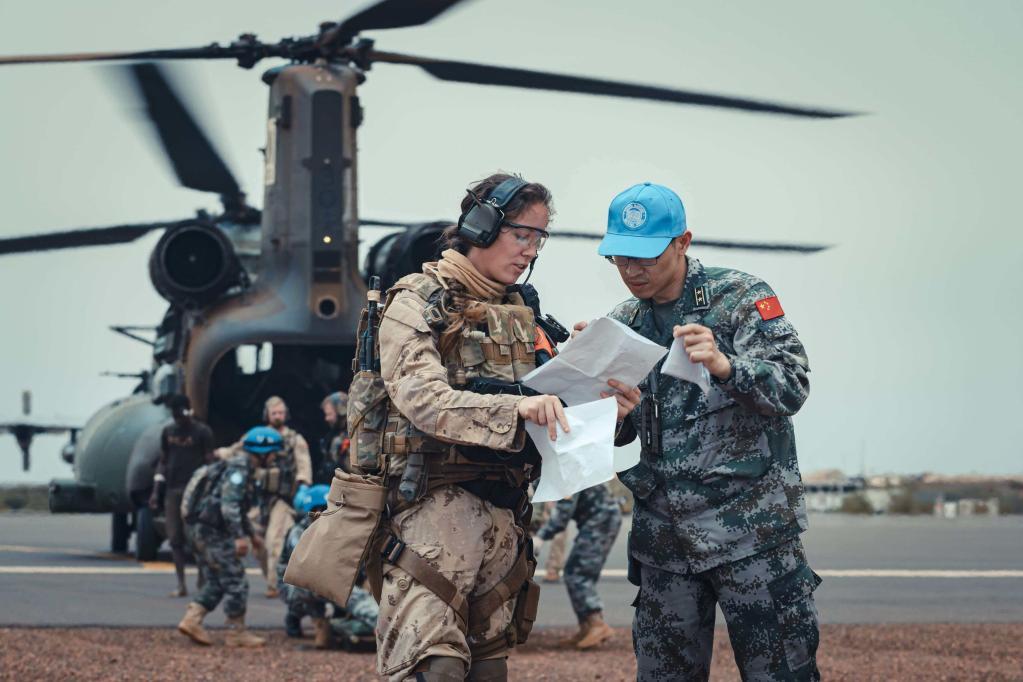
In 2019, Associate Professor Wang Yi of the Army Medical University served as a medical officer for the Eastern Theater Command of the United Nations Multidimensional Integrated Stabilization Mission in Mali, jointly rescuing the injured with the Canadian Air Medical Team.
"Today, I learned what a battlefield is."
February 14, 2019, is an important day in Wang Yi's life. On this day, he traveled to Africa, arriving in the Mali mission area, officially taking up the position of military medical officer for the Eastern Theater Command of the United Nations Multidimensional Integrated Stabilization Mission in Mali.
Before this, his life was like a straight and smooth line: from undergraduate to master's to doctorate, step by step, he graduated and stayed on to teach, always calm and steady. When the news came that the military was selecting peacekeeping staff officers from the grassroots for the first time, Wang Yi signed up without hesitation.
"Why do you want to go on a peacekeeping mission?" the interviewer asked.
"The research I want to do is related to combat and can truly help the troops."
"Go to Mali, it's the most dangerous place."
"Mali?"
He only knew that the country was in Africa and that the United Nations had a mission area there, but he knew almost nothing else. As for what "most dangerous" meant, he had no concept.
On July 22 of that year, Wang Yi's peacekeeping diary contained this sentence: "Today, I learned what a battlefield is. Today, I understood what responsibility is."
Everything that happened that day is vivid in his memory—
At eight in the morning, Wang Yi had just entered the office and had not yet taken his seat.
Without warning, a loud bang. All the glass shattered instantly. Fragments swept toward him like a torrential rain, one piece flew past his ear and embedded itself in the wall behind him.
Immediately, the alarm rang throughout the camp.
Wang Yi followed the crowd out of the office and dove into the shelter.
This was not a drill.
The shelter was dark and stuffy, with the smell of rust and dust in the air. Two minutes later, the intercom crackled: "Medical officer, report to the command post immediately."
The situation was unclear, and leaving the shelter meant potentially facing the threat of death. He did not hesitate for a moment and rushed out. He was the first person to arrive at the command post that day.
On the surveillance screen, a huge breach had been blown open at the gate of a foreign military camp. Several heavy armored vehicles were overturned on the ground, twisted into a pile of scrap metal.
Later, he learned that the bomb weighed 100 kilograms and the explosion site was only 1,000 meters away from him.
"Mali is one of the most dangerous peacekeeping mission areas in the world." He had heard this before departing, but it was only at that moment that he truly understood.
Taking a deep breath, he issued a series of commands: "Search and rescue team, deploy."
"Triage, execute on-site."
"Evacuation route, clear."
……
The rescue operation ran at high speed until late at night. The camp returned to calm, with only the beams of searchlights sweeping back and forth in the night.
In the dead of night, Wang Yi sat alone beside the shelter, leaning against a rock, the thrill of surviving the ordeal surged in his heart.
The night sky in Africa was filled with stars, the starlight clear and bright, like scattered diamonds on a black velvet curtain, as if he could reach out and touch them. Away from the chaos of war and the sudden storms, this land was exceptionally beautiful in its quietness, allowing him to truly realize for the first time how precious peace is.
In the distance, there were faint lights at the edge of the desert, in the direction of the local tribal settlements. He took out his phone, scrolled through the familiar family numbers, deleted, input, deleted… In the end, he silently turned off the phone screen.
The dangers in Mali were far more than this explosion.
Due to the lack of supporting airports, supplies shipped by sea needed to be transported overland to the northern theater, a long and perilous journey. Once, a convoy delivering supplies to the Melaka area unfortunately hit a landmine.
An 18-year-old foreign peacekeeper, severely injured, was rushed to the medical point, but he was unrecognizable. Wang Yi stood there, speechless for a long time.
Having experienced the ravages of war, Wang Yi had witnessed too many farewells between life and death. A student who had once taken his class overseas had lost a leg by the time they met again; others, upon first meeting, became eternal farewells.
During his peacekeeping mission, Wang Yi's daily work schedule was packed: formulating training plans, supervising practical drills, streamlining workflows, conducting battlefield rescues… He often said, "I was so busy that I didn't even have time to miss home." But the death of that young foreign soldier made him particularly concerned about his parents and wife far away.
One evening, after a long day of work, he walked on the soft red earth of the camp, the desert evening wind carrying the dry and desolate air towards him.
At that moment, he missed his hometown of Chongqing, the warm and humid air of the mountain city, the continuous light rain, the human warmth rising on the streets at dawn, the thousands of lights along the Jialing River, and the night view of the bridge spanning the Yangtze River in front of his home…
Longing was hidden in his heart, while the mission weighed on his shoulders. During the 18 months of the peacekeeping mission in Mali, Wang Yi was awarded the Commander’s Commendation by the United Nations Multidimensional Integrated Stabilization Mission in Mali and received two "Outstanding" performance evaluations. Due to his effective control of the COVID-19 pandemic in the mission area, he was also recognized by the Special Representative of the United Nations Secretary-General in Mali.
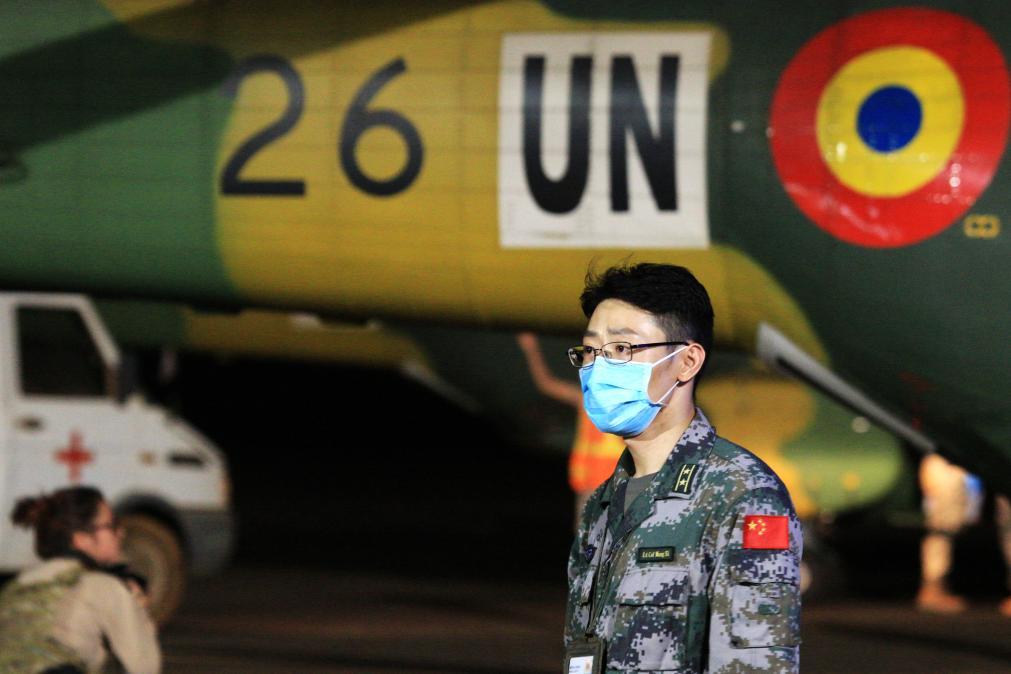
In 2020, Associate Professor Wang Yi of the Army Medical University organized and commanded the rescue of the injured at night.
"We are on the same planet, but not in the same world."
In 2022, Wang Yi once again took the initiative to volunteer and went to Abyei to carry out peacekeeping tasks.
Many around him were puzzled: why not enjoy a stable life and instead go to a war-torn place? Some advised him: once is enough.
"Some things just have to be done by someone." He remained steadfast.
This time, his battlefield was Abyei. He was one of the first military staff officers sent there from China.
The hardships and dangers of Abyei far exceeded his expectations.
The dirt road outside the barracks was a passage to unexpected dangers: almost every day he encountered snakes, some coiled by the rocks, others lying across the road; scorpions lurked in the wall crevices; half-meter-long lizards crawled past his feet without a care.
The water flowing from the purifier was a faint green color—algae had grown inside the purifier, and repeated cleaning was futile. When brushing his teeth, a fishy smell assaulted his senses.
To this, he joked: "In Abyei, just being alive is pretty good."
He wrote all the hardships in his peacekeeping diary but said nothing to his family far away.
Not long after, Wang Yi began to feel unwell. Fatigue, muscle aches, and a persistent low fever… The same symptoms lasting for several days made Wang Yi's heart sink—he was likely infected with malaria.
Before this, malaria was just a medical term to him. When he was diagnosed with severe malaria, even he, who was usually calm, couldn't help but feel a bit nervous.
He took his medication on time, and his condition gradually improved. Two months later, a second infection struck unexpectedly, and he had to grit his teeth and take medication again to fight the disease.
In medicine, the mortality rate for a second malaria infection is extremely high, and the malaria parasite can easily develop resistance. Moreover, after the first infection, the parasites can reside in the liver for life, like a bomb that could explode at any moment. The physical pain and mental torment, he bore alone, never revealing it to his family or colleagues back home.
When recalling this experience, Wang Yi merely brushed it off: "The malaria parasites in my liver can be considered a peacekeeping medal."
In the midst of laughter and conversation, there is the composure of a soldier and the openness of a healer.
One afternoon, he and a colleague drove to examine a patient suffering from rabies.
On the endless red dirt road, with dry bushes on both sides, several vultures circled low, exuding a sense of oppressive silence.
Halfway there, the weather suddenly changed, and heavy rain poured down, causing the armored vehicle's wheels to sink deep into the mud.
There was no signal on the phone. The vehicle's radio could not contact headquarters. Time ticked away… fuel was running low, and the battery was insufficient, with no one around.
All they could do was wait.
Finally, a three-wheeled vehicle appeared in the rearview mirror. Wang Yi braved the pouring rain to get out of the car and stopped the local man. He handwrote a rescue note, drew a detailed route map, and repeatedly instructed him to deliver the note to the nearest peacekeeping military camp.
More than an hour later, the rescue team finally arrived. His colleagues urged him: "It's too dangerous; let's go back."
Wang Yi's gaze was resolute: "No, keep going. I must see that patient ahead."
He saw the patient with his own eyes. The patient was isolated in a room, agitated and restless. The local medical conditions were almost non-existent. There were no vaccines, no immunoglobulin, not even the most basic care.
On the way back, he remained silent, contemplating what to do next.
Late at night, after finishing the last report, he opened his phone's memo and wrote down word for word: "We are on the same planet, but not in the same world."
After that, he specifically conducted rabies prevention and control training for the Chinese contingent, repeatedly reminding his comrades: "This disease is very dangerous once it breaks out; we must prepare protection in advance and have the relevant medications ready."
February 1, 2024, was the day he was about to return to China. He posted a long-awaited message on social media: "Time to say goodbye."
It was time to say goodbye, as the sun was about to set in Abyei at six in the evening.
During his 14 months in Abyei, Wang Yi completed various tasks such as health logistics coordination, medical collaboration, and resource allocation with high quality. At the end of the mission, he received another "Outstanding" performance evaluation, becoming the only Chinese staff officer in the mission area to receive this evaluation.
"For those who cannot be present."
In January 2026, New York, United Nations Headquarters.
The day before, after a long flight, Wang Yi had only slept for three hours. When he took the podium, he immediately switched to a different state.
In the audience were peacekeeping representatives from 37 countries. Behind each face was the complex interplay of interests among nations. At this moment, his identity was the chair of the medical support group for the United Nations Peacekeeping Forces Self-Equipped Working Group meeting. Wang Yi said that what he wanted to do was to make international rules more aligned with the real needs on the peacekeeping front lines, so that the rules themselves could save more lives.
The opening was steady and smooth, showing no signs that this was his first time presiding over a meeting at the United Nations Headquarters. This composure stemmed from months of careful preparation. To tackle this tough issue, he had already mastered the meeting topics and had rehearsed the negotiation details, anticipating the directions of questioning from representatives of various countries.
Even so, on the first day, the topics were still stalled.
That night, Wang Yi stayed alone in his hotel room.
He closed his eyes, and in his mind, it was like watching a movie, replaying every detail and every confrontation from the day’s meeting frame by frame. He knew that the negotiations in the meeting were far more mentally challenging than the dangers on the battlefield.
The real tough battle began the next day.
Wang Yi sat at the center of the podium, his expression determined. Facing the heated debates and sharp questioning from representatives of various countries, he maintained a steady pace, controlling the rhythm of the meeting.
In the end, he proposed a plan. Representatives from various countries raised their hands, and the proposal was passed.
Throughout the meeting, he presided over more than a dozen debates and facilitated consensus on 11 proposals. These proposals would soon be transformed into tangible supplies, crossing mountains and seas, sent to Abyei, South Sudan, the Democratic Republic of the Congo… delivered to those peacekeeping soldiers who stand firm in the flames of war and march against the dangers.
Wang Yi said that everything he did ultimately was "for those who cannot be present."
The United Nations sent a letter of thanks, praising Wang Yi for "upholding professionalism and playing a key role in facilitating consensus and leading the medical working group to achieve practical results."
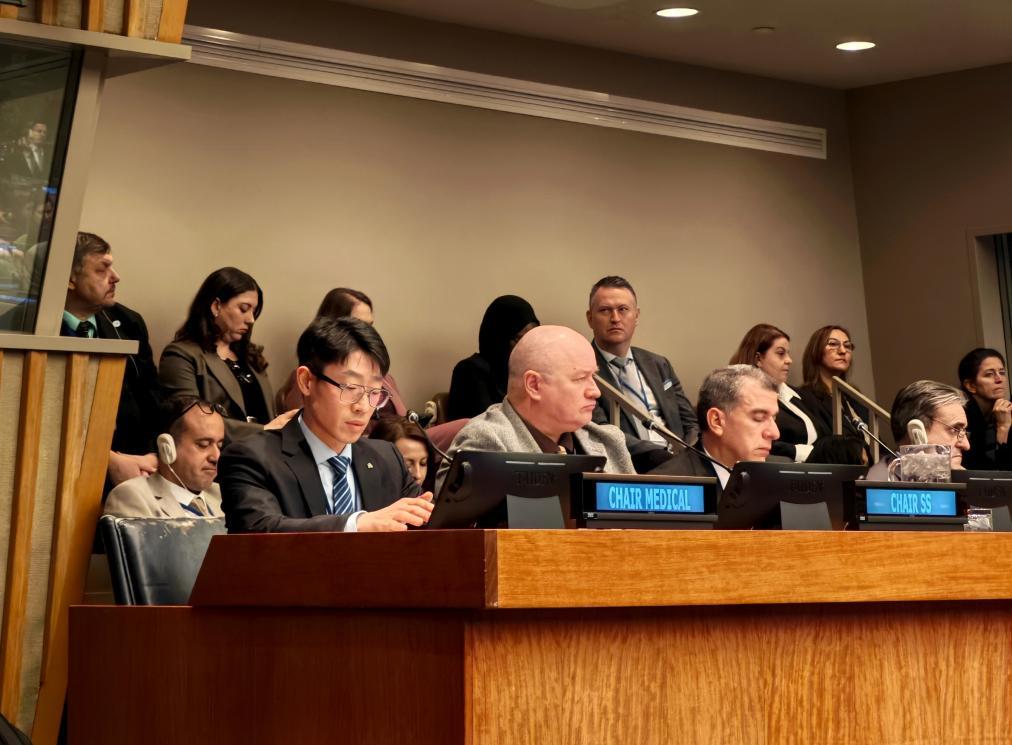
In 2026, Associate Professor Wang Yi of the Army Medical University participated in the "United Nations Peacekeeping Forces Self-Equipped Working Group Meeting" at the United Nations Headquarters in New York as the chair of the medical support group.
Flying from New York to Chongqing, a fifteen-hour journey, Wang Yi did not close his eyes, bent over his desk writing lesson plans.
Outside the window, above the clouds, the morning sun burst forth, casting golden light across the sky.
He remembered the brief social media post at the end of his second peacekeeping mission: Time to say goodbye.
He bid farewell to the yellow sands of Mali, the red earth of Abyei, and the lights of New York.
But some beliefs etched into his bones, he never said goodbye to.
That is: as long as he wears the military uniform and carries the mission on his shoulders, he is always ready to set out again.
After returning to the country, Wang Yi's research and teaching work continued without pause: developing a virtual simulation system for the entire drug screening process, creating AI-based rapid diagnostic software for malaria, conducting theoretical research on the "mass casualty treatment and evacuation system for large-scale military operations"…
Wang Yi said that no matter where he is, the original intention of being a soldier will never change.
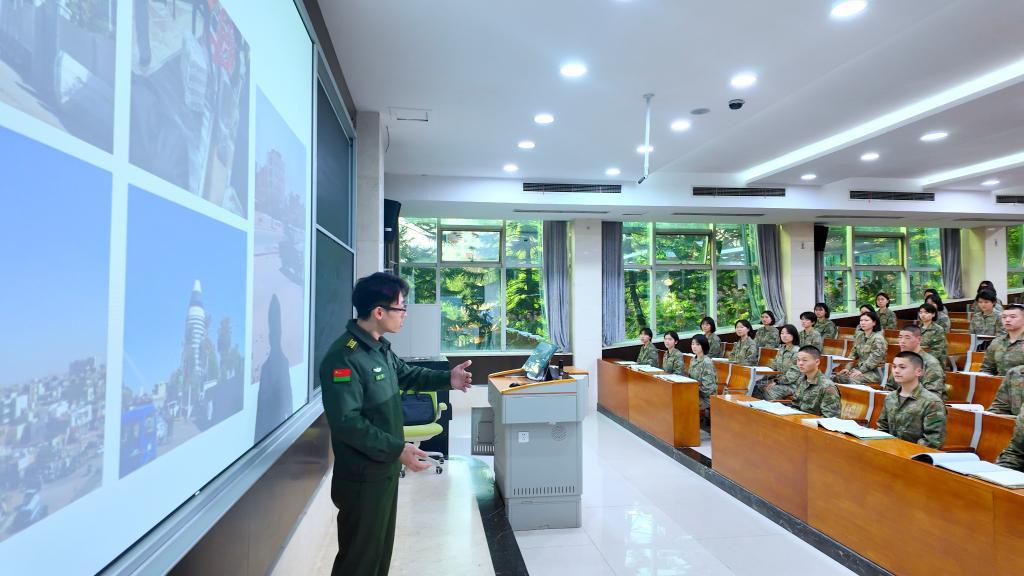
Associate Professor Wang Yi of the Army Medical University teaches students.
A Chinese military doctor served in UN peacekeeping missions in Mali and Abyei from 2019 to 2022, providing critical medical support and training. He encountered numerous dangerous situations, including bomb explosions, and was recognized for his outstanding performance. His experiences highlight the challenges and responsibilities faced by military personnel in conflict zones.
- The Chinese military doctor served in Mali and Abyei for peacekeeping missions.
- He provided medical support and training to local forces.
- He faced dangerous situations, including bomb explosions and medical emergencies.
- He received commendations for his performance during these missions.