

Summary and Key Points: In early 2015, during a Composite Training Unit Exercise off the coast of Florida, a French Navy submarine commissioned in 1984 penetrated the defenses of USS Theodore Roosevelt and simulated torpedo attacks that reportedly ‘sank’ the 100,000-ton carrier and several of her escorts.
A Rubis-Class Submarine vs. A Nimitz-Class Nuclear Aircraft Carrier
There is now a coterie of examples highlighting how submarines, even relatively cheap diesel-electric ones belonging to navies a fraction the size of the United States Navy, can damage (or even sink) advanced nuclear-powered aircraft carriers.
In early 2015, a French Navy Rubis-class submarine participated in a Composite Training Unit Exercise (COMPTUEX) off the coast of Florida. During that 2015 COMPTUEX, an older French Navy nuclear-powered Rubis-class submarine named the Saphir reminded US Navy planners how vulnerable carriers are to smaller submarines.
COMPTUEX 2015
In this incident, the USS Theodore Roosevelt (CVN-71), a nuclear-powered Nimitz-class carrier, was hit by torpedoes fired during the Saphir’s simulated exercise.
The French submarine obtained firing solutions against both the Theodore Roosevelt and many of its support surface warships.
The Saphir belonged to a class of nuclear-powered submarines that traces its roots to the 1970s.
The lead boat of that class entered service back in 1983, while the second submarine of its class, the Saphir, was commissioned in 1984.
Compared to Soviet and American nuclear-powered submarines of its day, the French submarines were tiny. A Rubis-class sub measures 241 feet long and displaces 2,700 tons when submerged.
At most, the submarine carries 70 sailors at any given time.
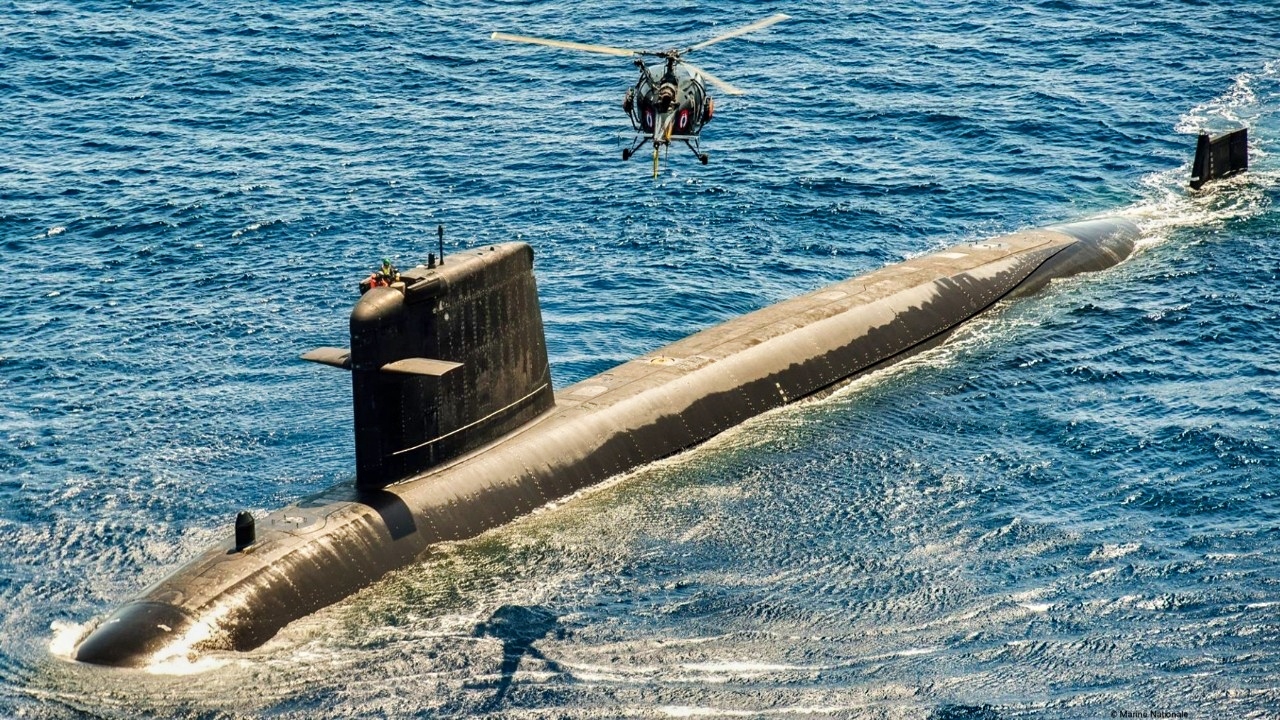
Rubis-Class French Navy Submarine. Image Credit: Creative Commons.
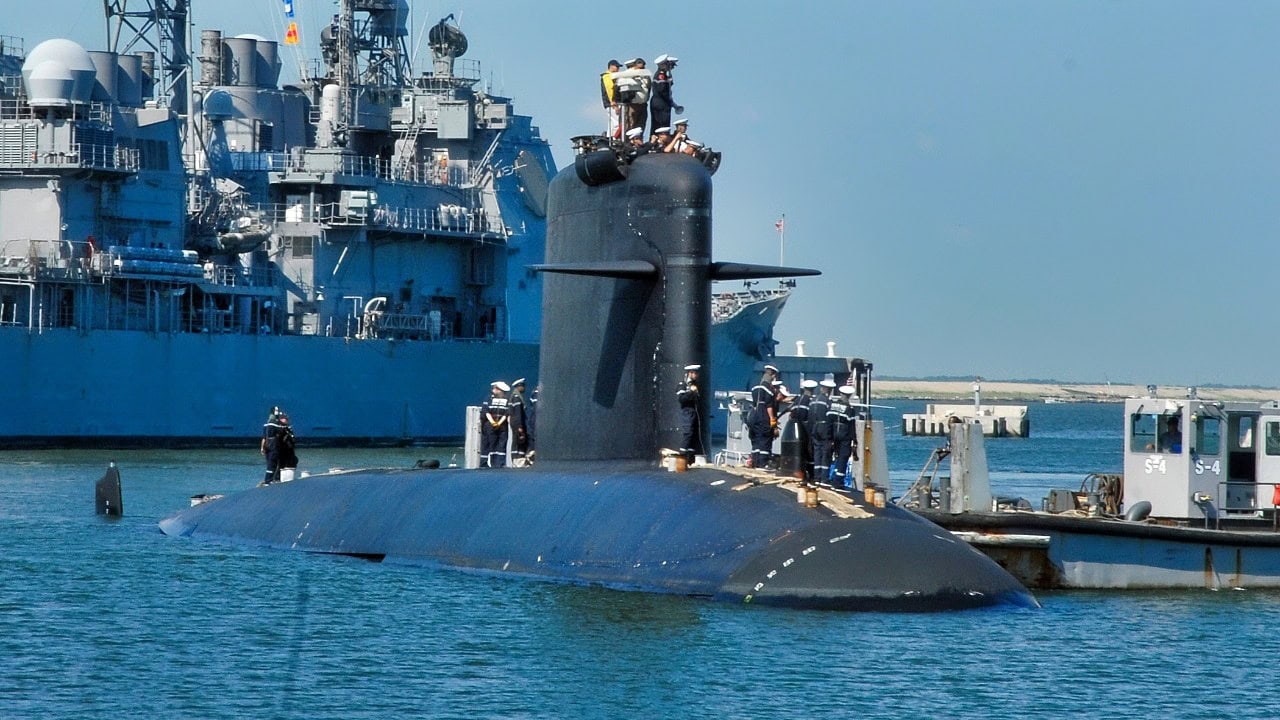
Rubis-Class: The French nuclear attack submarine FS Amethyste arrives at Naval Station Norfolk after completing patrol operations in the West Indies. Amethyste is making a four-day port call before joining the Theodore Roosevelt Task Group for Joint Task Force Exercise starting next week.
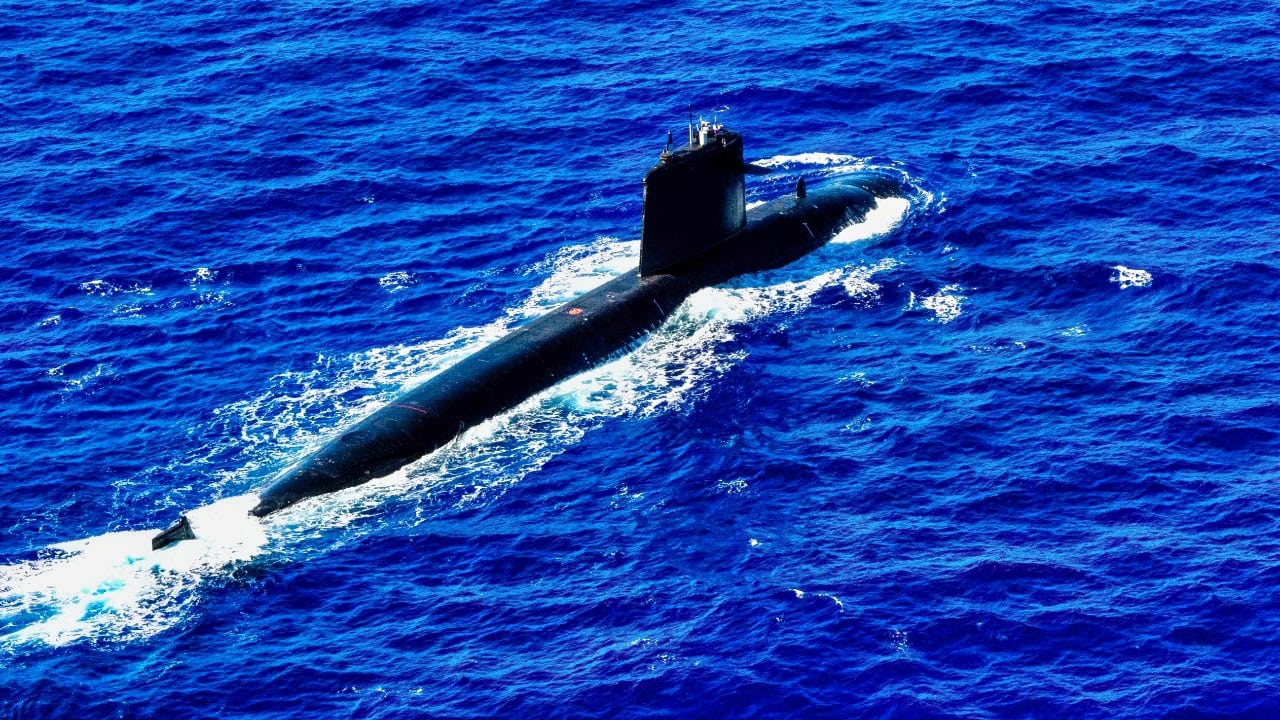
Rubis-Class Submarine from France
The Theodore Roosevelt, by contrast, is about 1,092 feet long and displaces about 100,000 tons when fully loaded.
That size difference is massive.
The Rubis-class was specifically designed to hunt rival submarines and attack surface ships.
Its relatively compact hull means the submarine has a reduced acoustic signature.
France then gave this submarine class the AMÉTHYSTE modernization, which further reduced its noise output before the Saphir participated in the COMPTUEX mission off the Florida coast in 2015.
Theodore Roosevelt’s battle group included the Navy’s Ticonderoga-class cruiser USS Normandy and Arleigh Burke-class destroyers USS Winston S. Churchill, USS Forrest Sherman, and USS Farragut.
A Los Angeles-class attack submarine also participated in the exercise.
COMPTUEX 2015 had two main phases.
Saphir first operated alongside the US warships.
The two parties conducted anti-submarine exercises against a simulated submarine threat.
Then the scenario shifted to an adversarial setting in which the Saphir was tasked with hunting the carrier strike group, penetrating its expensive defensive envelope, and attacking the Theodore Roosevelt directly.
Despite the impressive flotilla traveling alongside the Theodore Roosevelt, the older French nuclear-powered submarine penetrated the defenses surrounding the massive Nimitz-class aircraft carrier.
The French sub then conducted multiple simulated torpedo attacks against the Theodore Roosevelt and its various escorts.
It is believed that four US ships were destroyed in the simulated attack by that one, relatively small and compact, older French submarine.
Because submarines become easier to detect the faster they move, the Saphir prowled silently in the depths off the coast of Florida.
More importantly, the French submarine moved slowly, reducing the noise of the onboard propulsion machinery and avoiding disruption of the water flowing around the hull.
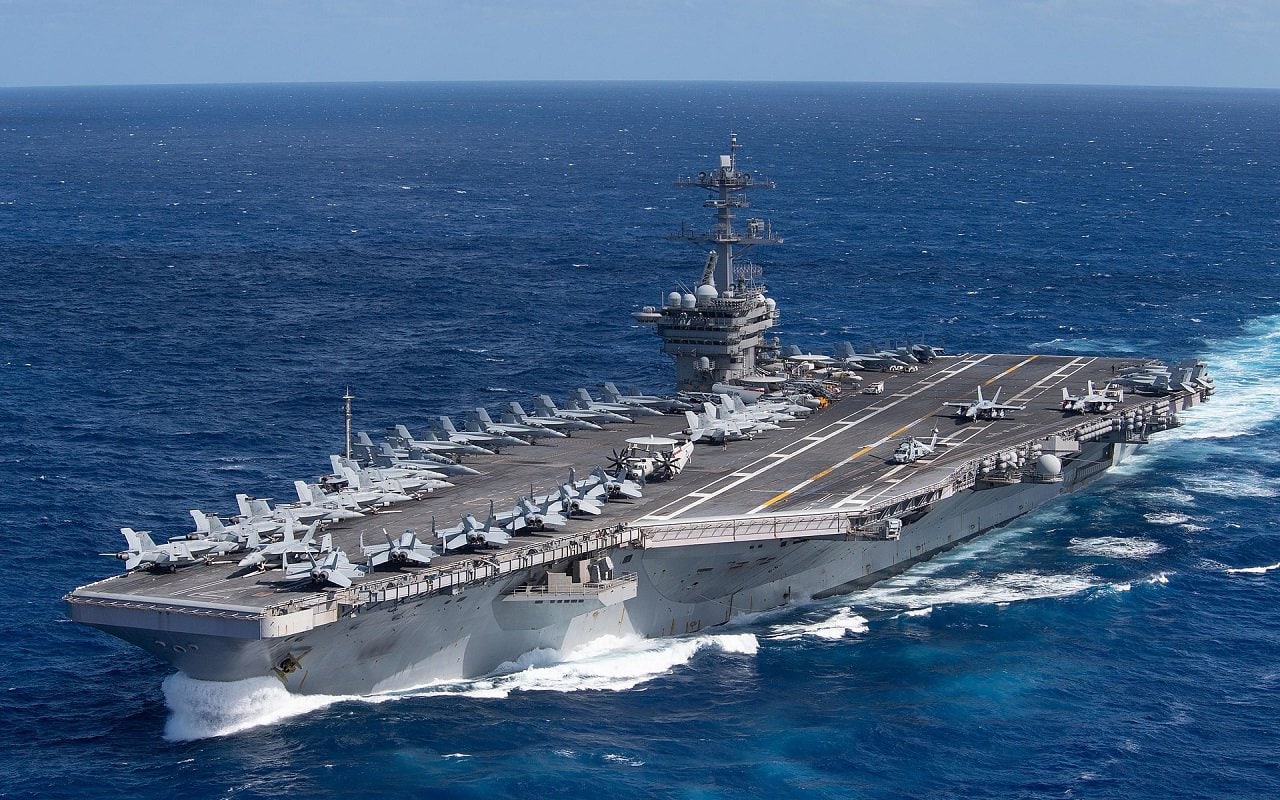
(Jan. 25, 2020) The aircraft carrier USS Theodore Roosevelt (CVN 71) transits the Pacific Ocean Jan. 25, 2020. The Theodore Roosevelt Carrier Strike Group is on a scheduled deployment to the Indo-Pacific. (U.S. Navy photo by Mass Communication Specialist Seaman Kaylianna Genier)
Plus, the submarine commander had anticipated where the carrier and its attendant battle group would be and positioned the submarine in the likeliest place through which the American surface warships and carrier would pass.
Death By Cheaper, Older, Smaller Subs?
Once the Americans were in range, Saphir fired its F17 Mod 2 heavyweight torpedoes.
The Saphir carried four 533-millimeter torpedo tubes and SM39 Exocet anti-ship missiles.
However, the precise rules for the 2015 COMPTUEX were never publicly revealed.
So, there were likely variables involved that the public (and therefore defense analysts) are not fully privy to. Extenuating circumstances may have favored the French Navy.
Although this is not the first time this has happened in the last ten to 15 years, it suggests a real security problem with America’s carriers.
America spends billions of dollars building, maintaining, and securing its nuclear-powered aircraft carriers.
Yet a relatively old French Navy submarine got within torpedo range of the carrier and its battle group. That single, small, older submarine fired multiple rounds at both the carrier and up to four of its escorts, all without being sunk.
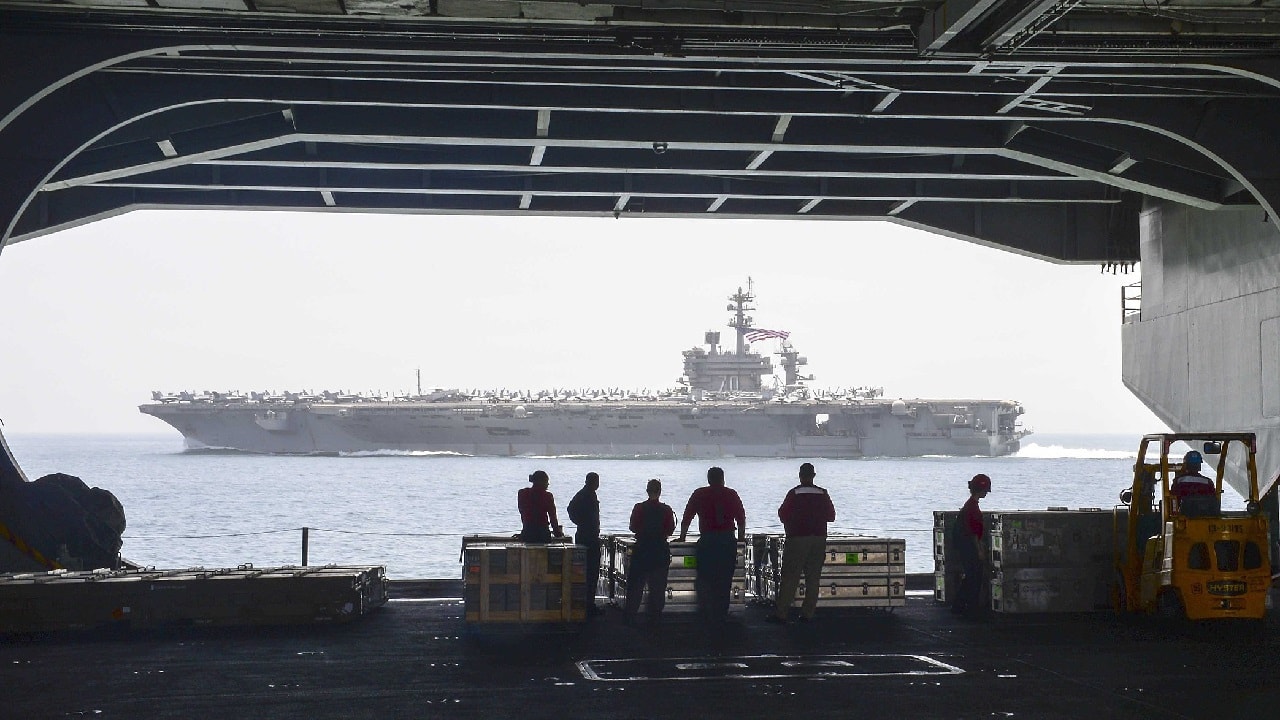
U.S. Navy sailors view the Nimitz-Class aircraft carrier USS Carl Vinson (CVN-70) from the hangar bay of the aircraft carrier USS Theodore Roosevelt (CVN-71). Theodore Roosevelt was deployed in the U.S. 5th Fleet area of responsibility supporting Operation Inherent Resolve, strike operations in Iraq and Syria as directed, maritime security operations and theater security cooperation efforts in the region.
Lessons Learned?
This experience in 2015 was one (of far too many) in which foreign navies employed older submarines to take on the bigger, more expensive, more advanced American carriers — and walked away with a major (simulated) win.
Fears should abound in the Pentagon, as the world inches ever closer to a great power conflict, that the United States’ vaunted carrier fleet is increasingly obsolete and vulnerable to cheap attacks that cause expensive amounts of irreparable damage.
America’s navy is on notice.
Have they noticed?
About the author: Brandon J. Weichert
Brandon J. Weichert is the Senior National Security Editor at 19FortyFive.com. He also manages The Weichert Brief on Substack. Weichert also hosts “National Security Talk” on Rumble. He is the author of four bestselling national security books, most recently A Disaster of Our Own Making: How the West Lost Ukraine (Encounter Books). Follow him via Twitter/X @WeTheBrandon.