
Algeria deploys its troops to Niger — JNIM tests a new Sahelian lock
 Marie Dubois
Algeria deploys its troops to Niger — the JNIM tests a new Sahelian lock
Madama, in the extreme north of Niger, is not a capital and probably never will be. It is a track, an old French base from Operation Barkhane, located a few dozen kilometers from the Libyan border. Yet, it is here that a major change in posture has been taking place since the end of October. After a parliamentary vote authorizing the deployment of units from the People's National Army, Algiers has sent a convoy into Niger, for the first time since its engagement alongside Egypt in 1973.
The decision announced by President Abdelmadjid Tebboune is presented as a protection of common economic and energy interests. It is also a response to the deterioration of the Sahelian theater of operations. The Algerian authorities have not published the number of troops, the duration, or the rules of engagement for the mission. This opacity is significant: it is not yet an expeditionary force comparable to Barkhane, but a military signal whose implications far exceed the number of vehicles that crossed the border.
A calculated doctrinal break
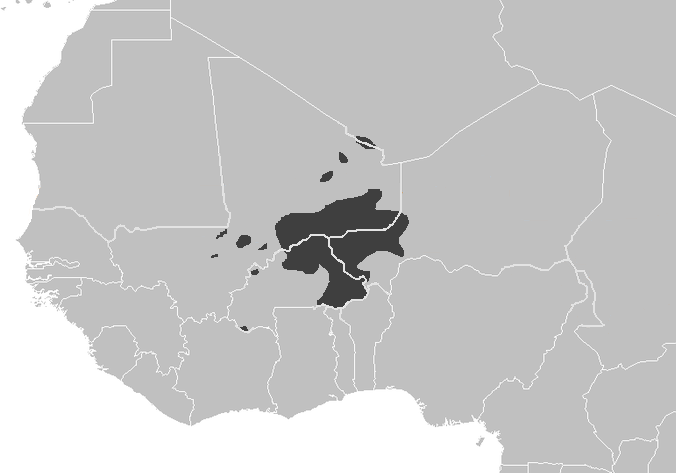
Since independence, Algeria has jealously guarded the principle of non-intervention of its army beyond its borders. The vote of both chambers, followed by presidential authorization, thus holds both political and operational value. Algiers does not want to become the new gendarme of the Sahel. It wants to prevent the chaos in Niger from spilling over into the Hoggar, weakening its Saharan routes, and threatening infrastructure related to gas, uranium, or cross-border trade.
Geography imposes this caution. Between northern Niger, Libya, and southern Algeria, distance does not protect states: it gives space to traffickers, armed groups, and unescorted convoys. The JNIM, or Group for Support of Islam and Muslims, operates mainly in the Mali-Burkina-Niger arc, while the Islamic State in the Sahel retains capabilities in border areas. None of these groups need to hold Madama to disrupt a logistical line. They only need to make the roads unpredictable, strike local relays, and exploit rivalries between national forces.
Madama is not a stabilization base
The choice of an old French position is telling. An isolated base can serve as a surveillance post, a relay for intelligence, or a support point for patrols. It cannot, by itself, control northern Niger. A military track, even restored, does not replace a logistical chain or units capable of holding the ground after a convoy passes.
On the ground, the decisive question will therefore be that of the actual mission. Is it to protect installations, accompany Nigerien forces, monitor the Libyan border, or prepare operations against armed groups? These tasks do not carry the same cost. The first may remain limited. The last two would require human intelligence, available aviation, and a medical setup that official announcements have not yet identified.
The French precedent should serve as a warning. Barkhane had an air fleet, drones, intelligence capabilities, and considerable logistical depth. It failed to translate its tactical successes into sustainable political control. A smaller Algerian mission will not be able to compensate for the absence of administration, justice, and services in the areas traversed. It risks even becoming a symbolic target if presented as the guarantee of a reconquest that Niamey cannot ensure alone.
The Russian factor and Niamey's calculations
For the Nigerien junta, the Algerian arrival offers a welcome margin of maneuver. It allows for diversifying partners without restoring a French presence and without abandoning the security relationship with Moscow. For Algiers, it is a way to enter the dossier without officially endorsing the project of the Sahel States Alliance. This ambiguity suits both capitals, but complicates coordination on the ground.
Russian forces or their successors in the region do not obey an Algerian chain of command. Nigerien units, on the other hand, will have to arbitrate between several interlocutors, various methods, and sometimes multiple political priorities. The risk is not necessarily an open confrontation. It is more banal and more dangerous: a poorly coordinated patrol, unshared information, or an incident at a checkpoint can turn a protection operation into a diplomatic crisis.
What the JNIM will seek to measure
The JNIM has no interest in attacking Madama head-on right now. The best response is probably observation. How many vehicles are arriving? At what rate are they being resupplied? Are Algerian soldiers leaving the base? Are Nigerien authorities providing them with guides and intelligence? An organization that knows how to wait can obtain these answers through transporters, communities, and smuggling networks.
The first test could therefore take place far from the base, on the routes connecting northern Niger to the center of the country or to the Malian and Libyan borders. An attack on a convoy, an improvised explosive device, or the kidnapping of a local intermediary would be enough to impose a choice on Algiers: remain in a limited protection posture or gradually expand the mission. This is how external commitments lengthen, rarely by a single decision, often by the accumulation of incidents.
The available facts remain incomplete, particularly regarding the number of deployed troops and the initial tasks assigned to the Algerian units. But an operational conclusion is already solid. Algeria is not closing the Sahelian border: it is advancing a lock. If this lock remains fixed, it will protect a few points. If Algiers wants to control the roads, it will have to accept a mobile, costly, and politically risky war. The JNIM, for its part, will only have to choose the time and place to test the lock.
Sources
Algeria has deployed troops to Madama, Niger, for the first time since 1973, following a parliamentary vote. This deployment aims to protect economic interests and respond to the deteriorating security situation in the Sahel. The JNIM is expected to observe and potentially test the effectiveness of this military presence.
- Algeria deployed troops to Niger for the first time since 1973.
- The deployment follows a parliamentary vote authorizing the action.
- The operation is presented as a protection of economic and energy interests.
- The JNIM is monitoring the situation and may test the deployment's effectiveness.
- Algeria's action reflects a shift from its long-standing non-intervention policy.