
EU approves 1 billion euros for Ukraine and leaves Poland's airspace test open
 Dr. Klaus Weber
EU approves 1 billion euros for Ukraine and leaves Poland's airspace test open
On November 20, 2026, the Council of the European Union decided on additional military aid for Ukraine worth 1 billion euros. On the same day, Poland reported three Russian aerial objects in its airspace, presumably two missiles and a drone. This temporal coincidence is strategically more revealing than any summit declaration: Europe can decide on new aid packages, but it still cannot reliably prevent the war from reaching its own NATO eastern flank.
One billion euros for the right category
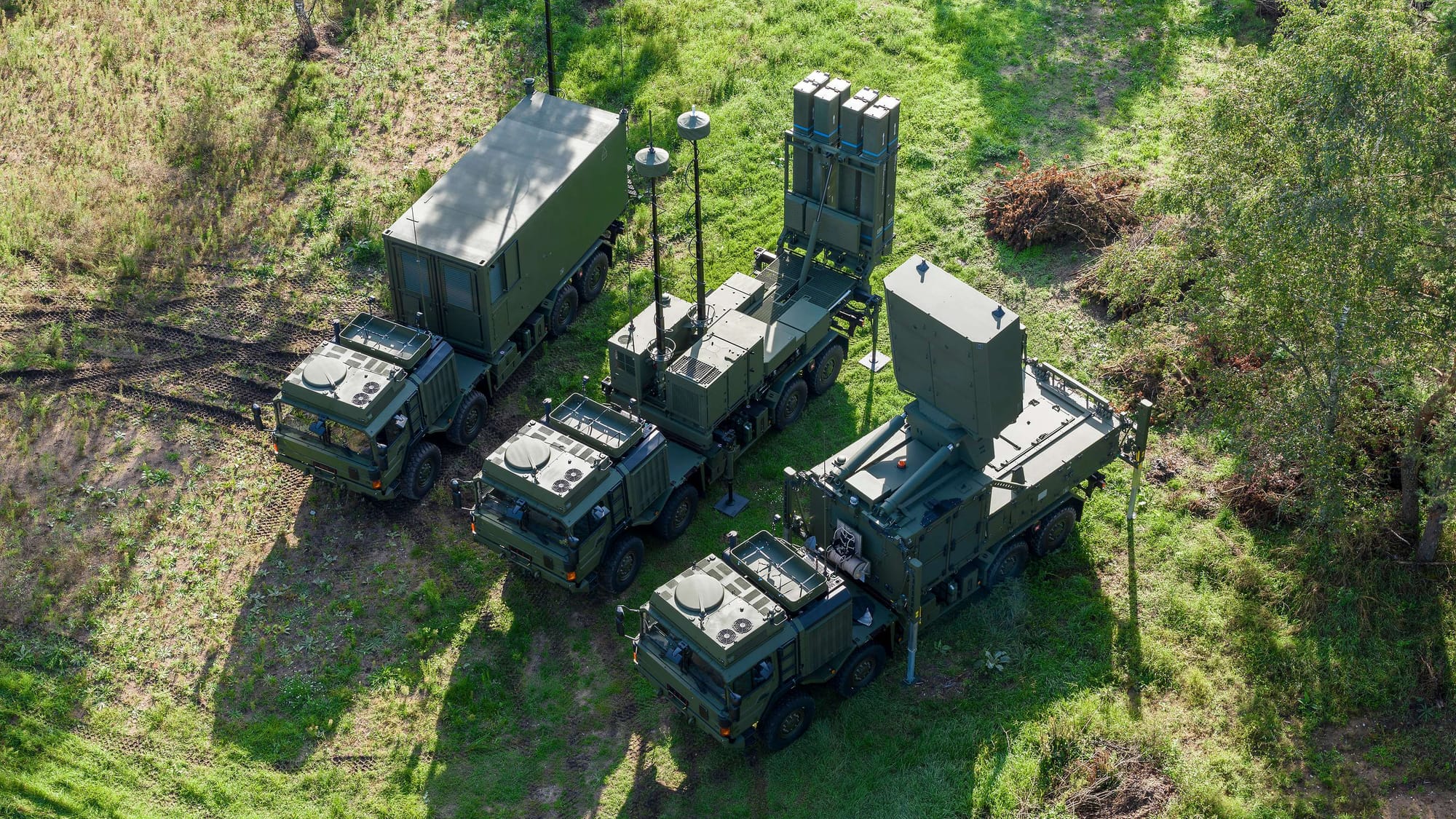
The new tranche from the European Peace Facility is to be provided through joint procurement, according to the Council. Planned are drones, air defense, ammunition, electronic warfare, radar systems, and explosives. This is not symbolic support. Kyiv needs exactly those capabilities that can limit the Russian advantage in missiles, drones, and reconnaissance. The decision also shows that the EU increasingly understands its support as an industrial task rather than merely a financial one.
- 1 billion euros additional EPF military aid
- Drones, air defense, and radar systems
- Ammunition, electronic warfare, and explosives
- Joint procurement instead of isolated national decisions
However, joint procurement is not yet a joint capability. Months or years lie between the Council's decision, contract signing, production slot, delivery, and operational readiness. For a Ukrainian unit under daily missile fire, the political decision is therefore initially an option, not an available battery.
The Polish incident exposes the European gap
The three airspace violations over Poland make this delay politically visible. Warsaw described the incident as a Russian provocation; London condemned it as completely unacceptable. What matters less is whether Moscow intended to escalate deliberately. What matters is that an alliance with high defense budgets still has to react to the next trajectory instead of being able to control the entire approach path.
Poland has been massively investing in its armed forces for years and is building a multi-layered air defense with Patriot, Narew, and other sensors. Nevertheless, no national system, let alone a European system, is seamless. Ukraine demonstrates daily how challenging it is to defend against a combined salvo of cruise missiles, ballistic missiles, and low-cost drones. A single expensive interceptor missile cannot cost-effectively counter the entire threat.
Here lies the real strategic connection between EU aid and the Polish incident. Europe finances in Ukraine the defensive experience it needs at its eastern border. But it has not yet converted this experience into a permanently available European production and command structure. Thus, Ukraine serves simultaneously as a shield, testing ground, and warning signal.
From contracts to capabilities
NATO Secretary General Mark Rutte emphasized on November 12 at the Transatlantic Defense Industry Access Forum that more than 50 billion US dollars in new defense procurements have been announced since the NATO summit in Ankara. His central demand was to translate contracts into real capabilities. That is the right measure. Europe suffers not primarily from a lack of announcements but from long delivery times, fragmented orders, and insufficient ammunition and interceptor missile production.
The EU is trying to solve this problem with the EPF and other instruments. Joint procurement can bundle demand and make the European industry more predictable. However, it cannot automatically generate production capacity. If member states order the same systems without organizing spare parts, training, data links, and maintenance together, no European air defense network will emerge, but rather an expensive stock of national islands.
Additionally, there is transatlantic dependence. For sensors, missile defense, satellite reconnaissance, and command capability, European armed forces remain reliant on American contributions. This is militarily reasonable for now, but politically dangerous if Washington changes its priorities. The EU can provide one billion euros; however, it cannot quickly purchase a sovereign early warning and interception architecture.
The paradox of European support
Thus, November 20 reveals a European paradox. The more Europe supports Ukraine, the clearer it becomes what capabilities Europe itself lacks. The additional billion is necessary, but it is not proof of strategic autonomy. Similarly, the reaction to the Polish airspace incident demonstrates alliance solidarity, but not yet the capability for seamless deterrence.
Europe has learned to finance defense. It has not yet learned to transform financed decisions quickly enough into available capabilities.
The political task is therefore not to choose between Ukraine aid and the defense of Poland. It is to connect both tasks within a common European air defense architecture. This requires binding delivery deadlines, common stocks, interoperable radars, and an industrial division of labor that goes beyond national prestige projects. Otherwise, the billion euros remains a correct step at the wrong pace. Europe then buys more security for Ukraine while its own eastern flank continues to wait for the next warning signal.
Sources
- Council of the European Union, November 20, 2026, European Peace Facility and additional 1 billion euros military aid.
- Reuters, November 20, 2026, Russian aerial objects in Polish airspace.
- NATO, November 13, 2026, speech by Secretary General Mark Rutte at the Transatlantic Defense Industry Access Forum.
On November 20, 2026, the EU approved 1 billion euros in military aid for Ukraine, coinciding with Poland's report of three Russian aerial objects in its airspace. The aid package aims to enhance Ukraine's defense capabilities against Russian threats, including drones and missiles. This incident underscores the ongoing challenges in European defense readiness and the need for a cohesive air defense strategy.
- EU approved 1 billion euros in military aid for Ukraine on November 20, 2026.
- Poland reported three Russian aerial objects in its airspace, including two missiles and a drone.
- The aid package includes drones, air defense, munitions, and electronic warfare systems.
- The incident highlights the gaps in European defense capabilities despite increased military spending.
- NATO Secretary General emphasized the need to translate contracts into real military capabilities.