
Russian Missiles Hit Poland in 2026 and Expose NATO's Airspace Problem
 Alexandra Reeves
Russian Missiles Hit Poland in 2026 and Expose NATO's Airspace Problem
Three Russian cruise missiles and a jet-powered drone did not merely lose their way over Ukraine on Friday. They crossed into Poland while 11 countries were conducting a major military exercise nearby. That is the part European officials should be concentrating on.
Polish authorities reported three violations of national airspace in the south-east, with the objects crashing near Nowy Lipowiec, Mołodycz and Rudnik nad Sanem. No injuries were reported in Poland, but the timing was hard to dismiss. The sites were between 50 and 60 kilometres from Nowa Dęba, where roughly 2,800 foreign troops were training alongside several thousand Polish personnel. Prime Minister Donald Tusk called the incident an intentional provocation. NATO Secretary General Mark Rutte described it as a grave violation and said alliance aircraft had been scrambled.
A Russian strike crossed an alliance border
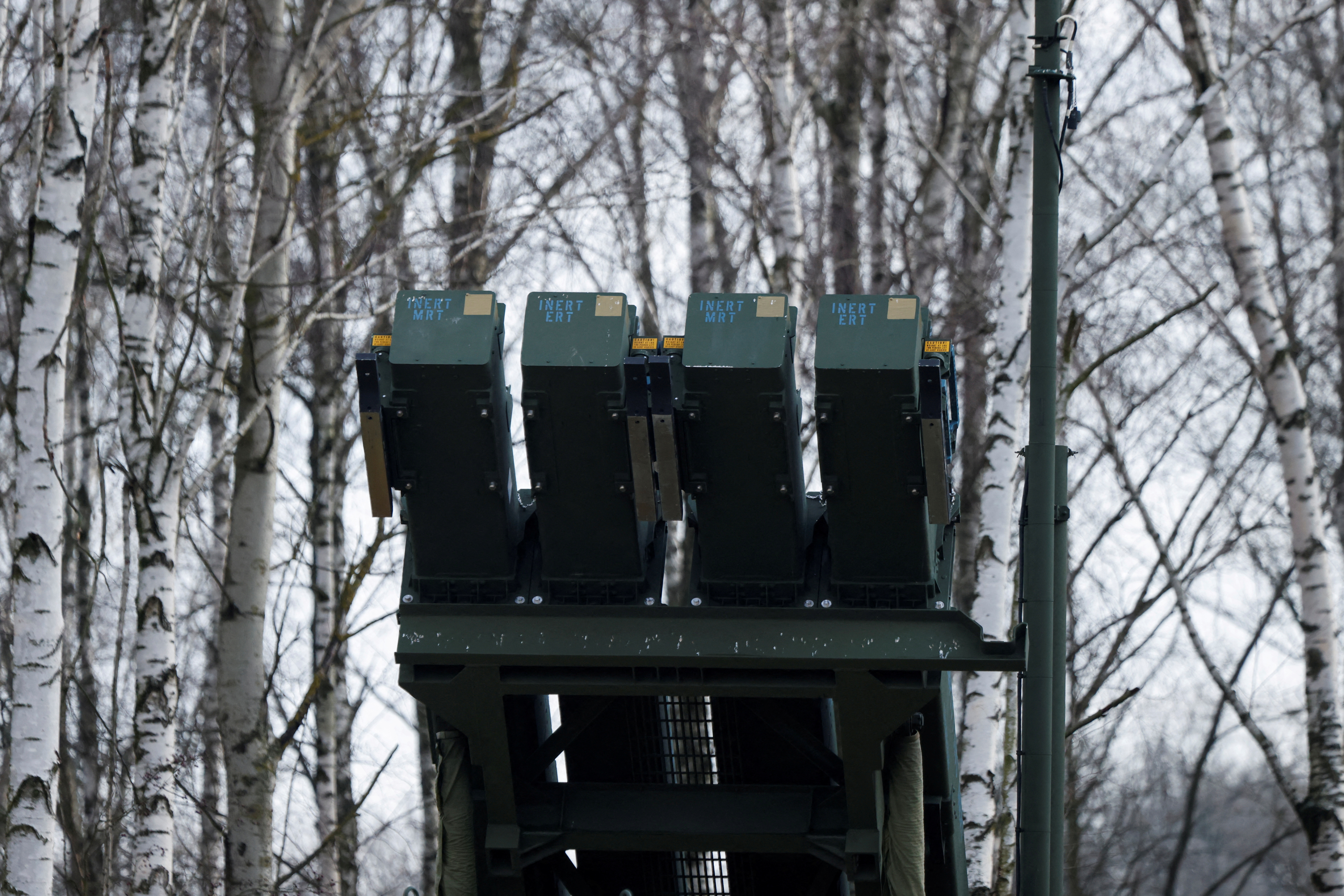
The immediate temptation is to argue about intent. Did Moscow deliberately aim at Poland, or did a large strike package produce predictable spillover? The public evidence does not yet settle that question. It does establish something more useful: Russia is willing to conduct attacks at a scale that makes allied airspace violations increasingly likely, even when NATO forces are exercising in the same region.
According to the Polish operational commander cited by The Guardian, Russia used seven bombers, 26 Kalibr cruise missiles, 72 Kh-101 cruise missiles and more than 500 drones in the overnight assault. Those figures describe a very large, layered attack rather than a single navigation error. Air traffic control at Rzeszów-Jasionka airport, a major passenger hub and a key transit point for aid to Ukraine, was briefly evacuated for the first time since the full-scale war began.
That matters militarily. An air-defence network must identify, classify and respond to threats while they are moving fast and while friendly aircraft, civilian traffic and exercise forces are sharing the same airspace. A state does not need to launch a deliberate attack on NATO to create a dangerous NATO decision. It only needs to generate enough ambiguity, volume and speed.
The real weakness is not Poland's resolve
Poland has spent years preparing for precisely this kind of pressure. Its forces reacted, senior commanders convened and Tusk spoke directly with Rutte. The political response was faster and more coherent than the alliance's response to the stray missile that killed two people in Przewodów in 2022.
But a prompt reaction is not the same as a solved problem. The harder question is whether NATO has enough sensors, interceptors and shared rules to handle repeated incursions during a winter campaign. Ukraine's experience suggests the answer is uncomfortable. In a November 10 report, Defense News, citing Ukraine's foreign minister Andrii Sybiha, reported that Kyiv was asking Washington to accelerate interceptor deliveries as Russia attacked the energy grid. Sybiha said US intelligence sharing and military assistance through the Priority Ukraine Requirements List remained in place, but he still asked for more quantities and front-loaded supplies.
Ukraine is fighting inside the attacker's envelope and has had to ration air-defence missiles for years. Poland and NATO have more capable systems and a stronger industrial base. They also have more airspace to protect, more civilian aviation to keep moving and a political obligation to avoid shooting down an object before its status is clear. The alliance's technical advantage does not remove the arithmetic problem: defensive missiles are expensive, launchers are finite and Russia can mix drones with cruise missiles to force costly choices.
This is coercion below the threshold
Moscow gains something whether the violation was intentional or not. If NATO intercepts every ambiguous object, Russia can impose a high financial and operational cost. If NATO hesitates, Russia learns that its strike corridors can brush the alliance without triggering a military response. Either way, the boundary becomes a laboratory.
That does not mean Article 5 is about to be invoked. It means the alliance's deterrence message is being tested in the grey space before an unmistakable attack. Rutte's language of solidarity is politically necessary, but deterrence depends on what follows: more persistent surveillance, better cross-border command arrangements and a clear understanding of when an air-defence engagement is defensive rather than escalatory.
The exercise timing makes the signal sharper. Russia struck while allied ministers and troops were assembled at a training site close to the impact area. Perhaps Moscow wanted to intimidate the coalition supporting Ukraine. Perhaps it wanted to demonstrate that European military activity can be disrupted at will. The distinction matters less than the effect. Poland's eastern flank is not a rear area anymore, and the alliance is being forced to rehearse that fact in real time.
What to watch next
The next test will be practical, not rhetorical. NATO should explain what was detected, how quickly aircraft were scrambled and whether the response exposed gaps between national air-defence networks. Poland will also want stronger protection around Rzeszów and other logistics nodes, while Ukraine will press for the interceptors that could reduce the chance of Russian strike packages reaching Polish territory in the first place.
Europe's leaders are right to call the incident dangerous. They should be more precise about why. This was not only a Russian provocation or another tragic by-product of the war. It was a demonstration that NATO's airspace can become part of Russia's operational problem set without Russia formally attacking NATO.
The uncomfortable conclusion is that Poland may be safest when Ukraine has enough air defence to stop Russian strike packages before they reach the border. That makes support for Kyiv an act of allied self-defence, not charity. If Europe treats the next incursion as an isolated accident, Moscow will keep turning accidents into strategy.
Sources
Three Russian cruise missiles and a drone violated Polish airspace in November 2026, crashing near Nowy Lipowiec, Mołodycz, and Rudnik nad Sanem during a NATO military exercise. The incident, described by NATO as a grave violation, involved a large-scale Russian attack using multiple missile types and drones. No injuries were reported, but the event raised concerns about NATO's airspace security and response capabilities.
- Three Russian cruise missiles and a drone violated Polish airspace.
- The incident occurred during a military exercise involving 2,800 foreign troops and Polish personnel.
- Polish authorities reported no injuries from the missile strikes.
- NATO Secretary General described the incident as a grave violation.
- The attack involved a large-scale Russian military operation with multiple types of missiles and drones.