
American Strikes on Iranian Missile Sites and Mine Boats in 2026 Reveal the Fragility of the Hormuz Agreement
 Ahmed Al-Rashid
U.S. Strikes on Iranian Missile Sites and Mine-Laying Boats in 2026 Reveal the Fragility of the Hormuz Agreement
On May 25, 2026, U.S. Central Command stated that its forces conducted defensive strikes in southern Iran against missile launch sites and boats attempting to lay mines, on the same day that Washington was discussing negotiations progressing well to end the war and open the Strait of Hormuz. This is not a media paradox, but an accurate description of the state of the Gulf today. The political table is discussing a memorandum of understanding, while the sea continues to punish anyone who believes that signing alone is enough to open the passage.
The news reported by the Associated Press and repeated by Reuters in subsequent reports not only adds a new strike to the record of the U.S.-Iranian war of 2026. Its military value is that it defines the nature of the remaining threat after weeks of talk about a ceasefire. The danger is not here in Tehran or in a distant nuclear facility, but in a small boat carrying mines, and in a coastal missile platform that can make an American destroyer or an oil tanker think twice before crossing the passage.
The Strike Amid Talks of Agreement
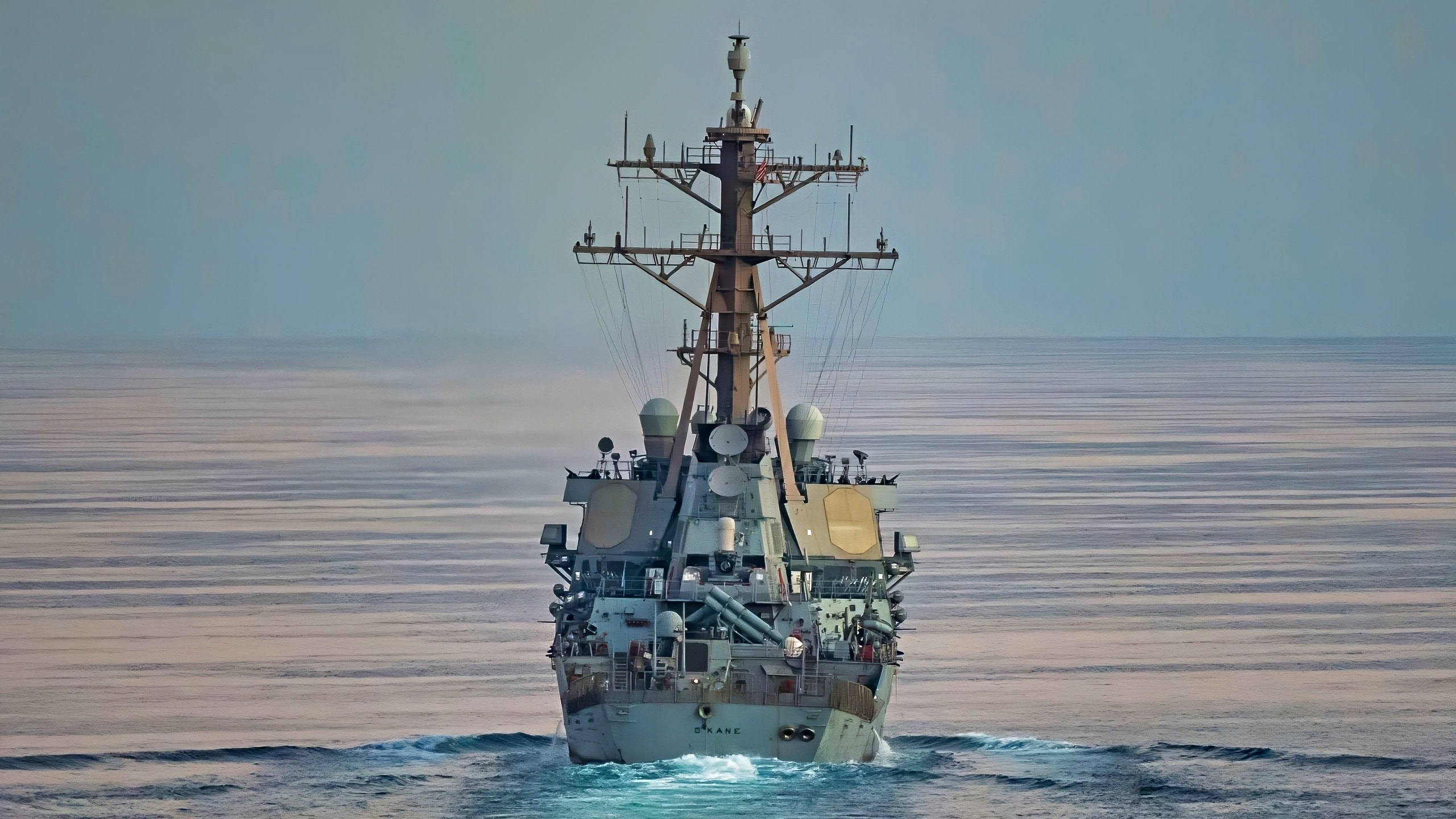
According to the American narrative, the strikes were carried out to protect U.S. forces from Iranian threats, emphasizing that Washington is exercising restraint due to the existing ceasefire. The announced details are limited, and this in itself is part of the message. When a major naval power says it struck mine-laying boats and missile launch sites and does not provide a complete map of the targets, it does not want to announce a wide operation, but it also wants to remind the adversary that the sea is being monitored and that the rules of engagement have not frozen.
In contrast, the timing was not innocent. Reports about a framework for U.S.-Iranian understanding spoke of gradually opening the Strait of Hormuz, and perhaps returning traffic to pre-war levels within thirty days, while discussing broader issues such as enriched nuclear materials, frozen Iranian funds, and U.S. military presence around Iran. But any military officer who has served in the region knows that thirty days in the Strait of Hormuz is not a diplomatic duration but an engineering and security one. Mine removal, ensuring safe passages, convincing insurance companies, and reassuring ship crews are much harder than drafting a joint statement.
Mines Are More Important Than Nuclear Rhetoric
Practically, negotiators can postpone nuclear discussions for two months, and they can write a vague sentence about not possessing nuclear weapons, but they cannot postpone the question of mines. One sea mine in the right place is enough to raise the cost of passage, recalculate insurance prices, and force tankers to wait or turn around. For this reason, the U.S. strike against mine-laying boats seems more significant than striking a single missile site. A missile kills if launched. A mine wins even before it explodes because it sows doubt in navigation charts.
Iran understands this equation well. Since the beginning of the Hormuz crisis, the strongest card has not been to completely close the strait, but to make it unreliable. The difference is significant. A complete closure calls for a wide military response and puts all major powers against Tehran. However, making passage possible but fraught with risks gives Iran daily negotiating power. Every ship that waits, every captain that requests escort, and every insurance company that raises prices becomes a political message that does not need a speech from the leader or president.
The Gulf Between U.S. Protection and Iranian Risks
For Saudi Arabia, the UAE, Qatar, and Kuwait, the new strikes reveal an uncomfortable truth. These countries want an agreement that quickly opens the strait, but they do not have the full tools to enforce that agreement. They have air defenses, U.S. bases, radars, and huge budgets. But in the narrow sea between Iran and Oman, they still rely on the American decision, and on the mood of an American leader who sees that negotiation and bombing can happen on the same day.
Here, the problem of the triangle of capability returns, which I often repeat because reality repeats it more than I do. The Gulf has purchased equipment, but it has not built enough joint systems for training, command, mine removal, and protecting maritime convoys in a long crisis. Buying Patriot or THAAD or Iron Dome addresses part of the sky. But it does not open a mined strait. Maritime security needs mine sweepers, patrol aircraft, inspection teams, unified rules of engagement, and before that, political trust among the Gulf capitals themselves. This trust is not a spare part that can be ordered from Washington.
Why a Thirty-Day Agreement Is Not Enough
American reports spoke of a proposal to open the strait within thirty days, and the possibility of releasing frozen Iranian funds and lifting some forms of maritime blockade. Theoretically, this seems logical. Iran gains an economic and sovereign benefit, and the United States gets lower oil prices and calms a front it does not want open forever. But the problem is that the strait is not a customs passage. It is a military space saturated with doubt, and commercial ships do not return to their normal course just because diplomats said so.
If Iranian boats, or boats linked to the Revolutionary Guard, are still able to attempt to lay mines during negotiations, it means that Washington and Tehran may agree politically before their military tools on land and sea are disciplined. In armies, this is the most dangerous area between war and peace. The politician says that the agreement is close. The field commander sees a target threatening his forces and strikes it. The other side interprets the strike as an insult. Then the mediators return to salvage what was called a nearly ready agreement just hours before.
Lebanon Is Not a Side Detail
On the same day, Israel continued to strike Hezbollah positions in Lebanon, while reports indicated that the party was using fiber-optic drones against Israeli forces. This is not a separate file from Hormuz as some diplomats like to imagine. Any U.S.-Iranian agreement that talks about ending operations on all fronts, including Lebanon, will collide with the question of control. Can Tehran stop all its allies at the same time it requests Washington to open the strait? And can Israel accept a halt to strikes if drones continue on its borders?
From an Arab perspective, this is the part that is often missing from Western analysis. The Gulf does not only fear the Iranian missile, but fears that the U.S.-Iranian agreement becomes an arrangement between two powers at the expense of the security of the countries lying between them. When Washington strikes inside Iran to protect its forces, and when Israel strikes in Lebanon to protect its forces, Gulf capitals seem like those waiting for the result of a match in which they have neither the referee's whistle nor the game plan.
Military Summary
The strikes of May 25 do not mean that the agreement is dead, but they mean that the agreement has not yet been born militarily. There is a difference between Iran accepting the principle of opening Hormuz and the strait becoming safe enough for regular passage. And there is a difference between the United States announcing restraint and stopping strikes against what it considers a direct threat to its forces. At sea, intentions do not reveal mines.
The equation now is simple and harsh. If Washington wants a viable agreement, it must transform it from a political text into a clear maritime monitoring system. And if Tehran wants a real price for opening the strait, it must stop the game of ambiguity between the state, the Revolutionary Guard, and the small boats. As for the Gulf states, they must see in this crisis a lesson, not just a new opportunity for purchasing. For the weapon that does not transform into a shared capability remains like a beautiful rifle hanging on the wall of the operations room. It reassures the eye, but it does not open a mined passage.
Sources: Associated Press, Reuters, Al Jazeera, The Washington Post, Georgia Public Broadcasting.
U.S. Central Command conducted defensive strikes against Iranian missile launch sites and minesweeping boats in Southern Iran on May 25, 2026. This action occurred amid discussions about negotiations to open the Strait of Hormuz, underscoring the ongoing military tensions in the region. The strikes were aimed at protecting U.S. forces from Iranian threats, highlighting the complexities of military operations during diplomatic efforts.
- U.S. Central Command conducted strikes in Southern Iran on May 25, 2026.
- The strikes targeted Iranian missile launch sites and minesweeping boats.
- The operation was described as defensive amid ongoing negotiations regarding the Strait of Hormuz.
- The strikes highlight the ongoing military tensions despite diplomatic talks.
- The report emphasizes the importance of maritime security in the region.