
As aircraft losses mount, Pentagon wants a software fix to see through the fog of war
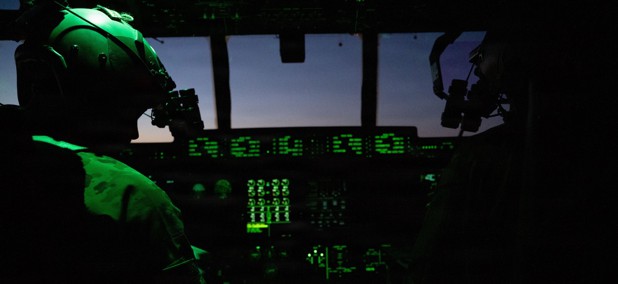
The U.S. planes that have gone down in the Middle East since the launch of Operation Epic Fury all lacked the same thing: a common operating picture that includes relevant intelligence and data. The Defense Innovation Unit announced Monday it’s looking for a fix.
The request: an open-architecture software suite to fuse real-time data into a credible picture of moving objects, threats, and conditions. The idea is to give pilots a broader understanding of reality in a way that is unremarkable to American motorists with easy access to data about ever-changing conditions but aspirational for air crews flying planes outfitted with antique computer hardware.
U.S. Air Force officials have warned of a lack of a common operating picture among airframes, particularly transport planes like C-130s, for years. But the loss of seven aircraft in just over a month, due mostly to communication errors and friendly fire, has exposed a big gap in how U.S. planes communicate with one another and with ground forces.
At the outset of the war on Iran, the U.S. lost three F-15E Strike Eagles due to Kuwaiti friendly fire. In March, they lost a KC-130 refueling tanker when it was involved in a mid-air mishap with a second tanker, due in part to a transponder failure but, again, pointing to a gap in the planes’ ability to fuse data to identify one another.
During the rescue effort that followed an Iranian shootdown of an F-15E Strike Eagle and an A-10 Thunderbolt on April 3, the U.S. destroyed two MC-130J transport planes when the planes were unable to take off from their makeshift runway, U.S. President Donald Trump said in a press conference on Monday.
“It was sandy, wet sand, so we thought there may a problem taking off because of the weight of the plane… And then we also had all the men jumping back onto the planes, and they got pretty well bogged down.”
It’s the sort of problem that access to real-time data on terrain, weather, and other factors could have solved. But most older transport planes lack up-to-date maps or terrain data, forcing crews to “rely heavily on pre-mission planning products, voice updates, and aging platform-specific displays,” according to DIU’s ask.
Because computer hardware varies widely throughout the U.S. aircraft fleet, the Air Force and aircrews frequently use workarounds such as software-defined radios or off-the-shelf communications equipment to get the data they need. But there is no common standard, which makes it difficult for aircrews to know what data they need.
“This problem is especially relevant for large, high-value airlift and tanker aircraft that utilize avionics and mission systems that are optimized for more permissive operations,” according to the announcement for DIU’s “Open Mission Engine” program. The new effort seeks software that can combine all the relevant friend, foe, intelligence, and logistics data into one place in real time, not afterward.
While the solicitation doesn’t mention Operation Epic Fury by name, the rising number of U.S. military aircraft mishaps shows how urgently the U.S. military needs a way to better let planes communicate with each other.
Among the features that DIU wants the new software “engine” to have is a “moving map” application that “uses relevant operational data into a single aircrew display, including blue-force awareness, threat and airspace overlays, mission updates, and route decision support.”
The U.S. Air Force has experienced the loss of seven aircraft in the Middle East due to communication errors and friendly fire since the launch of Operation Epic Fury. In response, the Defense Innovation Unit is seeking a software solution to enhance situational awareness and data integration among its aircraft. This initiative aims to address the operational gaps that have led to these incidents, particularly among older transport planes.
- Seven U.S. aircraft were lost in the Middle East due to communication errors and friendly fire.
- The U.S. Air Force has requested a software solution to improve situational awareness.
- The losses include F-15E Strike Eagles and KC-130 tankers.
- The Defense Innovation Unit is seeking an open-architecture software suite for real-time data integration.
- The lack of a common operating picture has been a long-standing issue for U.S. transport planes.