
Benin Facing JNIM and ISSP — 12,000 Soldiers to Secure the Coastal Lock
 Marie Dubois
Benin faces JNIM and ISSP — 12,000 soldiers to hold the coastal lock
In Koualou, on the disputed border between Benin and Burkina Faso, military posts are no longer just points on an administrative map. They have become locks. According to the latest monthly overview from ACLED, the Support Group for Islam and Muslims (JNIM) has struck military positions in this area, killing soldiers and civilians, and then seizing weapons, ammunition, and equipment. In the same Benin-Niger-Nigeria border area, the Islamic State in the Sahel Province (ISSP) is now claiming operations in Nigeria for the first time since 2019.
This is not a spectacular crisis in the media sense. There are no armored columns, no capital threatened tomorrow morning. But on the ground, this is often how the lines shift: an isolated post, a cut-off track, a patrol that does not return, and then a village that learns to negotiate with whoever actually controls the night.
The northern Benin becomes a contact space
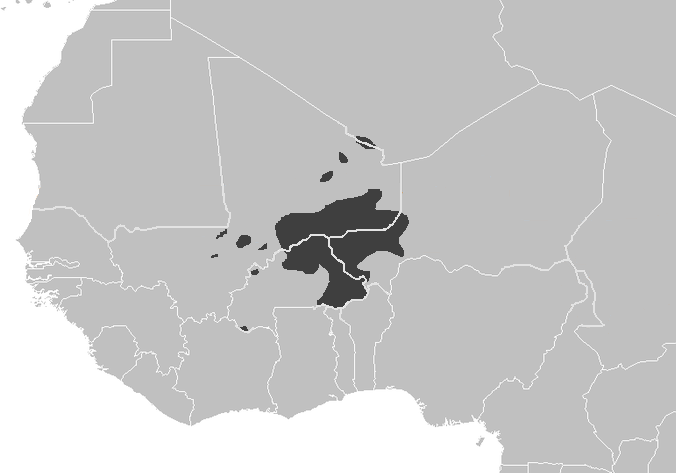
Benin is not Mali, and that is precisely why its case deserves attention. The Beninese Armed Forces (FAB) have about 10,000 to 12,000 active personnel, according to the military report published by DefenceWeb. The army represents the bulk of the force, with around 8,000 men, alongside a modest navy, a small air force, and a recently structured National Guard. This format is suited to a coastal state that has long focused on internal security, the border, and the Gulf of Guinea. It is much less suited to facing two jihadist organizations capable of maneuvering from Burkina Faso, Niger, and northwestern Nigeria.
Geography works against Cotonou. Between the Alibori, Atacora, and border parks, the distances are long, the roads usable by season, and regular forces must cover areas where the presence of the state is measured less by the flag than by the frequency of patrols. The border is not a line. It is a depth of movement: cattle, fuel, smuggling, refugees, hunters, preachers, informants, and armed groups often pass through the same corridors.
Two adversaries, two logics
ACLED highlights an important point: the recent claims of the ISSP in Nigeria gradually clarify the status of networks locally referred to as Lakurawa. These are appearing less and less as an autonomous formation and more and more as a component of the ISSP's presence in border areas. This precision matters. If the ISSP consolidates operational continuity between Niger and Nigeria, northern Benin finds itself exposed not to a one-time infiltration, but to a regional system.
The JNIM, on the other hand, operates differently. Its strength is not just in killing soldiers. It is in showing rural communities that the state arrives late, leaves early, and provides poor protection. The attack in Koualou, if confirmed in all its details, fits into this logic: strike a military point, recover equipment, demonstrate that the contested border is a tactical opportunity, not an obstacle.
The essential data is not just the number of dead. It is the captured equipment and the frequency with which armed groups can return to the same theater without being permanently fixed.
A modernization still too light
The Beninese government has increased its defense effort. DefenceWeb estimates expenditures at 126.13 billion CFA francs in 2025, or about 222 million dollars, compared to 54.04 billion CFA francs in 2021. This is a real leap for a country of this size. Cotonou has also benefited from aid and cooperation from France, the United States, Belgium, and increasingly, China. We see light armored vehicles, protected vehicles, surveillance means, and increased attention to mobile units.
But material modernization is not enough. In this type of theater, what runs out the fastest is not always armor. It is human intelligence teams, mechanics, radios, light drones, medical evacuations, connections with local leaders, and the ability to hold a position after regaining it. From experience, a new vehicle immobilized due to lack of parts quickly becomes a monument to the optimism of a staff.
The small Beninese air force illustrates this constraint. It has a few transport, observation, and helicopter aircraft, but not a sufficient mass to continuously monitor the north, support troops, and simultaneously cover the maritime front. However, Benin cannot completely choose between the northern land and the southern maritime. The Gulf of Guinea remains a major economic artery, while jihadist pressure necessitates a shift in priorities towards the interior.
The political risk behind the military risk
The most sensitive point may be civil-military relations. DefenceWeb reminds us that Benin experienced an attempted coup in December 2025, with the authors citing jihadist insecurity, corruption, and military negligence. Even though Patrice Talon's regime maintains greater stability than its Sahelian neighbors, this alert shows that pressure in the north can contaminate the political center.
It would be too easy, from Paris or Brussels, to reduce the problem to a need for Western training. The Beninese know very well what a war that slips into villages costs. The real question is whether the state can offer a more reliable presence than that of armed groups, without turning every border area into a space of permanent suspicion. Arbitrary arrests, brutal controls, and poorly supervised militias give jihadists what they seek: recruitable grievances.
What to watch for now
Three indicators will matter in the coming months. The first is the frequency of attacks around Koualou, Alibori, and Atacora. An isolated attack remains serious; a series becomes a campaign. The second is the ability of the JNIM or ISSP to capture heavy weapons or usable vehicles. The third is the real cooperation, not just declarative, between Benin, Niger, Nigeria, and Burkina Faso. Since the Sahelian coups and the fracture with ECOWAS, coordinated patrols are politically more difficult. On the ground, this difficulty has a simple consequence: it opens interstices.
Benin is still holding. But it is holding with a short army, thick borders, and two adversaries who learn quickly. The next alert will likely not come from Cotonou. It will come from a post in the north, a secondary road, or a border market where soldiers arrive after armed preachers. This is where the coastal lock will be played out.
JNIM attacked military positions in Koualou, Benin, resulting in casualties among soldiers and civilians, and the loss of weapons and equipment. The Benin Armed Forces, with around 12,000 active personnel, are facing challenges from jihadist groups operating from neighboring countries. The government is increasing defense spending to address these threats, but logistical and operational challenges remain significant.
- JNIM attacked military positions in Koualou, resulting in casualties and equipment loss.
- ISSP claims operations in Nigeria for the first time since 2019.
- Benin has approximately 12,000 active military personnel.
- The government is increasing defense spending significantly by 2025.
- The situation in northern Benin is becoming increasingly complex due to jihadist threats.