
Boko Haram loses 360 captives in Borno in 2026 — the Mandara mountain remains the real front
 Marie Dubois
Boko Haram Loses 360 Hostages in Borno in 2026 — the Mandara Mountains Remain the Real Front
On June 6, in the mountainous area of Mandara, south of Borno State, the Nigerian army rescued 360 hostages from a Boko Haram-held zone. The announcement came the next day, with a detail that speaks volumes about the terrain: two infants died of exhaustion during or after the extraction from the mountains. In this theater, the distance on the map is deceptive. From Gwoza to the rocky retreats leading to the Cameroonian border, a few kilometers can represent a day’s march, especially with children, the injured, and starving civilians.
The event was presented by Abuja as a success of Operation Hadin Kai, the joint force responsible for the Northeast. It must be acknowledged: extracting several hundred people from a massif that has been used as an insurgent refuge for years is not an administrative operation. It requires human intelligence, local guides, fire cover, and a minimum capacity for medical evacuation. But this success must also be viewed without euphoria. Saving 360 people proves that the army can still penetrate certain sanctuaries. It also proves that Boko Haram maintained enough control there to hold hostages for weeks.
Mandara is Not a Hideout, It’s a System
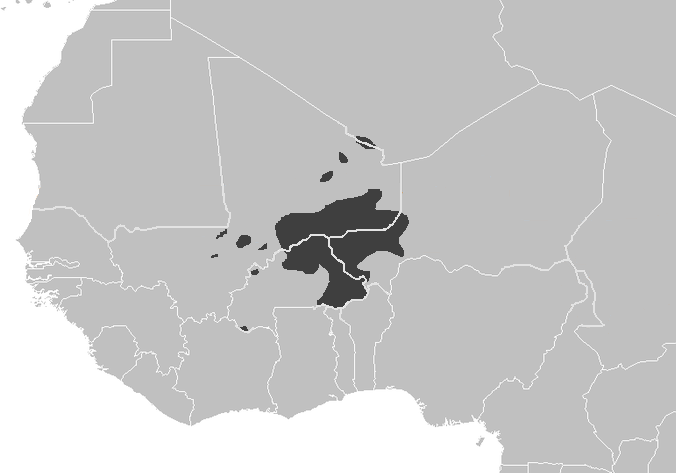
The Mandara range is not just a mountain border. It functions as an old natural counter-mobility device: ravines, secondary paths, scattered villages, passages to Cameroon, observation from the heights. An armored convoy becomes slow there. A foot patrol becomes vulnerable. An armed group that knows the trails can disappear behind a ridge and reappear on a supply route.
During my years in the Sahel, I learned a simple rule: when an adversary chooses the mountains or thick bush, they are not just trying to hide. They are choosing terrain that makes your mechanical power less relevant. In Borno, Boko Haram and the Islamic State in West Africa (ISWAP) do not occupy territory in the same way, but both exploit this weakness. ISWAP has worked more on the islands, shores, and economic circuits of the Lake Chad basin. Boko Haram, on the other hand, maintains an older relationship with the massifs, forests, and isolated communities around Gwoza.
The Number 360 Hides Another Number, 416
The official toll speaks of 360 people freed. Premium Times recalls a more troubling element: during the attack on Ngoshe in March, Boko Haram reportedly kidnapped 416 people, including minors. The group then released a propaganda video from the locality, with a commander promising to stay there during Ramadan and celebrate Eid al-Fitr at the central mosque. If these elements are accurate, the current release does not conclude the Ngoshe episode. It only shows one phase of it.
There is also a significant divergence regarding the mechanism of the exit. The army speaks of a major operation conducted by intelligence. Local and security sources cited by the Nigerian press say that Boko Haram may have released some of the hostages. This contradiction is not a mere communication detail. On the ground, a negotiated release, an organized escape under military pressure, and a forceful extraction do not produce the same effects. The first may leave the opposing command chain intact. The second may indicate real but incomplete pressure. The third demonstrates a temporary superiority. At this stage, open information does not allow for a clean resolution.
Ransom as a War Economy
Another point deserves attention: according to Premium Times, a commander named Mallam Abu issued a 72-hour ultimatum on April 19 and demanded 5 billion naira. The amount is likely as much a psychological tool as a real price. But the logic is clear. Mass kidnappings in Nigeria are no longer just a tactic of terror; they have become a war economy that connects insurgents, intermediaries, pressured communities, and criminal networks.
This is where northeastern Nigeria intersects, through different paths, with the dynamics observed in the central Sahel. In Mali or Burkina Faso, controlling a road, a market, or a pastoral area allows for taxation. In Borno, controlling captive civilians allows for negotiation, recruitment, intimidation, and financing. Groups do not need to administer every village permanently. Sometimes, it is enough to show that they can kidnap, move, and hold populations despite state announcements.
American Pressure Does Not Replace Ground Control
The military context is not negligible. Abuja claims that a joint operation with the United States killed 175 ISWAP fighters last month. If this figure is reliable, it is a significant blow against part of the Islamic structure around Lake Chad. But strikes and targeted raids have a known limit: they reduce a capacity, they do not hold valleys, paths, and villages in the aftermath of the operation.
The release of the hostages from Mandara thus shows two simultaneous wars. The first is kinetic: finding camps, hitting leaders, destroying stocks, recovering hostages. The second is territorial: preventing Boko Haram from regaining movement corridors and reconstituting a captive population. The first can be conducted with drones, signal intelligence, and special forces. The second requires reliable regular units, police presence, community relays, and local justice that does not push civilians toward the bush.
The Immediate Risk
The most likely risk is not a major frontal battle in the coming days. Boko Haram has lost a significant human resource and will likely seek to compensate. The most logical option would be a series of attacks against villages considered collaborators, or against secondary roads between Gwoza, Bama, and access routes to Cameroon. The released hostages also become witnesses. This makes them valuable for intelligence but vulnerable if their protection is poorly organized.
The operational lesson is sober: the Nigerian army has achieved a useful, perhaps significant action. But as long as Mandara remains a space that the state traverses more than it controls, Boko Haram has not lost its front. It has lost a camp. The difference is substantial.
Open Sources Used
- Associated Press, June 7, 2026, announcement of the release of 360 hostages in Borno.
- Premium Times Nigeria, June 7, 2026, details on Ngoshe, the 416 kidnapped individuals, and the contradictory accounts of the release.
- Al Jazeera, June 7, 2026, coverage of the operation in the Mandara mountains and Boko Haram context.
- Africa Center for Strategic Studies, media review of June 8, 2026, summary of Nigerian reports on the operation.
On June 6, 2026, the Nigerian Army rescued 360 captives from Boko Haram in the Mandara Mountains of Borno State. The operation, part of the Hadin Kai initiative, highlighted the challenges of operating in difficult terrain, where Boko Haram maintains control over hostages. Despite the rescue, concerns remain about the ongoing threat posed by Boko Haram, especially following their earlier kidnapping of 416 individuals in Ngoshe.
- 360 captives were rescued by the Nigerian army from Boko Haram in the Mandara Mountains.
- Two infants died during the rescue operation due to exhaustion.
- Boko Haram had previously kidnapped 416 individuals in Ngoshe, indicating ongoing hostage situations.
- The operation was part of the Hadin Kai military initiative in Northeast Nigeria.
- There are conflicting reports about whether the captives were released or rescued.