
British Army wants quiet power to replace noisy generators
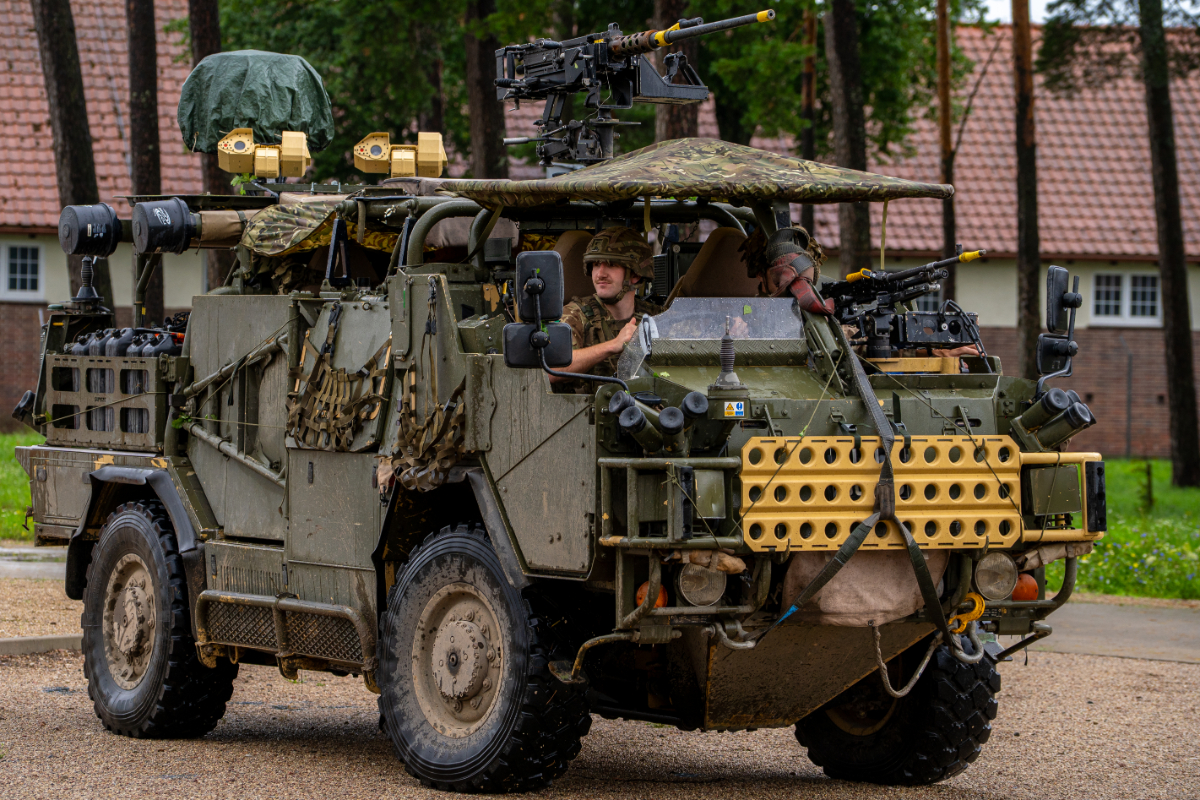
The British Army is looking for new ways to power its troops in the field, offering £2.45 million ($3.26 million) to companies that can develop better batteries, faster chargers and quieter alternatives to the diesel generators units rely on today.
UK Defence Innovation, the Ministry of Defence’s innovation arm, launched the Tactical Power Challenge on Oct. 15 on behalf of the British Army, with support from the Defence Science and Technology Laboratory, known as Dstl. The competition is being run alongside Australia’s Advanced Strategic Capabilities Accelerator, which has its own parallel effort on distributed tactical power, and first-stage bids are due by noon GMT on Nov. 10, 2026, according to the UK government announcement.
The push stems from how much more electricity armies now use. Radios, drones, sensors, electronic warfare kit, counter-drone systems and battlefield computers all need power, and research and experimentation by the British and Australian armies found a sharp rise in power demand driven by digital and autonomous systems. Most of that power still comes from fuel-burning generators, which are noisy, hard to move and depend on regular fuel deliveries.
“Reliable and deployable power is fundamental to maintaining operational advantage,” said John Cunningham, director of innovation responsible for UK Defence Innovation.
The challenge has two parts. The funded strand, called Innovative Tactical Power, is a two-stage competition for technologies at an early-to-middle stage of development, roughly from lab prototypes to systems tested in a relevant environment, which winners would mature and demonstrate by March 2028. A separate, unfunded strand called Immediate Power is aimed at more mature products that could meet current needs quickly, and companies with promising systems may be invited to join British Army trials and experiments in the UK.
The Army’s wish list includes safer battery chemistries that hold at least as much energy as lithium-ion cells, high-speed charging, new types of power generation, and equipment to store, manage and distribute electricity across dispersed units. It also wants technology that lets troops operate silently, cuts the fuel they need to haul, supports uncrewed and robotic systems, and includes power sources soldiers can carry themselves. Both complete systems and individual components are eligible.
“British industry is central to delivering the capabilities our Armed Forces need for the future. This challenge will help identify and develop sovereign technologies that can improve operational energy resilience, support deployed personnel and strengthen the UK defence innovation ecosystem,” said Cunningham.
The British Army has a requirement for more than 4,000 Lightweight Field Generators and is studying how to modernize its tactical power as current systems near replacement, giving companies that perform well a possible route into future procurement.
Bids may be shared with Australia’s Department of Defence for assessment, and results from funded projects may be passed to Australian and U.S. defense partners under information-sharing arrangements. Second-stage submissions will be by invitation only, with demonstration work due to finish by March 2028.
Content preview only. Full article available at source. View Full Article
The British Army launched the Tactical Power Challenge on October 15, 2023, offering £2.45 million for companies to develop quieter and more efficient power sources. Bids are due by November 10, 2026, as the Army seeks to modernize its power generation capabilities to meet increasing demands from advanced military technologies. The initiative includes a requirement for over 4,000 Lightweight Field Generators and aims to enhance operational energy resilience.
- The British Army is offering £2.45 million for companies to develop better power solutions.
- The Tactical Power Challenge was launched on October 15, 2023.
- Bids are due by November 10, 2026.
- The Army requires over 4,000 Lightweight Field Generators.
- The initiative aims to address rising power demands from modern military equipment.