
South Korea's Cheongwang Laser Resets the 2026 Counter-Drone Cost Equation
 Marcus Chen
South Korea's Cheongwang Laser Resets the 2026 Counter-Drone Cost Equation
Two Korean laser systems shot down three drones during a South Korean Army exercise on October 14. That sounds like a routine technology demonstration. It is not. The important number is not three. It is the claimed $1.50 cost per shot.
Hanwha Systems' stationary Cheongwang and a 30-kilowatt-class vehicle-mounted laser were used during the Army's TIGER+ Future Warfare Integrated Combat Exercise. Defense News reported that the stationary system set a drone on fire and brought it down, while the company did not disclose the target types, engagement ranges, or which weapon destroyed each aircraft. Those omissions matter. A demonstration proves that a laser can defeat a drone under controlled conditions; it does not yet prove that a battery can survive a saturation attack.
The Weapon Is Real, But Its Promise Needs a Calculator
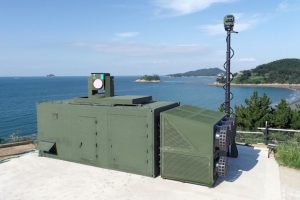
Cheongwang, formally the Laser Air Defense Weapon Block-I, was developed by Hanwha under a program led by South Korea's Agency for Defense Development. South Korea began fielding it in December 2024 and had roughly five systems protecting major government facilities by June, according to Korea JoongAng Daily. Hanwha describes it as the world's first operationally deployed laser weapon.
The attraction is obvious. A conventional interceptor turns every cheap quadcopter into a missile-budget problem. A laser replaces the magazine with electrical power, at least until weather, cooling, generator capacity, or component wear becomes the limiting factor. If the $1.50 figure is accurate, the cost exchange against a drone costing hundreds or thousands of dollars is radically better than using a surface-to-air missile.
But a laser's cost per shot is not its cost per kill. The calculation must include the radar, electro-optical tracker, power generation, maintenance, crew, and the defensive missile or gun that covers the laser when rain, fog, smoke, dust, or an obscurant defeats its beam. Anyone who has stood watch on a destroyer knows the weapon is only one part of the engagement chain. The sensor and power train determine whether it is available when the attack arrives.
North Korea Gives Seoul a Practical Test Case
South Korea is not buying this capability for a laboratory scenario. North Korean drones have repeatedly crossed the border. In December 2022, five entered South Korean airspace, with one reaching the Seoul area; fighters, attack helicopters, and warning shots failed to bring any of them down. That failure created a clear operational demand for a cheaper, persistent layer between electronic warfare and expensive missiles.
The October exercise showed that Seoul is building a layered answer rather than treating the laser as a magic wand. The demonstration included electronic jamming and a K21 armored vehicle engaging incoming drones. That is the right architecture: jammers for some targets, guns for targets that close quickly or maneuver unpredictably, and directed energy for targets that remain exposed to a stable beam long enough to be heated through.
The next question is scale. Five fixed systems can protect selected facilities. They cannot defend the airspace, logistics nodes, artillery positions, and maneuver units that would matter in a major conflict. Hanwha is developing a 50-kilowatt Laser Armored Vehicle for export and plans production by the end of 2027, while South Korea's proposed 2027 defense budget includes research funding for a mobile Block-II version. Until those systems are mobile, networked, and numerous, Cheongwang is a point-defense tool—not an answer to a drone campaign.
Why This Matters Beyond the Korean Peninsula
The wider Indo-Pacific problem is not a handful of reconnaissance drones. It is mass. China, North Korea, and other militaries can combine cheap unmanned aircraft, loitering munitions, decoys, electronic warfare, and long-range fires. A defender that answers every contact with a high-end interceptor eventually runs out of money, missiles, or both.
A recent CSIS report, The Art of Swarming, makes the same operational point from the offensive side: networked drones can sense, deceive, jam, strike, and reattack while forcing defenders to reveal sensors and waste interceptors. That concept makes affordable close-in defenses essential. A laser does not solve the swarm problem, but it can change the defender's ammunition curve if several weapons can engage different targets simultaneously and if the power supply survives the fight.
For the United States and its Indo-Pacific partners, South Korea's work is more relevant than the headline “first operational laser” suggests. Japan, the Philippines, Taiwan, and U.S. forces on small Pacific bases all face the same geometry: limited magazines, long resupply routes, and a growing number of inexpensive aerial threats. Seoul is providing a live test of whether a directed-energy system can move from a protected government compound to a distributed battlefield.
The Hard Part Is Sustaining the Beam
There are three tests ahead. First, Hanwha must publish enough data to establish range, dwell time, weather limits, target classes, and recharge rates. Second, the Army must demonstrate repeated engagements against mixed targets, including decoys and maneuvering drones, while jamming is active. Third, the mobile system must operate with the same reliability as the fixed weapon without turning its generator and cooling equipment into an obvious vulnerability.
The October demonstration is a credible step, and the $1.50 figure is strategically important. But a weapon that is cheap to fire can still be expensive to defend, hard to move, and easy to saturate. Cheongwang has reset the counter-drone cost discussion in South Korea. It has not yet settled the battlefield math.
That is the gap Seoul—and every military considering a laser—now has to close.
Sources
On October 14, 2026, two Korean laser systems shot down three drones during a South Korean Army exercise. The Cheongwang Laser, developed by Hanwha Systems, demonstrated its capability with a claimed cost of $1.50 per shot. This exercise highlighted the operational demand for cost-effective drone defense amid increasing aerial threats from North Korea.
- Two Korean laser systems were used to shoot down three drones.
- The cost per shot for the laser system is claimed to be $1.50.
- The demonstration took place during the South Korean Army's TIGER+ Future Warfare Integrated Combat Exercise.
- The Cheongwang Laser is described as the world's first operationally deployed laser weapon.
- The exercise included electronic jamming and engagement of drones with armored vehicles.