
Bulgaria Joins NATO’s Low-Level Air Defence Push in 2026
 Alexandra Reeves
Bulgaria Joins NATO’s Low-Level Air Defence Push in 2026
Russia does not need a bomber fleet to make NATO spend money on air defence. A cheap drone, a low-flying cruise missile, or a mixed salvo can force an alliance to reveal whether its sensors, command networks, and interceptors actually work together. Bulgaria’s decision to join NATO’s Air Defence Capabilities Against Lower-Level Air Threats High Visibility Project is therefore more than a small procurement announcement. It is a test of whether Europe can build a usable shield against the weapons that are easiest to launch and hardest to price efficiently.
What Bulgaria Actually Signed
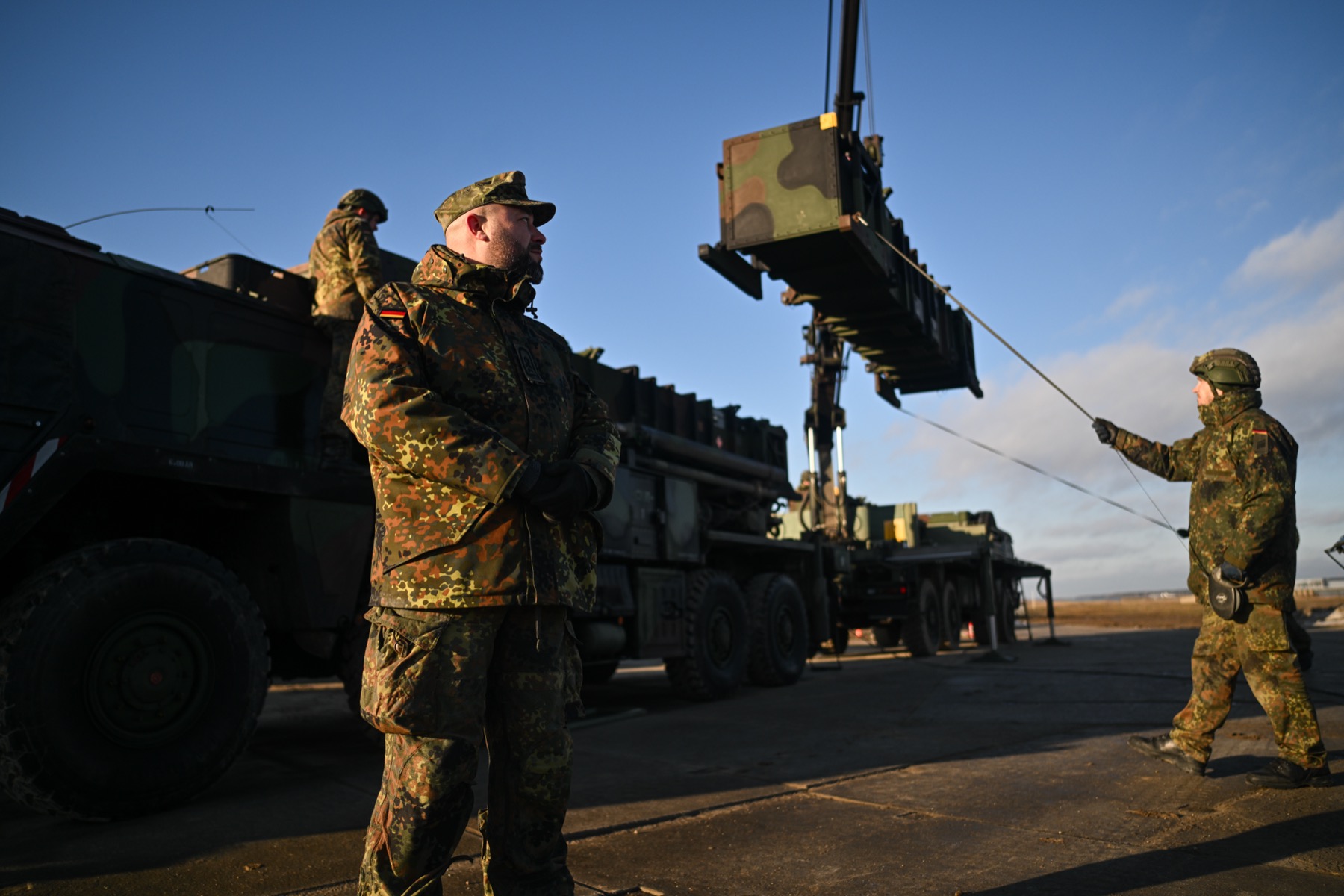
According to NATO’s announcement on 30 October 2026, Bulgaria signed a memorandum of understanding allowing it to join the High Visibility Project, or HVP. NATO says the project was established at the February 2025 Defence Ministers meeting, while the initial participants signed their agreement at the July 2026 NATO Summit Defence Industry Forum.
The wording matters. This is not an announcement that Bulgaria has received a new missile battery, and NATO has not published a Bulgarian order for a particular interceptor, radar, gun, or electronic-warfare system. The HVP is a multinational framework through which allies can acquire, develop, and field capabilities against lower-level air threats. NATO specifically identifies drones and cruise missiles as targets.
That makes the project a capability programme rather than a single weapon system. Its technical value should be measured in the connections between systems: detection, identification, command-and-control, engagement, and replenishment. A radar that sees a drone but cannot pass a track to the right firing unit is not an air-defence capability. It is an expensive witness.
The Equipment Problem Is Also a Cost Problem
Lower-level air defence sits in an awkward part of the arsenal. Strategic systems such as Patriot are designed to defeat demanding threats, but using a high-end interceptor against a small drone can be financially absurd. At the other end, guns, very short-range missiles, jammers, and other counter-uncrewed-aircraft systems may be cheaper, but they require dense coverage, reliable identification, and enough magazine depth to survive a sustained attack.
- Threats: small drones, loitering munitions, and cruise missiles operating at low altitude.
- Defence layers: passive surveillance, active radars, electronic warfare, guns, short-range missiles, and higher-end interceptors.
- Technical requirement: common data links and command systems that can assign the cheapest suitable effector to each target.
- Operational requirement: stockpiles large enough for repeated salvos, not merely a demonstration at an exercise.
NATO’s February 2025 policy on Integrated Air and Missile Defence describes the alliance’s problem in broader terms. It covers threats from ground to space, at all speeds and altitudes, and links air surveillance with passive and active defence. The HVP is the practical, lower-altitude expression of that policy. It is where the theory meets the unpleasant arithmetic of modern war.
Ukraine Has Made the Warning Impossible to Ignore
NATO’s own recent messaging connects this initiative to the war in Ukraine. On 28 October, Deputy Secretary General Radmila Shekerinska said that around $10 billion in equipment, including air-defence systems, had been delivered to Ukraine through NATO’s PURL initiative and US Foreign Military Sales. She also said every interceptor in Ukrainian hands saves lives.
That statement exposes the alliance’s dilemma. Ukraine needs sophisticated interceptors because Russia combines drones and missiles in ways designed to exhaust defenders. NATO members need the same high-end systems for their own territory, but they also need cheaper methods for defeating the mass of lower-cost threats. Sending another Patriot battery is politically visible. Building an industrial base capable of producing tens of thousands of affordable counter-drone effectors is less glamorous and probably more important.
For Bulgaria, the Black Sea gives this issue a geographic edge. Its airspace is not an abstract rear area. It sits near a theatre where Russian missile activity, maritime surveillance, electronic warfare, and drone operations all interact. Sofia’s value to the HVP will not come simply from buying equipment. It will come from making its national air picture and response procedures useful to the wider southeastern flank.
Why the Bulgarian Decision Matters
NATO says Bulgaria’s addition will bring greater interoperability, cost savings, and operational benefits. Those are familiar alliance phrases, but in this case they point to real bottlenecks. A multinational project can aggregate demand, standardise interfaces, and give smaller allies more leverage with industry. Bulgaria cannot reshape the European air-defence market alone. Inside a NATO programme, it can help create a market large enough to support production and sustainment.
The risk is that multinational cooperation becomes a substitute for fielded capability. NATO has launched many initiatives that looked impressive at ministerial meetings and moved slowly in factories. The HVP will matter only if it produces deployable systems, trained crews, tested data links, and a replenishment pipeline. The alliance should publish milestones: which capabilities are being developed, when they will enter service, and how many interceptors or effectors participating states can actually supply.
There is also a political test. Low-level air defence is a collective-good problem. Every ally wants protection, but each government would prefer someone else to pay for the sensors, ammunition, software, and maintenance. Bulgaria’s signature is useful because it widens the coalition. It does not solve the burden-sharing argument.
The Real Test Comes After the Ceremony
Bulgaria’s entry is a sensible move, but it is not yet a shield. It is a promise to join the work of building one. The immediate questions are whether the HVP can deliver affordable answers to drone swarms, whether those answers can be connected across national borders, and whether NATO can keep Ukraine supplied without hollowing out its own magazines.
My judgement is straightforward: NATO has finally identified the right layer of the air-defence problem, but identification is the easy part. Bulgaria’s memorandum will be meaningful when it produces hardware, software, and ammunition that crews can use under attack. Until then, Europe is still trying to defend a twenty-first-century sky with a twentieth-century procurement clock.
Sources
- NATO, “Bulgaria to join NATO’s initiative against lower-level air threats,” 30 October 2026.
- NATO, “NATO releases policy on Integrated Air and Missile Defence,” 13 February 2025.
- NATO, “NATO Deputy Secretary General at the Kyiv Security Forum stresses Ukraine’s urgent need for more air defence,” 28 October 2026.
Bulgaria signed a memorandum on 30 October 2026 to join NATO's High Visibility Project aimed at enhancing air defense capabilities against lower-level threats such as drones and cruise missiles. This initiative is part of NATO's broader strategy to improve interoperability and cost-effectiveness in air defense, particularly in light of the ongoing conflict in Ukraine. Bulgaria's strategic location near the Black Sea adds significance to its participation in this multinational effort.
- Bulgaria signed a memorandum to join NATO's High Visibility Project on 30 October 2026.
- The project aims to enhance capabilities against lower-level air threats like drones and cruise missiles.
- NATO emphasizes the need for interoperability and cost-effective solutions in air defense.
- The initiative is linked to the ongoing conflict in Ukraine and the need for effective air defense systems.
- Bulgaria's geographic position near the Black Sea is strategically significant for NATO's defense posture.