
U.S. Navy orders $114.7M power upgrade for H-1 helicopters
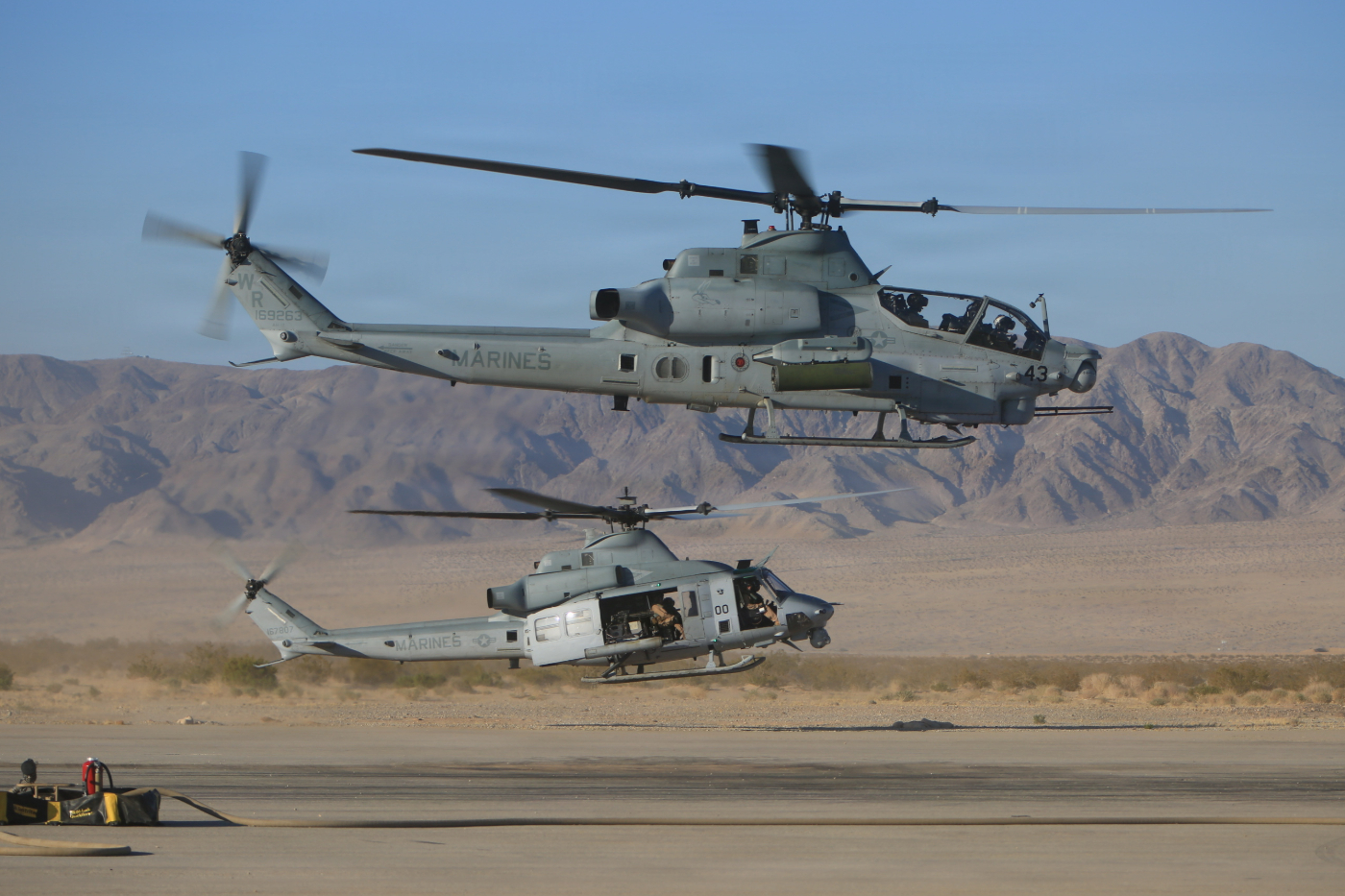
The U.S. Navy has ordered $114.7 million in structural and electrical upgrade hardware for the U.S. Marine Corps’ AH-1Z Viper attack and UH-1Y Venom utility helicopters, exercising an option on Bell Textron’s contract for the third phase of the program. The order buys 15 A-kits, four mission kits, nine aircraft installations, long-lead components, materials, labor and spares, with work due to finish in June 2028.
Naval Air Systems Command placed the sole-source modification, P00001 to contract N00019-26-C-0140, using fiscal 2027 U.S. Navy aircraft procurement funds, all obligated at award. The contract mixes fixed-price-incentive, firm-fixed-price and cost-plus-fixed-fee pricing. Bell’s Fort Worth, Texas, site has the largest share of the work at 38.1%, followed by its Amarillo, Texas, plant at 28.7%, with the rest spread across suppliers in Arizona, Michigan, Oklahoma, California, New Hampshire, Florida, Illinois and other locations.
The Pentagon announcement uses the effort’s formal name, H-1 structural and power improvements for Next-Gen Effects. Bell and the U.S. Marine Corps call it SPINE, short for Structural and Power Improvements for NextGen Effects. Until early 2026 it was known as SIEPU, the Structural Improvement and Electrical Power Upgrade. Bell says the upgrade adds electrical generating capacity and strengthens the airframes so the helicopters can carry new equipment, including long-range munitions, air-launched effects and non-kinetic systems, without running out of power or structural margin.
The order splits the hardware into two categories. A-kits are the permanent provisions built into each airframe: structure, wiring, mounts and power distribution. Mission kits are the equipment fitted on top of those provisions. The announcement does not say what the four mission kits contain, and it does not identify which aircraft will receive the nine installations or how many are Vipers and how many are Venoms.
The phase being funded is the production stage of a program that has spent about two years in prototyping. Bell finished the first two SPINE aircraft, one AH-1Z and one UH-1Y, in March 2026 after 19 months of structural and electrical work at its Amarillo Assembly Center, following earlier stops at the company’s drive systems and repair and overhaul centers. Both helicopters went to Naval Air Station Patuxent River, Maryland, for flight tests to settle the final configuration for the fleet.
In July, the U.S. Navy awarded Bell $33.6 million to produce SPINE Phase III hardware, including A-kits, D-kits, power generation components and drivetrain assemblies. Bell described that award as a base-plus-three-option-year contract covering SPINE upgrades on up to 49 aircraft, 21 UH-1Ys and 28 AH-1Zs, with modifications starting in Amarillo in mid-2027 and first deliveries of upgraded helicopters in 2028. FlightGlobal put the contract’s potential value at about $300 million. The new $114.7 million option matches that phase and schedule, with installations due by June 2028.
The upgrade is a midlife change to aircraft that are no longer in U.S. production. The U.S. Marine Corps launched the H-1 Upgrades program in 1996 to replace the AH-1W SuperCobra and UH-1N Twin Huey. The UH-1Y entered full-rate production in 2008 and the AH-1Z in 2010, and U.S. domestic production of the two types ended in 2020 and 2022. The Marine Corps operates about 189 Vipers and 160 Venoms, which share about 85% of their components, including engines, rotor system and much of the avionics. That commonality lets one set of SPINE work apply to both types, and Bell has said it expects to modify the Marine H-1 fleet over the next decade.
Electrical power is the main constraint SPINE addresses. New sensors, data links, electronic warfare equipment and launchers for small drones and long-range missiles all draw more power and add weight at hardpoints and in the cabin, and an airframe designed in the 1990s and 2000s has limited room for either. Bell has not published how much generating capacity the upgrade adds, and the U.S. Marine Corps has not said which specific weapons or air-launched effects it plans to integrate once the work is done.
The U.S. Marine Corps is already testing the kind of missions that will draw on that capacity. On May 13, during an exercise at Twentynine Palms, California, crews from Marine Light Attack Helicopter Squadron 169 launched
Content preview only. Full article available at source. View Full Article
The U.S. Navy ordered $114.7 million in upgrades for AH-1Z Viper and UH-1Y Venom helicopters, including 15 A-kits and 4 mission kits. The upgrades aim to enhance electrical capacity and structural integrity, allowing the helicopters to carry new equipment. Work is scheduled to be completed by June 2028, with significant portions of the work taking place in Texas and Maryland. The U.S. Marine Corps operates approximately 189 Vipers and 160 Venoms, which will benefit from these enhancements.
- U.S. Navy ordered $114.7 million for helicopter upgrades.
- The upgrades include 15 A-kits and 4 mission kits.
- Work is expected to finish by June 2028.
- The upgrades will enhance electrical capacity and structural integrity.
- The U.S. Marine Corps operates about 189 Vipers and 160 Venoms.