
Burkina Faso Facing JNIM — Roads Become the Real Front of 2026
 Marie Dubois
Burkina Faso facing JNIM — roads become the real front of 2026
In Djibo, at the northern tip of Burkina Faso, a road is never just a road. It brings supplies, ammunition, and news; it also allows the state to verify that it still exists beyond an isolated post. The latest assessments dedicated to the Burkinabè theater describe an army engaged in over 130 attacks against Jama'at Nusrat al-Islam wal-Muslimin (JNIM) in 2026, but still unable to sustainably secure its logistical routes. This is where the real military problem lies.
JNIM is not primarily seeking to take Ouagadougou
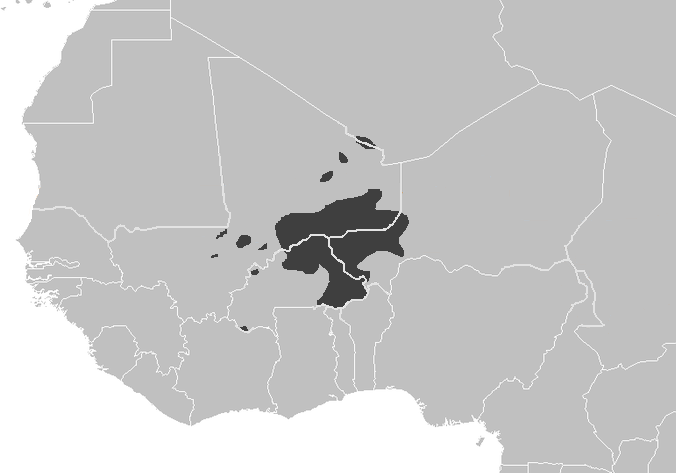
The group affiliated with Al-Qaeda thinks in terms of control zones, not administrative borders. In the North and East, it can cut a track, threaten a transporter, tax a market, and then disappear before a convoy arrives. Taking a capital is not necessary. It is enough to make the movement of the state costly enough that mayors, traders, and traditional leaders negotiate directly with the armed actor.
This method explains why the outcome of a military operation is not only measured by the number of fighters reported as neutralized. A unit can win a skirmish and lose the campaign if it cannot resupply the post the following week. In the Sahel, twenty kilometers of track can matter more than a tactical victory around a base.
A more offensive army but still blind
The Burkinabè Armed Forces have intensified their operations and rely on the Volunteers for the Defense of the Homeland as well as on the Russian partnership. This buildup gives Ouagadougou more firepower. It does not automatically resolve the intelligence deficit. Information from civilians remains fragmented, because speaking to the army can be interpreted as collaboration with the enemy and because JNIM's reprisals are swift.
The observation aligns with the warning presented by the head of the United Nations Office for West Africa and the Sahel, Leonardo Santos Simão, before the Security Council: armed groups are now combining attacks, road control, sophisticated communications, drones, and criminal economies. Burkina Faso is therefore facing an adversary that learns. A repeated sweep campaign along the same routes does not replace a local intelligence architecture or permanent protection of convoys.
The political cost of closure
The response of Ibrahim Traoré's regime is also political. Media restrictions, pressure on magistrates, and forced mobilization reduce the space in which failures can be discussed. However, an army needs negative reports to correct its setup. If a village chief can no longer report an armed presence without risking being accused of disloyalty, silence becomes a false operational data.
This mechanism indirectly benefits JNIM. The group does not need to convince an entire population; it only needs to exploit areas where the state can no longer distinguish between neutrality, fear, and complicity. The restrictions can create an appearance of unity in Ouagadougou while degrading the quality of information on the ground. This is a political victory for the junta, but a loss of sensors for the operational theater.
Russia provides time, not a geographical solution
Cooperation with Moscow brings instructors, weapons, and political assurance after the French departure. It can help hold a position or conduct a specific operation. But no external partner can simultaneously escort the roads of Djibo, Titao, Fada N'Gourma, and the corridors to Mali and Niger. The problem is geometric: the territory is vast, the roads few, and the armed groups mobile.
The comparison with the former Barkhane operation is useful, provided it is not turned into nostalgia. The French presence had an advantage in intelligence and air mobility, but it did not defeat the insurgency and lost its political legitimacy. Today, Burkina Faso has regained sovereign decision-making, but not yet the local network to transform that sovereignty into effective control.
The next test will be a convoy, not a speech
The operational priority in the coming weeks will be to see if the authorities can keep a few corridors open for several months, with escorts, intelligence relays, and protection for communities along the routes. Announcements of success must be separated from the losses actually confirmed on the JNIM side; the available information remains incomplete, and the figures put forward by both sides are often unverifiable.
If attacks continue to isolate the cities in the North and East, JNIM will not need to officially administer these provinces. It will control the schedules, markets, and the cost of movement. On the ground, this is already a form of power. The next serious indicator will therefore not be the number of flags raised after an operation, but the ability of a civilian truck to travel the road, return the next day, and start again the following week.
Sources
- AllAfrica, West Africa and the Sahel — Terrorism Is Changing Its Face, July 2026.
- AllAfrica, As Security Deteriorates, Sahelian Juntas Further Stifle Civilians, July 2026.
- UNOWAS — regional assessments of the threat in West Africa and the Sahel.
The Burkinabè army engaged in over 130 operations against JNIM in 2026, struggling to secure logistics routes in the north and east. JNIM disrupts state movements, forcing local leaders to negotiate directly with them. The army's reliance on local volunteers and Russian support has not resolved intelligence deficits, while political restrictions limit the flow of critical information. The effectiveness of military operations is measured by the ability to maintain open transport corridors.
- Burkinabè army conducted over 130 attacks against JNIM in 2026.
- JNIM employs tactics to disrupt state logistics without needing to capture territory.
- The Burkinabè army relies on local volunteers and Russian support for operations.
- Civilian information remains fragmented due to fear of reprisals from JNIM.
- Political restrictions hinder the military's ability to receive negative reports.