

Summary and Key Points: “The object of war is not to die for your country but to make the other guy die for his.” George S. Patton said that to the Third Army in 1944, before the Normandy landings, and 82 years later it remains the most quoted sentence any American soldier has produced. Almost everyone who repeats it hears it in George C. Scott’s voice — the deep, gravelly baritone from the 1970 film. Patton’s actual voice was high-pitched and thin, and he filled it with profanity in company where nobody expected it, including in front of women. That gap between the man and the myth runs through everything about him. He was a dandy who designed his own uniforms, wore riding breeches and high boots long after the cavalry was gone, and fined soldiers who appeared under fire without a necktie. He was also the only American commander the Germans genuinely feared.
George Patton: The Legend
No World War II general was as mission-focused as General George S. Patton. No one could stop the relentless former cavalry officer.
He earned the nickname “Old Blood and Guts” for a reason. Patton was erratic off the battlefield but a genius on it. He exemplified military service for combat-oriented soldiers and was a major reason the United States had so much success during the war.
He gave the quote above to his 3rd Army before D-Day in 1944.
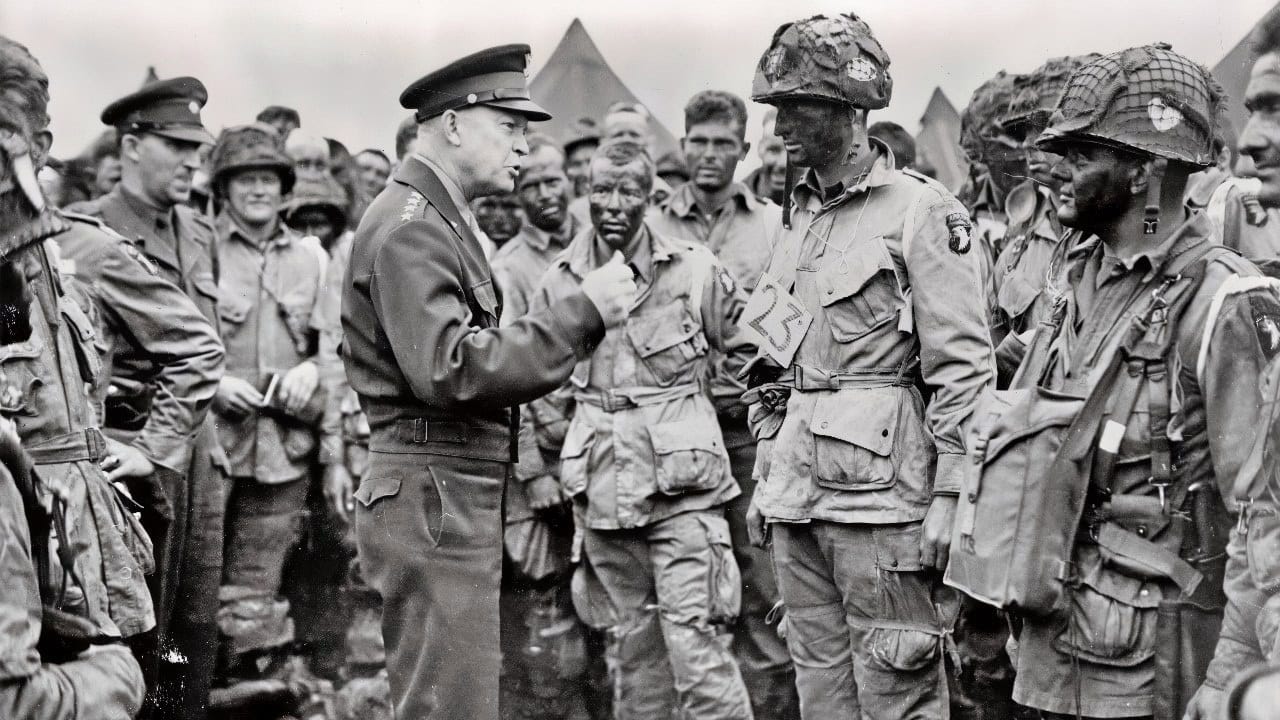
Dwight D. Eisenhower D-Day 1944. Image Credit: Creative Commons.
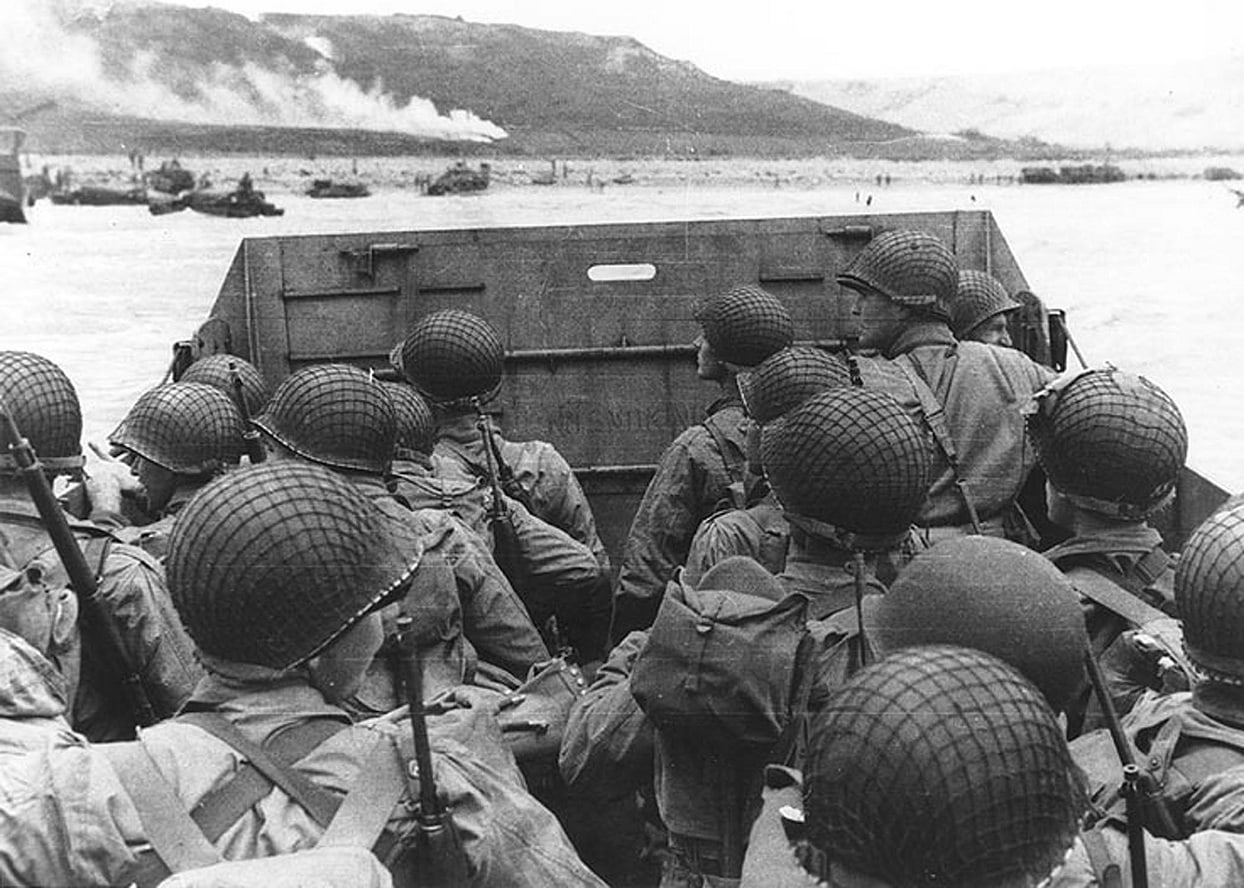
Troops in an LCVP landing craft approach Omaha Beach on D-Day, June 6, 1944.
Note the helmet netting, faint “No Smoking” sign on the LCVP’s ramp, the M1903 rifles and M1 carbines carried by some of these men.
Patton Loved the Limelight
He believed in the violence of action and in taking the fight to the enemy by creating chaos.
Patton wanted to eliminate as many troops as possible and take enemy cities, especially by arriving before other generals.
That’s when his media coverage was the best.
He Was Tough to Handle
Patton made his commanding officers, like General Dwight Eisenhower and General George Marshal,l extremely concerned about his treatment of certain soldiers who were refusing to fight due to “shell shock” – what we now call PTSD.
Patton was loquacious with the press and loved to see himself in print. But he usually put his foot in his mouth and said things that damaged his career.
Often portrayed in the public imagination as a deep-voiced baritone, Patton actually had a high-pitched voice.
It was often filled with colorful profanity, even in polite company and around women.
Patton Had Irresistible Magnetism in Social Settings
He took over the room with his charm, wit, and charisma. He was a popular dinner guest with urbane manners who preferred the finer things in life. But on the battlefield, he was a military prodigy who loved mechanized action and helped make the tank a key feature of warfare.
Patton’s aggressive style led to mistakes and high rates of casualties for his men, but many under his command loved him dearly.
He had a “God Complex” but that in many ways led to his soldiers fighting their hardest for him, and they pushed themselves to the limit to achieve his objectives.
The General Was Always Looking for a Military Advantage
Patton often compared himself to the best generals, not only of his day, but of all history. Some said he was deluded with grandeur. That only built his legend.
He rivaled German General Erwin Rommel and read Rommel’s book, Infantry Attacks. This volume encouraged Patton to mass his forces and use speed and surprise to punch holes in enemy lines and burst through breakout points. Patton loved the exhilaration of advancing rapidly with adversaries falling back in fear.
Patton Was a Fashion Plate
Patton was a dandy and a martinet. He designed his own uniforms, some of which the media ridiculed.
He wore pearl-handled six-shooter revolvers, horseback-riding pants, and high boots. He always wore his helmet and was ready for battle. He sometimes made his soldiers wear neckties, even in combat.
Those who didn’t dress appropriately were fined.
Eisenhower and Marshall were exasperated with Patton’s error-prone ways when not in fighting mode. They usually wrote him up for poor decision-making, and when Patton lost his temper by striking malingering soldiers in the face, they considered relieving him. But Patton stuck around until people stopped being mad at him, and let his combat exploits quiet his critics.
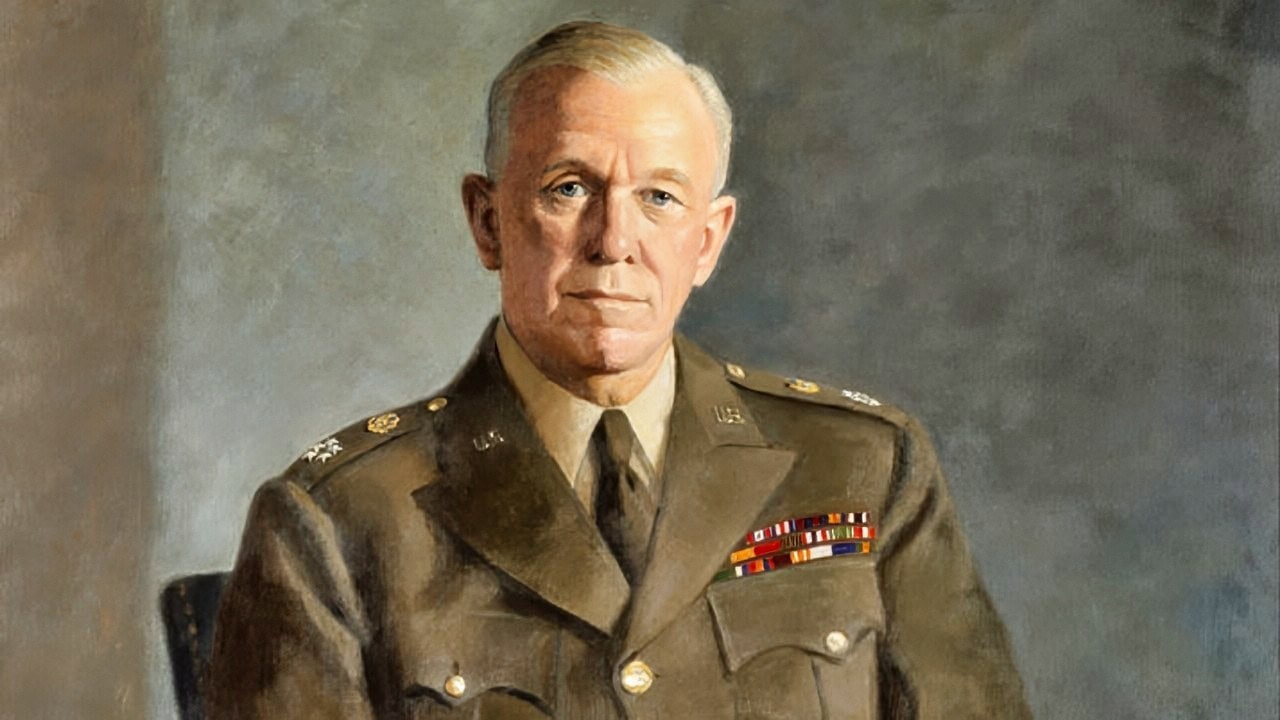
George C. Marshall Smithsonian Portrait. Creative Commons Image.
Kill the Bad Guys and Break Their Toys
His mantra was to kill the enemy and kill often. He had no aversion to death, especially when it was time to make his adversaries pay. Patton was usually bloodthirsty, and some worried he took too many chances, creating unnecessary friendly casualties.
Patton also reacted quickly to initial operational orders and claimed his men could be ready to fight within hours of a standstill. These boasts were often comically arrogant, but Patton eventually delivered.
History of Patton’s Service During World War II
Patton began World War II as the commander of the 1st and 2nd Armored Divisions. In 1942 h,e was assigned to North Africa. He was to lead troops after the amphibious landing in Morocco. “We shall attack and attack until we are exhausted, and then we shall attack again,” Patton exclaimed at the time.
In North Africa, Patton achieved early success. He led his forces to win the first major engagement against enemy forces in World War II at the Battle of El Guettar in March 1943. Eisenhower gave Patton command of the U.S. 7th Army and ordered him to prepare it for the invasion of Italy. Patton succeeded in Italy beyond expectations, and the media coverage was glowing.
This adulation did not last long since he struck a soldier in the face for what he believed to be cowardice and shirking duty. Eisenhower almost fired Patton, but the Supreme Allied Commander knew that he needed Patton to win the war.
Patton wanted overall command of the Normandy invasion. Still, he was disappointed to learn he would lead a feint to fool the Germans into thinking the Allied invasion would come from southeastern England. Patton carried out this deception with aplomb, and it led to the Normandy invasion’s eventual success, although friendly forces were bogged down for a substantial period.
The 1st Army broke through German lines, and Patton’s 3rd Army streamed through the breach. Patton was ecstatic, and this force became a lightning-fast spearhead that pierced through France. When the Germans counter-attacked during the Battle of the Bulge, Patton moved his army into attack mode in the Ardennes and struck back against the Nazis, ruining Adolf Hitler’s daring raid against Allied forces.
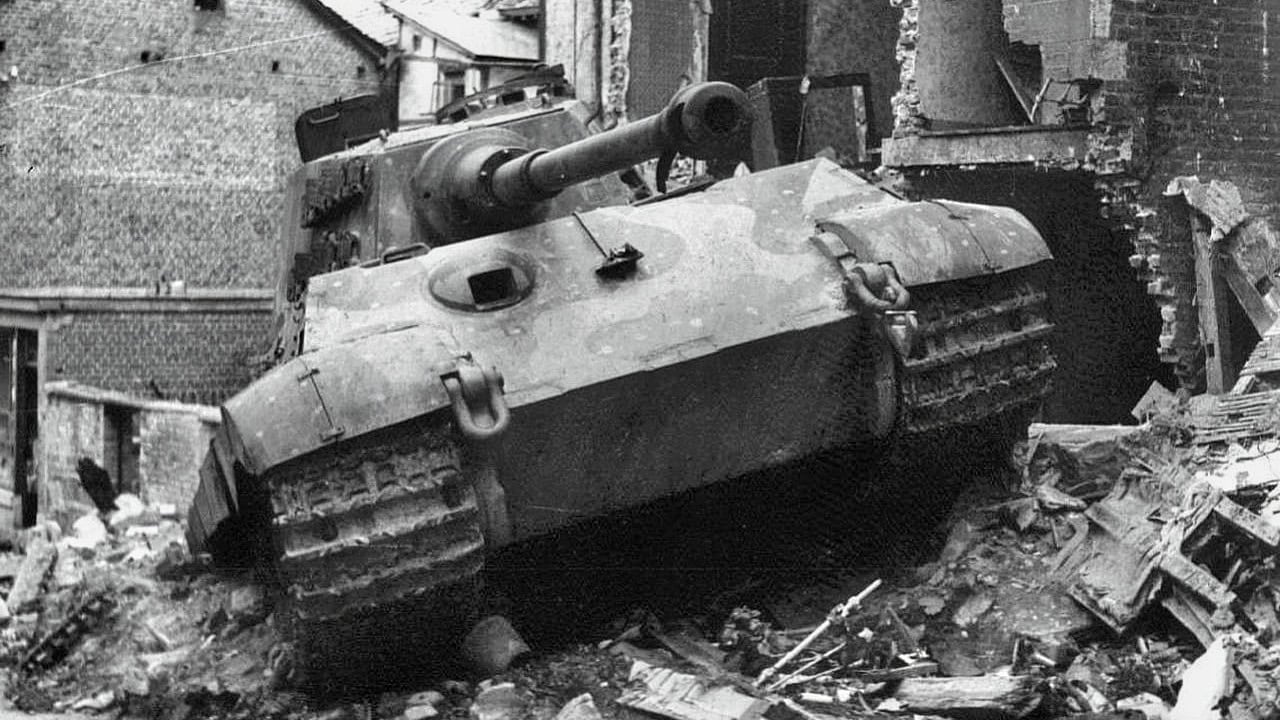
King Tiger Tank Battle of the Bulge.
“In early 1945, Patton led his army across the Rhine River and into Germany, capturing 10,000 miles of territory and helping to liberate the country from Nazi rule. In the months following Germany’s surrender, the outspoken general caused another firestorm of controversy when he gave an interview criticizing the Allies’ rigid de-Nazification policies in the defeated country; Eisenhower removed him from command of the 3rd Army in October 1945, according to the History Channel.
In December 1945, Patton suffered a tragedy. He hurt his neck and damaged his spine in a vehicle accident. Then he developed a pulmonary embolism as a result of the accident in a Heidelberg hospital and finally died.
Beyond the Quote: The Legacy of General Patton
Patton’s legacy endures even after all these years. People remember his mistakes, but his triumphs have overshadowed his shortcomings.
Nearly all soldiers, especially officers and enlisted members who served in the tank corps, became Patton acolytes. He is one of the best-known generals of World War II, and thankfully, his mistakes did not get him removed from service.
Old Blood and Guts was certainly bloody, but he had the kind of courage and charisma that made him a legendary figure in U.S. military history.
About the Author: Military Expert Dr. Brent M. Eastwood
Author of now over 3,000 articles on defense issues, Brent M. Eastwood, PhD, is the author of Don’t Turn Your Back On the World: a Conservative Foreign Policy and Humans, Machines, and Data: Future Trends in Warfare, plus two other books. Brent was the founder and CEO of a tech firm that predicted world events using artificial intelligence. He served as a legislative fellow for US Senator Tim Scott and advised the senator on defense and foreign policy issues. He has taught at American University, George Washington University, and George Mason University. Brent is a former US Army Infantry officer. He can be followed on X @BMEastwood.