
Russia's Factory Threat Tests Europe's NATO Guarantee 2026
 Dr. Klaus Weber
Russia's Factory Threat Tests Europe's NATO Guarantee 2026
Berlin, October 3, 2026. A Russian attack on a European arms factory would trigger a military response from NATO, according to EU Defense Commissioner Andrius Kubilius. In an interview with POLITICO Europe, Kubilius even mentioned a possible case for Article 5. This is politically significant, but legally not automatic. This very difference shows how unprepared Europe is to protect its emerging defense industry.
The Factory Becomes a Case for the Alliance
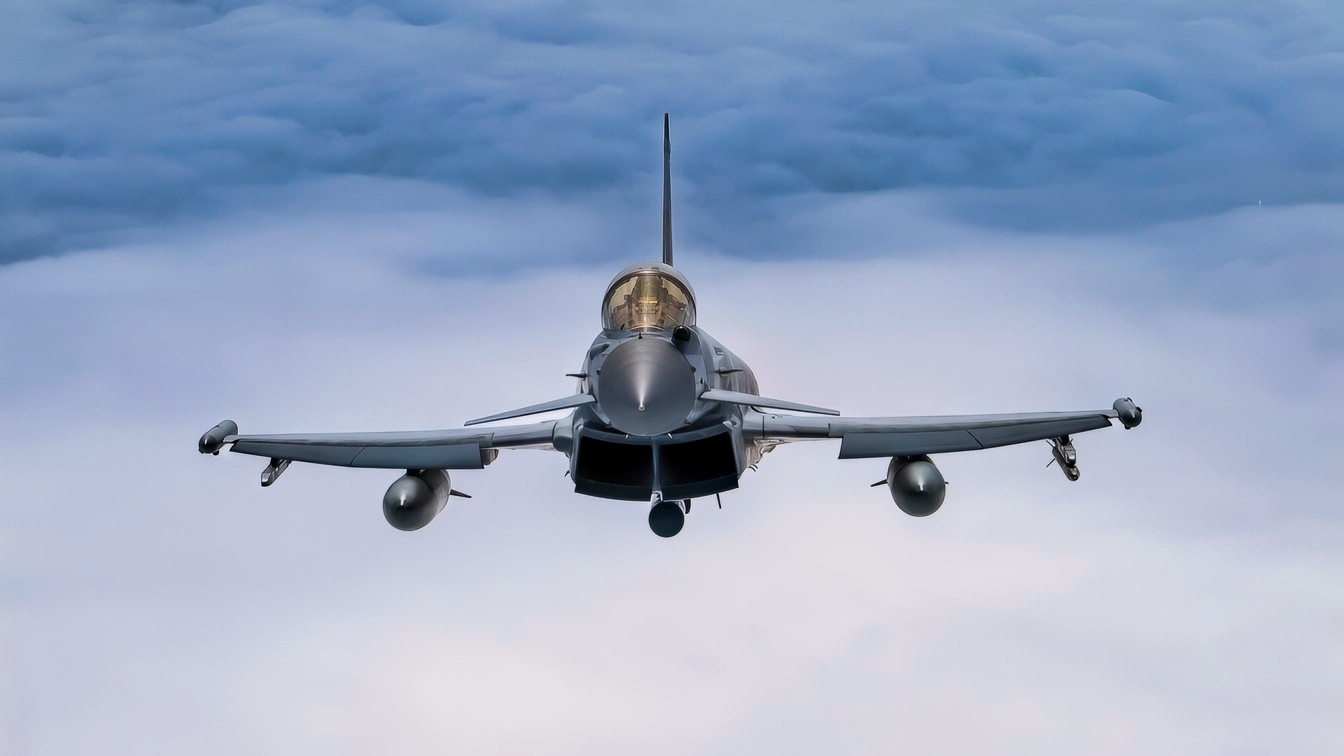
The warning comes at a time when Europe wants to reduce its industrial dependence on the United States. New production lines for ammunition, missiles, and armored vehicles are no longer being established solely for economic reasons. They are treated as part of deterrence. Therefore, attacking a production facility is not just an attack on a building, but on the alliance's ability to conduct war in the long term.
The scale of this industry is significant. The Eurofighter Typhoon reaches about Mach 2 and carries its weapons on 13 external hardpoints. The Leopard 2A8 is based on a 120-millimeter smoothbore gun and is a central platform project for NATO ground warfare. The ground-based IRIS-T SLM, in turn, fills a gap in European air defense with a range of about 40 kilometers. These systems are not abstract export goods. Their production has now become part of Europe's military resilience.
Article 5 is Not an Automatic Trigger
Kubilius' political message is understandable, but his legal simplification remains problematic. Article 5 obliges allies to assist, but explicitly leaves them the choice of measures. The North Atlantic Council must first determine that an armed attack has occurred. After that, each state decides for itself what action it deems necessary. A Russian cruise missile against a factory in Germany, Poland, or the Czech Republic would therefore not automatically equate to a declaration of war by the entire NATO.
This is precisely where the deterrence problem lies. Moscow would likely not treat a production facility like a barracks location, but as a "hybrid" target: sabotage, cyberattack, drones, arson, or an attack below the threshold of clearly attributable violence. The less clear the attribution, the more difficult the political decision becomes. A red line that exists only in a television interview is not a reliable security guarantee.
“Article 5 is a political decision of the alliance, not an automated military trigger.”
Europe's Industrial Policy Creates a Duty of Protection
European states have responded to the Russian war with billion-euro programs. Germany is expanding ammunition and vehicle capacities, France is promoting national key technologies, and Poland is enhancing its role as a logistical center for the eastern flank. The EU is trying to pool demand through joint procurement and loans. However, production capacity alone does not create resilience. A factory needs air defense, backup power, redundant supply chains, secured communication networks, and above all, a clear plan for crisis situations.
The political order has so far been reversed. First, contracts were awarded, then thoughts were given to the protection of the facilities. This is the old European mistake: confusing the financing of a program with the creation of a capability. A plant that can produce Leopard hulls or missile seekers but is unprotected against drone attacks is not a strategic resource, but an attractive target.
The Conflict with Washington
Kubilius' statement also touches on the transatlantic relationship. The U.S. expects Europe to increase defense spending and take more responsibility on the eastern flank. At the same time, American intelligence, air defense, and strategic deterrence remain indispensable for managing a large-scale attack. Europe is thus expected to protect its industry, but it does not yet possess all the means to independently respond to an attack on this industry.
This explains why NATO's response is more cautious than the political warning from the EU Commissioner. Washington does not want to create an automatic escalation logic that turns every damaged production hall into an immediate alliance crisis. Eastern European states, on the other hand, need exactly this clarity. For them, a European factory without a credible protection guarantee would be a symbol of vulnerability.
What Needs to Be Decided Now
- NATO must publicly clarify criteria for armed and hybrid attacks on critical defense infrastructure.
- European air defense plans must treat production sites as military high-value targets, not as ordinary industrial parks.
- The EU should not only finance factories through SAFE and EDF but also redundancy, cyber resilience, and backup capacities.
- Member states must determine before an attack what national response they can actually provide in the event of an alliance case.
The crucial question is not whether an attack on a European arms factory could theoretically touch Article 5. It can. The question is whether NATO would be politically united enough at the specific moment to determine this and militarily capable enough to make the decision credible.
Europe is rebuilding its defense industry because it takes the war seriously. However, the more visible this industry becomes, the more it itself becomes a target. The paradoxical lesson from Kubilius' warning is therefore: Europe's strategic autonomy begins in the factory, but it does not end at its factory gate. Those who produce their own weapons also take on the duty to protect them. Otherwise, Europe is merely financing targets for the next Russian test.
Sources: POLITICO Europe, October 1, 2026, Interview with EU Defense Commissioner Andrius Kubilius; Kyiv Post, October 1, 2026; NATO Treaty, Article 5; NATO and manufacturer information on Eurofighter Typhoon, Leopard 2A8, and IRIS-T SLM.
A potential Russian attack on a European defense factory could trigger NATO's Article 5 response, according to EU Defense Commissioner Andrius Kubilius. The EU is enhancing its defense capabilities to reduce dependence on the U.S. and address vulnerabilities in its defense industry. NATO is urged to clarify its response criteria for attacks on critical defense infrastructure, as political decisions regarding military responses are not automatic.
- A Russian attack on a European defense factory could trigger NATO's Article 5 response.
- The EU is working to reduce its industrial dependence on the U.S.
- European states are enhancing their defense capabilities in response to the Russian threat.
- NATO must clarify criteria for armed and hybrid attacks on critical defense infrastructure.
- The political decision for NATO's response to an attack is not automatic.