
Burkina Faso in 2026 — JNIM and ISSP Engage in a War that Fractures the Sahel
 Marie Dubois
Burkina Faso in 2026 — JNIM and ISSP are Engaged in a War that Fractures the Sahel
In Kacham, near the Malian border, the paths no longer separate the Burkinabè army from jihadist groups. Since the beginning of September 2026, the Jama’at Nusrat al-Islam wal-Muslimin (JNIM), affiliated with al-Qaeda, and the Sahelian branch of the Islamic State (ISSP) have been clashing for villages, roads, and men. The reports circulating are largely unverified, but the geography leaves little room for doubt: the war between insurgents has become a fully-fledged theater of operations.
Two Organizations, One Space to Control
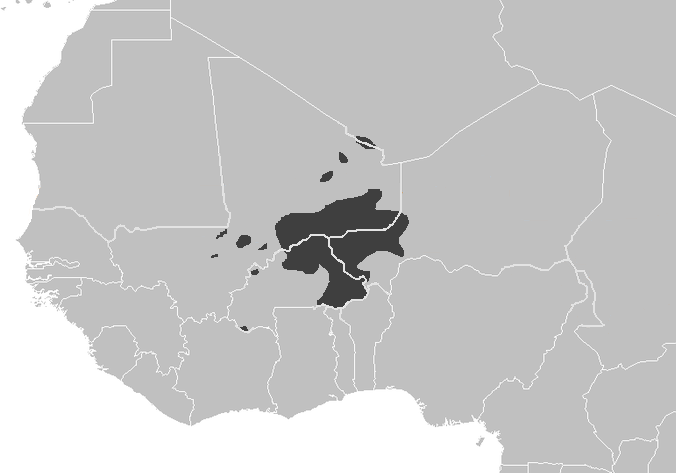
The JNIM seeks to consolidate a continuum of control between central Mali, northern and eastern Burkina Faso, and the border areas of Niger. Its advantage does not solely rely on the number of fighters. It is due to its ability to negotiate with certain communities, to tax trade routes, and to maintain outposts where the state no longer provides justice or security.
The ISSP, on the other hand, is conducting a campaign of penetration and denial. It strikes rival positions, seizes motorcycles and weapons, and punishes communities accused of cooperating with the JNIM or with government forces. In northern Burkina Faso, whoever controls a water point or a supply route controls more than a hamlet: they control the movement of civilians, livestock, and information.
Spectacular Reports, a Reality Harder to Measure
The first major clash reported near Kacham in early September resulted in an ISSP claim stating that over 200 JNIM fighters were killed, over 30 captured, and a significant haul seized. This claim has not been independently verified. On October 9, new fighting around Ganadaouri, in the Oudalan province, was followed by a claim of over 400 deaths among JNIM ranks.
Photographs released on November 1 provide some evidence, but not a conclusion. The media outlet i-Sahel counted at least 120 bodies, without being able to establish their identities or the exact location of the battle. The difference between the announced figures and the visible evidence is precisely the problem: in this conflict, propaganda is part of the combat fire.
ACLED has documented around 320 clashes between the two organizations since the beginning of their war in 2019, resulting in over 2,200 deaths among fighters. These data illustrate the depth of the phenomenon, but not its current speed. The events of autumn 2026 indicate an intensification around contact zones, particularly in Burkina Faso and western Niger.
The Burkinabè Government Does Not Automatically Regain Ground
Ouagadougou might be tempted to see this rivalry as an indirect victory. Every fighter that the JNIM sends against the ISSP is a fighter who is not launching an attack against the army or the Volunteers for the Defense of the Homeland (VDP). On the ground, this calculation is too simplistic.
The JNIM remains active in the north, center-north, west, and east of Burkina Faso. Even under pressure, it retains regional depth in Mali and Niger. The ISSP, for its part, can use its local gains to recruit, recover weapons, and present itself as the only force capable of challenging its rival's grip. A weakened organization is not necessarily less dangerous: it can become more mobile, more predatory, and less concerned about maintaining a social base.
The real indicator is therefore not the number of villages announced as "recaptured." It is the ability to move between Djibo, Gorom-Gorom, and the paths to Mali without permanent escort, without clandestine taxes, and without risk for traders. As long as these routes remain contested, the state's territorial control remains theoretical.
A Rivalry that Already Overflows Borders
The clashes are not confined to Oudalan. Activities related to the JNIM-ISSP competition have been documented in the Nigerien regions of Tillabéri and Dosso, as well as in the Nigerian state of Kebbi. This creates new pressure on coastal countries, where administrative borders do not correspond to either transhumance routes or smuggling networks.
This extension is more concerning than the ideological duel between al-Qaeda and the Islamic State. A group does not need to hold a capital to destabilize a region. It only needs to tax a road, ban a market, or make an informant disappear. In Burkina Faso, around 4.5 million people will need humanitarian assistance in 2026. In rural areas, a temporary decrease in the number of deaths may simply mean that residents can no longer access fields or that events are no longer reported.
The Next Test Will Be Logistical
The war between the JNIM and the ISSP does not provide Ouagadougou with a sustainable strategic window. It offers at best a local respite, provided it can quickly transform it into administrative presence, human intelligence, and protection of routes. Without this, both groups will emerge from their rivalry with better-adapted networks and communities even more constrained.
My experience on the ground has taught me that a map can give the illusion of a continuous front. In the Sahel, the front is a succession of wells, markets, and paths. If the Burkinabè army does not secure these points before one of the two groups absorbs them, the next offensive will seek to lock down movement between Mali, Burkina Faso, and Niger.
Sources
- Al Jazeera, “Burkina Faso’s rival armed groups turn on each other as state loses ground,” November 13, 2026.
- ACLED, “Conflict in the Sahel,” accessed November 22, 2026.
- Sahel Watch, “West Africa geopolitical, economic and security overview — November 2026.”
Clashes between Jama’at Nusrat al-Islam wal-Muslimin (JNIM) and Islamic State Sahel Province (ISSP) erupted in Kacham, Burkina Faso, starting in September 2026. JNIM seeks to consolidate control over key areas, while ISSP conducts attacks and punishes communities cooperating with JNIM. Reports indicate significant casualties, with claims of over 400 JNIM deaths by October. The conflict has implications beyond Burkina Faso, affecting neighboring Niger and Nigeria.
- JNIM and ISSP are engaged in violent clashes in Burkina Faso since September 2026.
- ISSP claimed over 200 JNIM fighters killed in early September and over 400 by October.
- The conflict has resulted in significant casualties and territorial disputes.
- The fighting has extended beyond Burkina Faso into Niger and Nigeria.