
Ceasefire between the US and Iran faces new challenges as Kuwait's air defense intercepts Iranian missiles, exposing new risks on the Gulf front.
 Ahmed Al-Rashid
US-Iran Ceasefire Faces New Tests as Kuwait's Air Defense Intercepts Iranian Missiles, Exposing New Risks on the Gulf Front
Author: Ahmed Al-Rashid|Type: Breaking analysis|Date: June 2, 2026
The key change on June 1 was not another exchange of fire between the US and Iran, but rather Iran publicly targeting US military positions in Kuwait for retaliation. Both AP and Reuters reported that after the US struck Iranian radar, drone command and control stations, and attack drones in southern Iran over the weekend, the Iranian Revolutionary Guard claimed to have retaliated against US forces stationed in Kuwait; Kuwait subsequently activated its air defense systems to intercept incoming missiles and drones, condemning the attacks as detrimental to regional de-escalation efforts.
From Geruk and Qeshm to Kuwaiti Airspace
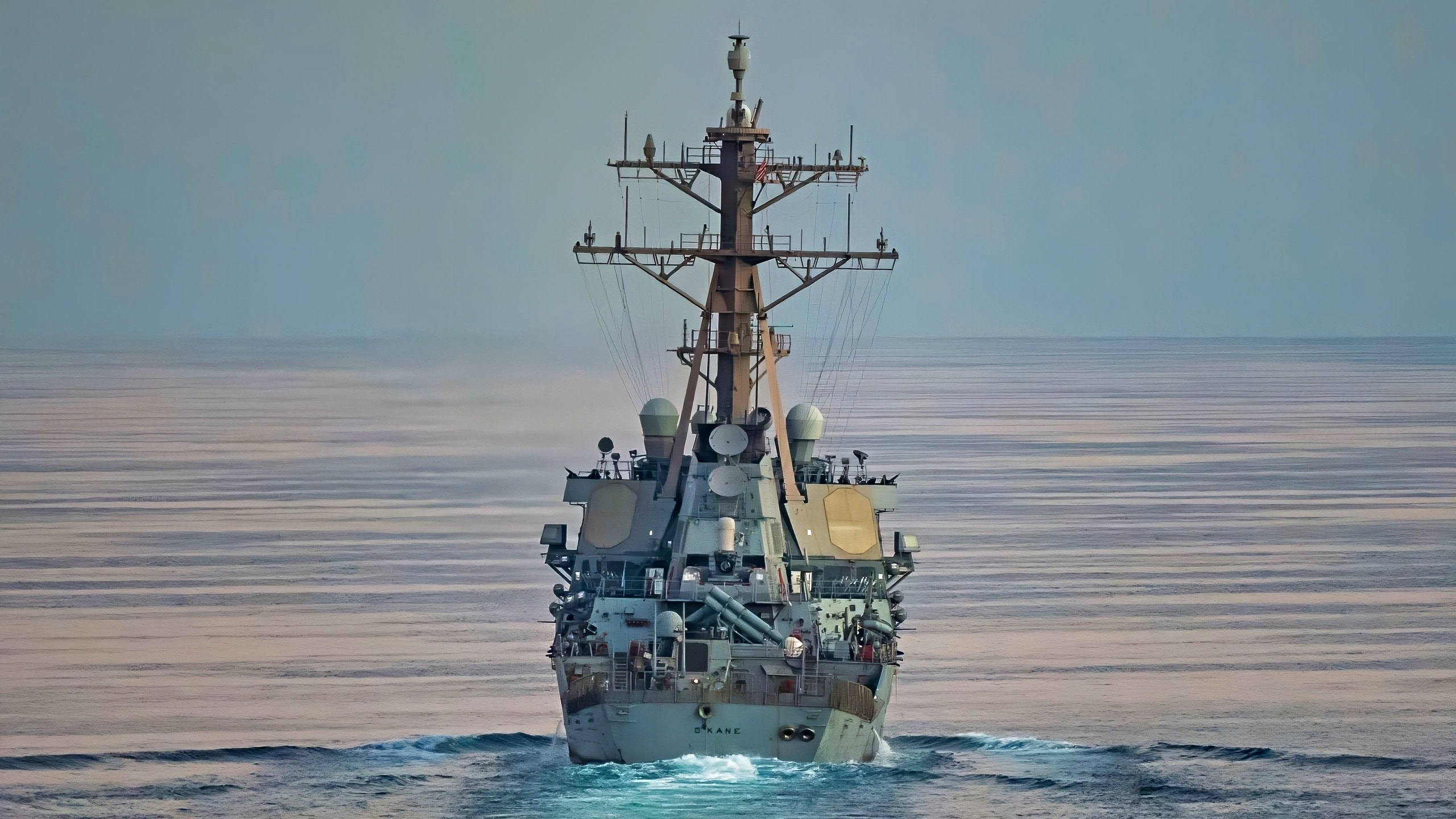
The US Central Command was clear: US forces conducted "self-defense strikes" against Iranian radar and drone command facilities near the Geruk/Goruk area and Qeshm Island from May 30 to 31, citing that Iran had shot down an MQ-1 drone operating over international waters and posed threats to regional shipping with its facilities and one-time attack drones. CENTCOM stated that US forces destroyed Iranian air defense, ground control stations, and two attack drones, with no US casualties reported.
From a military perspective, these strikes were not comprehensive air raids but rather a "node disruption" operation aimed at suppressing Iran's reconnaissance, tracking, and drone launch chains along its southern coast. Geruk/Goruk and Qeshm Island are close to the Strait of Hormuz, where the radar, ground control stations, and attack drones form a pressure system in the strait rather than isolated targets. Washington termed it self-defense, while Tehran viewed it as a direct weakening of its southern defense network.
Kuwait Drawn into the Frontline
Iran's choice to respond in the direction of Kuwait sends a political signal that outweighs tactical gains. AP reported that the ballistic missiles launched by Iran were intercepted by US forces, while Reuters stated that US forces intercepted two ballistic missiles aimed at US troops in Kuwait, with Kuwait also reporting that its air defense systems were responding to missile and drone attacks. The presence of the US Army Central Command's forward command structure in Kuwait means that it is not seen as a "neutral rear" by Iran, but rather as part of the US combat network.
This serves as an uncomfortable reminder for Gulf nations: purchasing Patriot, THAAD, or command and control systems does not equate to political immunity. The actual mission of the Gulf air defense network is shifting from protecting national cities and energy facilities to simultaneously protecting US military bases, ports, airports, and the pace of US military operations. Any military personnel who have served in the region know that intercepting a missile is merely a technical action; the real challenge lies in explaining after each interception why their skies must continue to fire in someone else's war.
Ceasefire Becoming a Testable Gray Area
This round of exchanges occurred while the US and Iran were still attempting to negotiate an end to the war and reopen the Strait of Hormuz. AP noted that the nominal ceasefire has been tested multiple times by military actions from both sides; Reuters reported that Iranian officials criticized the US for its constantly changing negotiation stance and viewed actions in Lebanon, Israel, and the US as part of the same conflict chain. Trump continues to claim that Iran wants to reach an agreement, but the interceptions over Kuwait indicate that there is no real separation between the negotiating table and the launch pads.
The Strait of Hormuz remains the center of this crisis. AP cited Lloyd’s List Intelligence stating that before the conflict, over 130 large commercial vessels passed through the strait daily, while only 36 vessels have passed in the last seven days, about one-third of which were transporting crude oil or petroleum products. Reuters also reported that oil prices rose over 3% due to the latest exchanges. If the core of a war-ending agreement is to restore shipping, then any attack on Kuwait, US military bases, or vessels in the strait will prompt shipowners, insurers, and Gulf governments to reassess the credibility of the so-called "reopening."
Escalating Security Pressure on Gulf Allies
Kuwait's involvement will also change the tone of Gulf allies in negotiations with the US. The focus around May 29 had already shifted to attacks in the direction of Kuwait and the US response to Iranian positions; the May 31 incident involving commercial vessels in the Gulf of Oman brought US enforcement of blockades to the forefront. The novelty of June 1 lies in the fact that the exchanges are no longer just "US strikes on Iran, Iran threatening the strait," but rather Iran openly targeting US nodes within Gulf nations as potential attack objects.
This will force Kuwait, Qatar, Bahrain, the UAE, and Saudi Arabia to recalculate three things: first, whether the security guarantees provided by US bases also bring predictable strike risks; second, whether their domestic air defense ammunition stocks can withstand low-frequency but prolonged missile/drone attrition; and third, whether Gulf nations still have the capability to pull themselves back from the brink of the battlefield before US-Iran negotiations are locked in.
Conclusion
From Ahmed's perspective, the events of June 1 revealed not whether Iranian missiles can penetrate air defenses, but rather the longstanding issue of Gulf security architecture: the US places bases on allied territory, allies purchase expensive air defense systems to protect these bases, and Iran uses limited missiles and drones to remind every capital that the costs of war will not be confined to Washington and Tehran. If the ceasefire does not have clear boundaries for engagement, rules for passage through the Strait of Hormuz, and constraints on regional bases, the sounds of interceptions over Kuwait will continue to serve as background noise for negotiations.
Sources
- Associated Press, 2026-06-01: U.S. bombs Iranian military sites, then downs missiles Tehran fired at troops in Kuwait.
- Reuters, 2026-06-01: Kuwait comes under fire as US and Iran trade blows.
- U.S. Central Command, 2026-05-31: U.S. Defends, Disables Threats in Response to Iranian Aggression.
- Reuters, 2026-05-31: U.S. struck Iranian radar and drone command/control sites at Goruk and Qeshm Island.
Iran launched missiles targeting U.S. forces in Kuwait on June 1, 2026, prompting U.S. Central Command to conduct airstrikes on Iranian military sites. Kuwait's air defense successfully intercepted the missiles, reflecting escalating tensions in the region. This incident underscores the risks Gulf states face amid ongoing U.S.-Iran hostilities, with oil prices rising as a result of the exchanges.
- Iran targeted U.S. military positions in Kuwait with missiles.
- U.S. forces conducted airstrikes on Iranian military sites in response.
- Kuwait's air defense intercepted incoming missiles and drones.
- The situation highlights the risks for Gulf states amid U.S.-Iran tensions.
- Oil prices rose due to the recent military exchanges.