
CENTCOM reports B-52 strikes on Iranian missile sites
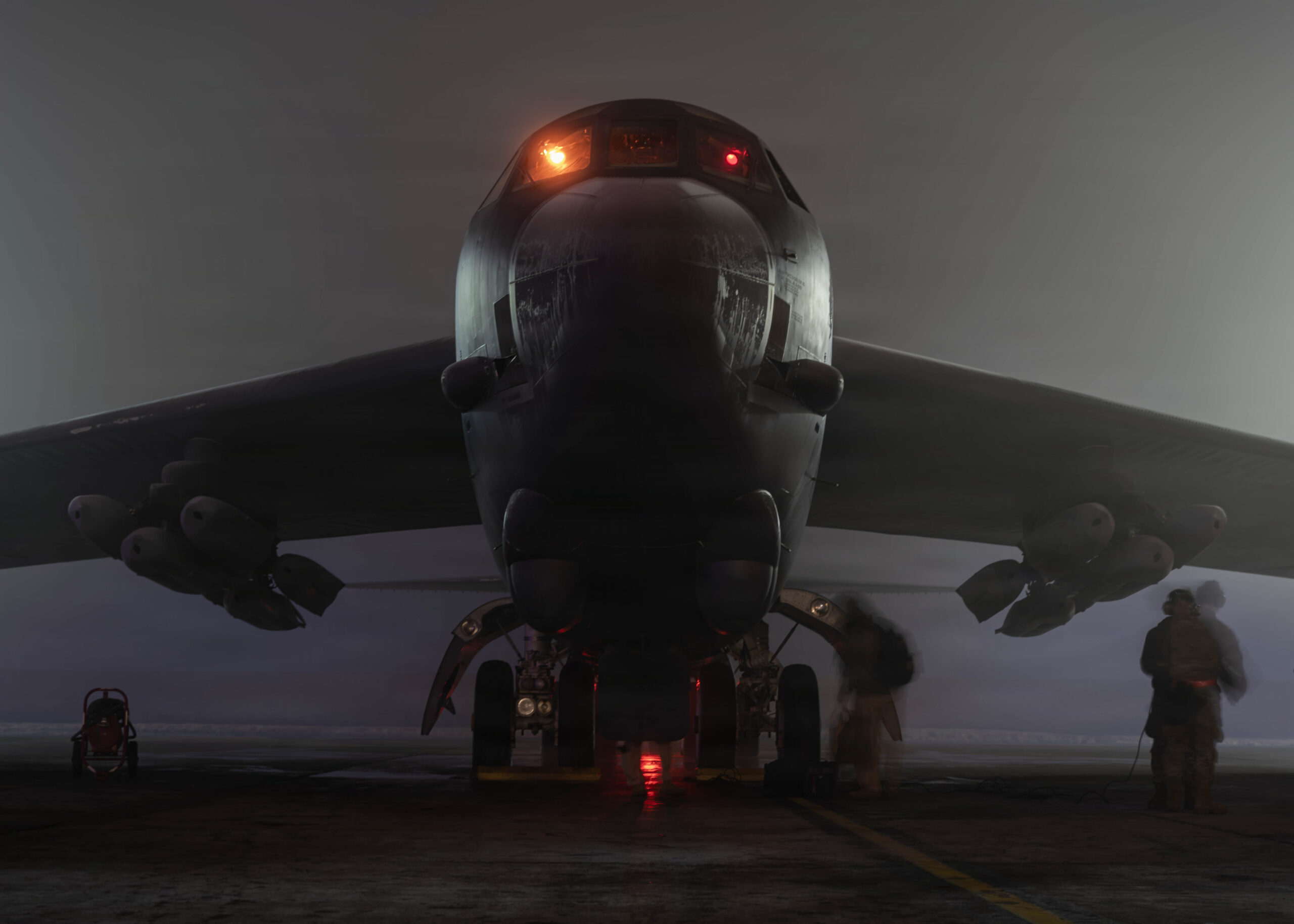
The United States Central Command (CENTCOM) confirmed that Boeing B-52H Stratofortress bombers conducted strikes on Iranian ballistic missile facilities and command-and-control positions during the opening phase of Operation Epic Fury, according to official statements.
The confirmation came alongside newly released footage from United States Central Command Public Affairs showing airmen preparing a B-52H Stratofortress for launch in support of the operation.
The operation’s initial phase focused on Iranian missile infrastructure and command nodes identified as operational threats. During the first 100 hours of Operation Epic Fury, U.S. bombers struck ballistic missile sites and command and control posts inside Iran, according to statements by senior U.S. military officials.
United States Secretary of War Pete Hegseth emphasized the overwhelming nature of the strikes in remarks referenced by the command. “This was never meant to be a fair fight, and it is not a fair fight. We are punching them while they’re down,” Hegseth said.
According to a social media statement from Admiral Brad Cooper, commander of United States Central Command, long-range bomber operations played a central role in the campaign’s opening phase. Cooper said Boeing B-1 and Northrop Grumman B-2 bombers carried out what he described as “uncontested surgical strikes” against missile facilities located deep inside Iranian territory.
Cooper also confirmed that Boeing B-52 bombers conducted strikes against command and control posts in Iran. The statement indicates that all three bomber aircraft used by the United States Air Force for long-range strike missions—the B-1B Lancer, the B-2 Spirit, and the B-52 Stratofortress—have been employed in the conflict.
The B-52 Stratofortress remains one of the longest-serving aircraft in the United States Air Force inventory. The heavy bomber has been used in every major conflict involving the United States since 1965 and continues to serve as a long-range strike platform capable of delivering both precision-guided and conventional weapons.
In operational terms, the B-52H is designed to carry large payloads over intercontinental distances while operating at high altitude. The aircraft can launch a range of stand-off weapons, including cruise missiles and precision-guided bombs, allowing crews to engage targets without entering heavily defended airspace.
While the B-52 typically operates alongside stealth or high-speed strike platforms in modern campaigns, its ability to carry a large volume of munitions remains a key feature of U.S. bomber operations. The aircraft often performs sustained strike missions against fixed targets such as command centers, missile storage facilities, and logistical infrastructure.
Content preview only. Full article available at source. View Full Article
U.S. Central Command (CENTCOM) confirmed that Boeing B-52H Stratofortress bombers conducted strikes on Iranian ballistic missile facilities and command-and-control positions during the opening phase of Operation Epic Fury. The strikes targeted missile infrastructure and command nodes identified as operational threats. This operation involved multiple U.S. bomber aircraft, including the B-1 and B-2, emphasizing the overwhelming nature of the strikes against Iranian military capabilities.
- U.S. bombers struck ballistic missile sites and command and control posts inside Iran.
- The operation's initial phase focused on Iranian missile infrastructure and command nodes identified as operational threats.
- All three bomber aircraft used by the United States Air Force for long-range strike missions were employed in the conflict.