
CENTCOM says 95% of ships transit Hormuz safely amid mine denials and U.S. warning to Iran

CENTCOM says that 95% of ships transit Hormuz safely amid mine denials and U.S. warnings to Iran
On October 25, the commander of U.S. Central Command did not limit himself to speaking from an operations room; he flew over the Strait of Hormuz and publicly stated that the corridor does not contain Iranian mines. On the same day, the command reported that more than 95% of ships transit safely, and that U.S. forces are assisting Gulf countries in exporting up to 1.5 billion barrels through the strait. These are figures and a unilateral American narrative that have not been subject to independent verification, but they are not a fleeting propaganda detail: they are an attempt to redefine the operational reality at sea before political disputes turn into a decision to open fire.
The battle of evidence over a busy maritime corridor
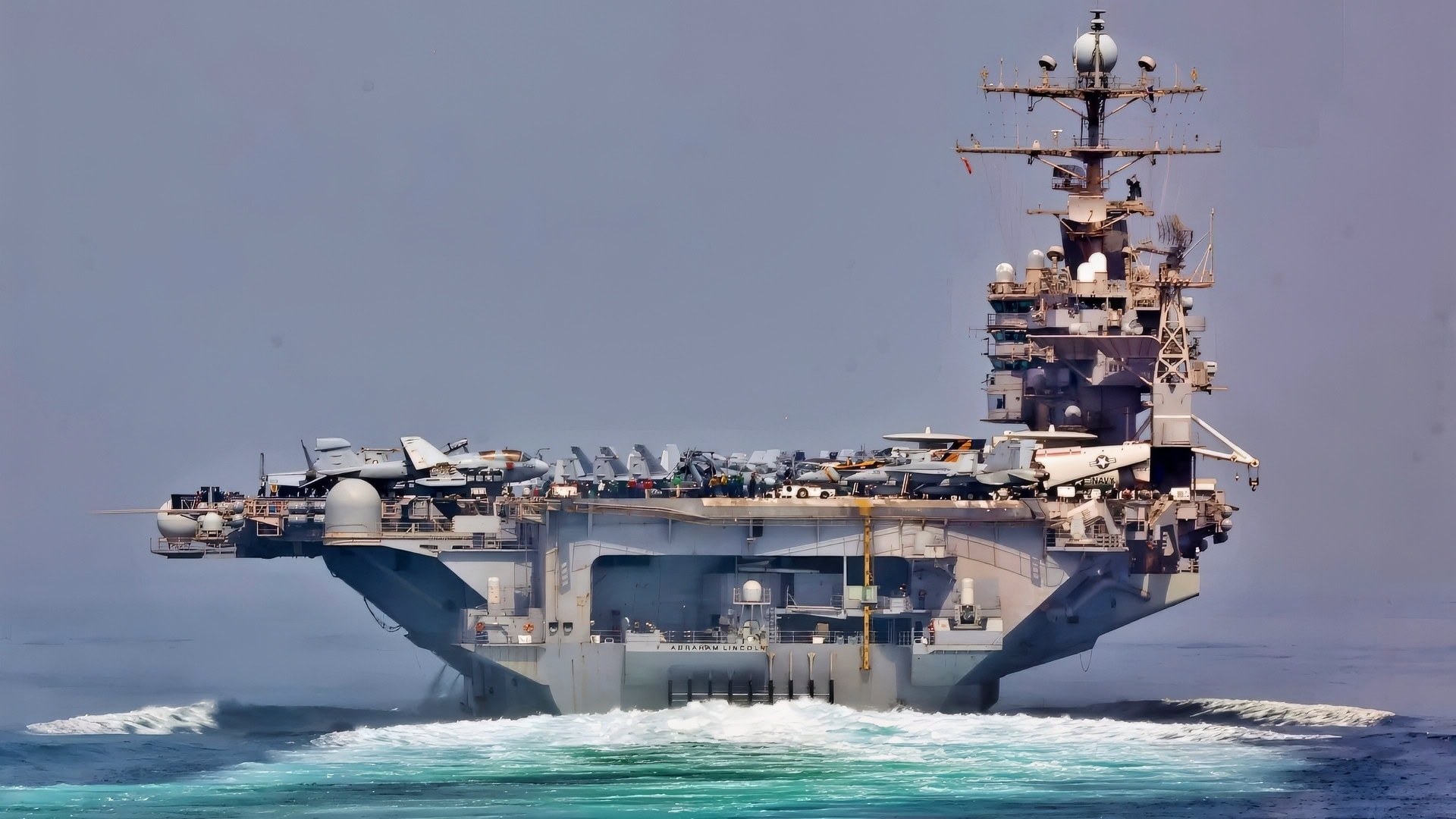
This denial stands in direct opposition to the Iranian Revolutionary Guard's narrative from October 17–20 about mines that halted or set fire to tankers, along with a series of reports about attacks on commercial vessels during October. The two narratives should not be merged into a middle ground. CENTCOM's announcement of the corridor being free of mines and the Revolutionary Guard's claim of their existence or effectiveness are two conflicting official assertions that have not been independently verified.
Practically, the issue is not whether a single ship was able to transit. Successful naval mining does not require a complete closure to achieve its effect; it is enough to make an insurance company reprice the risk, or to compel a captain to wait for a convoy, or to impose additional cargo and freight on a tanker. Therefore, the 95% figure, even if accurate, does not negate the remaining danger but reveals a different language of measurement. Washington measures the continuity of flow, while Tehran seeks to demonstrate its ability to make every transit a costly decision.
The CENTCOM commander's flight over Hormuz also carries a message to sailors and shipping companies: the United States wants to be seen monitoring the corridor, not just announcing it. However, reconnaissance and deterrence are not mine clearance. Mine clearance is a slow and material process that requires specialized ships, repeated surveys, and trust from civilians, and this trust is not generated by press conferences.
Trump delays the strike but announces the hour of decision
On the same day, Donald Trump stated that the United States would not strike Iran today, according to Israeli reports, then proposed an equation of either an agreement or we finish them completely. Earlier, he responded to a question about a strike that day with the word "maybe." These are not identical messages. Saying "not today" removes a short time window, while "agreement or finish" transforms the threat into an open political deadline that no one knows the beginning or end of.
The flaw in this type of messaging is that allies and adversaries read different things from it. The Revolutionary Guard may interpret the delay as an opportunity to raise the cost of the next strike, while markets may read it as a temporary truce, and Gulf governments hear a warning that the decision has not been canceled but postponed. The differences in phrasing between "maybe," "we won't strike today," and "agreement or finish" confirm that the White House's messaging has not settled on a single voice. This is a dangerous gap when civilian ships and drones are in the same theater of warning.
The deadline gains greater weight because Washington and Tehran are factoring in the timing of elections, as multiple American media reports have indicated. However, elections do not grant leaders complete control over the sea. Any documented incident against a tanker, base, or aircraft could steal the decision from box calculations and place it in the hands of a field commander within hours.
Iranian response between capability and exaggeration
Tehran has also escalated its rhetoric. Military officials stated that the response to U.S. aggression would be unimaginable, and Iran has been attributed with claiming to have shot down a U.S. drone, a claim that has not been independently verified. Reports have also conveyed threats of using the nuclear option and striking infrastructure if Iran is attacked; this characterization from the Iranian side has not been substantiated by independent sources, and it does not clarify whether it refers to actual nuclear capability or maximum deterrence language.
Any military officer who has served in the region knows that distinguishing between capability and exaggeration is not done through statements. Shooting down a drone, if confirmed, demonstrates that air defense or electronic warfare can disrupt reconnaissance. However, it does not prove a sustainable ability to prevent U.S. forces from operating. Similarly, threatening infrastructure is more actionable than the nuclear statement: missiles, drones, and asymmetric maritime attacks can hit ports, power stations, cables, and coastal facilities, but their political success depends on continuity and selectivity, not just the first strike alone.
Conversely, Tehran's continued messaging through intermediaries, as reported by the Associated Press, indicates that political channels have not been severed. This is not necessarily a sign of moderation; it is mutual insurance against miscalculation. Armies prepare for the worst, and diplomats leave a small window so that the worst does not become automatic.
The cost of danger shifts to the shore
Iranian-American talks over Hormuz have stalled, and oil remains above $116 per barrel. This price is not a judgment on an actual closure of the strait, but rather a pricing of the possibility that transit may become slower and more dangerous. More importantly, oil leaking from a tanker that was attacked has reached the shores of the UAE, according to Al Jazeera. Here, the nature of the crisis changes: the problem is no longer just a captain and a shipping company, but coastal municipalities, fishing, tourism, environmental cleanup, and insurance premiums borne by Gulf economies.
Iran's offer to open the strait immediately upon lifting what it calls a blockade reveals its negotiating equation. It does not offer freedom of navigation as a separate principle, but as part of a political trade-off. CENTCOM presents it as an existing operational case. Between the trade-off and the operational claim lie shipping companies that cannot manage their tankers with slogans.
The Houthi front draws attention and munitions
On October 25, the Saudi-led coalition announced the interception of ten Houthi ballistic missiles, with reports of interceptions near Mecca and the reopening of Riyadh airport. However, the news of a Houthi missile hitting a gathering of Saudi-led forces and resulting in dozens of casualties, as reported by The Wall Street Journal, adds a new layer that should be separated from the airport, Aramco, and the presidency in Aden that the platform previously covered. This is not a repetition of those incidents, but a simultaneous test of air defense capability and command to protect civilian facilities and combined forces.
The connection to Hormuz is not automatic and should not assume a unified operations room without evidence. However, it is clear in the military outcome: every interception in Yemen consumes interceptors, warning time, and command attention, which are resources the region also needs to protect navigation. The structural contradiction now is that Washington wants to prove that Hormuz is operating normally, while its adversaries have cheaper means to demonstrate that the cost of this normalcy is rising every day.
Sources and methodology: Statements from CENTCOM, the White House, and the Revolutionary Guard were treated as separate preliminary statements. Reports from Jerusalem Post, Anadolu, AP, Al Jazeera, WSJ, NPR, Politico, and NYT were used for comparison; the unilateral figures and claims mentioned above were explicitly labeled as unverified independently.
U.S. Central Command (CENTCOM) reported that 95% of vessels are safely transiting the Strait of Hormuz as of October 25, denying the presence of Iranian mines. CENTCOM's claims are part of an effort to redefine operational realities amid rising tensions with Iran, which has made conflicting claims about maritime security. The situation remains complex, with implications for regional security and oil markets.
- CENTCOM claims 95% of ships transit the Strait of Hormuz safely.
- CENTCOM denies the presence of Iranian mines in the strait.
- U.S. forces assist Gulf states in exporting oil through the strait.
- Iranian Revolutionary Guard claims to have halted or damaged tankers with mines.
- The price of oil remains high, indicating market concerns about transit safety.