
The Liaoning and USS Roosevelt Appear in the Philippine Sea at the Same Time: Exercises and Real Combat Overlap at the Reconnaissance Level
 Li Minghui
The Liaoning and USS Theodore Roosevelt Appear Simultaneously in the Philippine Sea: Exercises and Real Combat Overlap at the Reconnaissance Level
On October 25, the South China Morning Post cited open-source tracking and analysis stating that the Chinese Navy's Liaoning carrier group and the U.S. Navy's USS Theodore Roosevelt aircraft carrier may be operating in the Philippine Sea. Media on the same day summarized this as the simultaneous operations of Chinese and American aircraft carriers and strike groups in the Western Pacific. What should be avoided is automatically interpreting their simultaneous appearance as confrontation. As of the time of publication, neither side has released real-time coordinates, distances between vessels, or a complete list of accompanying ships that can be mutually verified; any judgments regarding positions and distances can only be marked as based on open-source tracking and media reports, without official confirmation from either side.
Coexisting in the Same Waters Does Not Mean Fleets Are Confronting Each Other
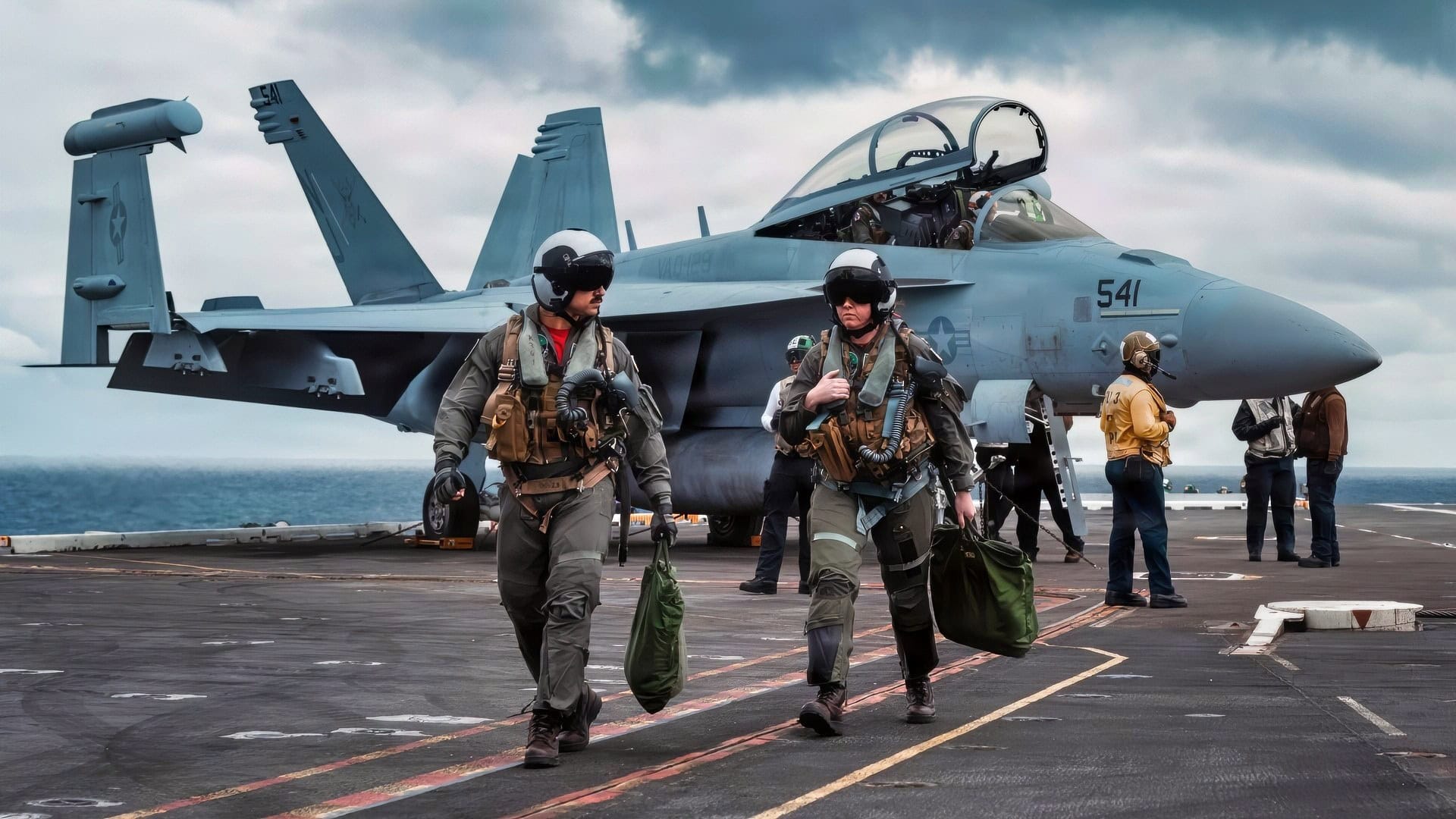
The Philippine Sea is not a narrow body of water. Even if two carrier forces are in the same area, they may be far apart, executing different routes and training objectives. The specific composition of the Roosevelt strike group in this round is not sufficiently disclosed to confirm ship-by-ship; this article does not deduce its escort ships, supply ships, or submarine configurations based on conventional formations; similarly, there is no reliable evidence to prove that the two formations have had close contact or tactical confrontation.
However, coexistence itself still has military significance. Carrier groups do not just move on a map: the takeoff and landing of carrier-based aircraft, refueling, data link coordination, electromagnetic control, and air defense alert all generate signals that can be collected, categorized, and reviewed by adversaries. In simple terms, the distance between vessels is just a pointer on a dial; what truly operates are the observations of two systems regarding each other's processes.
Keen Sword 27 Provides a Window for Observation
The U.S.-Japan Keen Sword 27 exercise is currently underway in the southwestern direction of Japan and related air and sea areas. Multiple reports have referred to it as the largest joint exercise between the U.S. and Japan, with participation exceeding 50,000 personnel, focusing on maneuvers, communications, air defense, and anti-ship coordination in island directions. Whether the Roosevelt has been accompanying the exercise throughout and what specific roles the carrier has played remain inconclusive due to insufficient official information; the temporal overlap cannot be written as a subordinate relationship.
Another relatively certain fact is that recent reports from Japan have detected Chinese military aircraft, unmanned reconnaissance platforms, warships, and vessels capable of supporting aircraft carriers operating in the vicinity; media such as DD News have stated that Chinese forces are tracking the exercise. For the PLA, the value of such large-scale joint exercises lies not only in how many vessels are seen but in recording how multinational forces integrate into the command chain, when they activate what types of sensors, and how the rhythm of resupply changes. Public information cannot show the actual content obtained, but close reconnaissance and presence verification are training objectives in themselves.
Two Sets of Wartime Processes Overlapping in Peacetime
The author believes that this scenario resembles two parallel operating assembly lines. The U.S. military and allies use exercises to test the logistics and command connections between distributed forces; the Chinese side uses proximity to large exercises to test sustained deployment, long-range support, situational awareness, and the ability to observe multinational systems. It is not a precursor to war, nor does it mean that risks do not exist. The closer training activities are to real processes, the harder it becomes to separate electromagnetic spectrum, reconnaissance routes, and data link competition from actual combat; yet this layer is precisely what is most difficult for outsiders to see.
Low-Intensity Signals Around the Taiwan Strait
The Taiwanese army recently announced a shift towards more unscripted training to enhance the troops' ability to respond to situations; Beijing, on the other hand, reiterated its support for pro-unification figures on the island during the anniversary of Taiwan's recovery. These political and training signals do not change the maritime facts but indicate that all parties are embedding preparation work into their daily rhythms. It is worth noting that what truly compresses warning times is not how many nautical miles the aircraft carriers are apart, but how closely all parties operate the sensors, command, and support processes during exercises to wartime conditions.
Source: South China Morning Post, DD News, Military Watch, Taipei Times, Focus Taiwan. The next question to pursue may not be whether the two aircraft carriers have encountered each other, but who can more quickly convert the process data collected during peacetime into decision-making advantages in a crisis.
On October 25, the Chinese Navy's Liaoning Carrier Group and the U.S. Navy's USS Theodore Roosevelt were reported to be operating simultaneously in the Philippine Sea. The ongoing Keen Sword 27 exercise, involving over 50,000 personnel, is taking place in nearby waters. Chinese military assets are reportedly tracking these exercises, highlighting the military significance of the overlapping operations.
- Chinese Navy's Liaoning Carrier Group and U.S. Navy's USS Theodore Roosevelt were reported to be operating in the Philippine Sea on October 25.
- The ongoing Keen Sword 27 exercise involves over 50,000 personnel from the U.S. and Japan.
- Chinese military assets were reported to be tracking the U.S.-Japan exercises.
- No official confirmation of the exact positions or distances between the two carrier groups was provided.
- The report emphasizes the significance of military signals generated during these operations.