
CENTCOM's New Mission Against Iran's Networks in 2026 Tests Gulf's Ability to Protect Its Borders
 Ahmed Al-Rashid
CENTCOM's New Mission Against Iran's Networks in 2026 Tests Gulf's Ability to Protect Its Borders
On November 7, 2026, the U.S. Central Command announced the formation of a task force to disrupt the land transport routes used by Iran to support illegal military shipments, just days after the U.S. State Department announced measures targeting Tehran's efforts to acquire shoulder-fired air defense systems. This is not news about a missile launched or a base bombed, but it may be more significant for the Gulf; the battle has shifted to the route that connects money, components, and intermediaries to factories and platforms.
From Sea to Land Routes
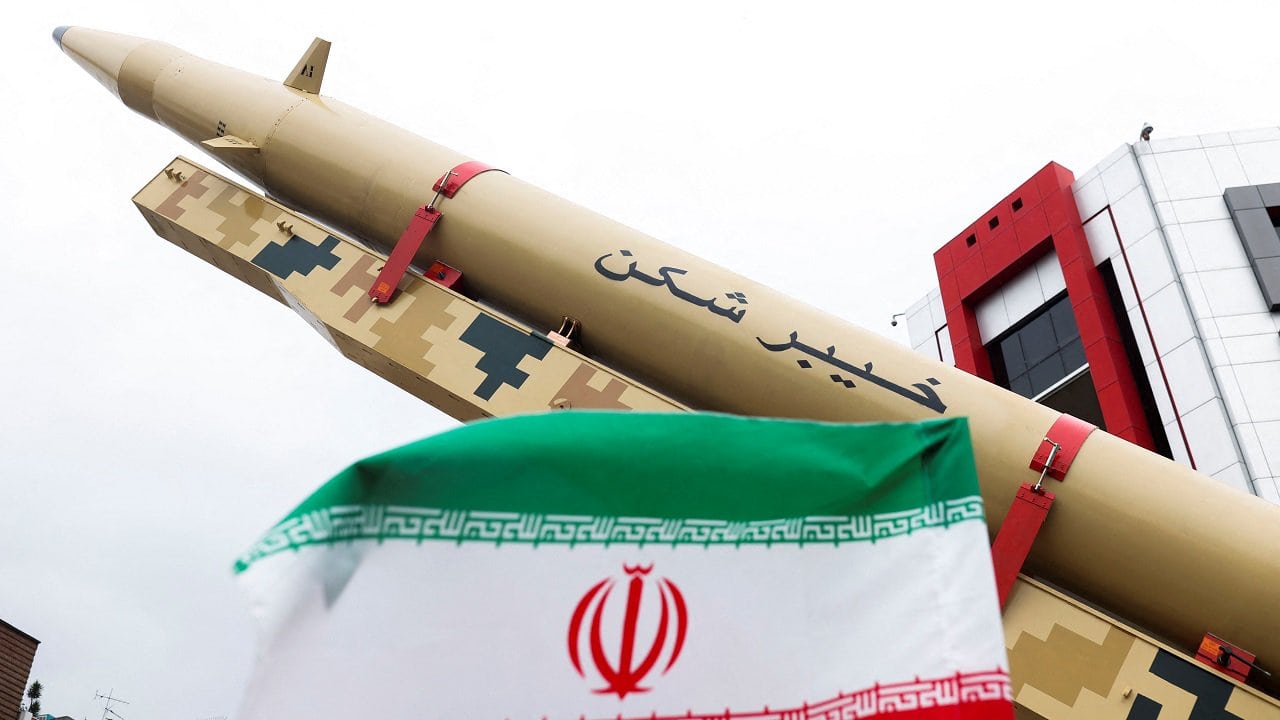
CENTCOM data indicates that the new mission focuses on detecting and disrupting land transit routes associated with Iranian shipments, while repeated data from the U.S. Treasury Department since April and September shows that the supply network does not rely on a single country or company. The component may be purchased through a front company in East Asia, transferred to an intermediary in the Middle East, and then enter Iran with seemingly ordinary commercial documents. Therefore, intercepting a single ship does not equate to dismantling the network; the real danger is the system's ability to quickly compensate.
This shift complements the maritime blockade rather than replacing it. The United States can monitor maritime corridors with reconnaissance aircraft and ships, but it needs financial and intelligence information and local partnerships to know which truck or warehouse deserves inspection. In my view, this is the point that will determine whether the new force is a real pressure tool or just another name for a limited interception operation.
Why MANPADS Matter to Gulf States
The U.S. State Department indicated on November 5 that it is disrupting Iran's efforts to acquire MANPADS systems. These weapons are not THAAD or Patriot, but they pose a greater threat to aviation at different moments. A shoulder-fired missile can threaten a helicopter, a transport plane, a drone, or a civilian aircraft flying at low altitude near an oil facility. Additionally, their ease of concealment and transport makes controlling them more difficult than controlling a large air defense battery.
The Gulf has spent billions of dollars on long-range air defense, but protecting facilities cannot be measured solely by the number of Patriot and THAAD launchers. It also requires border control, port monitoring, supply chain inspections, and linking customs, intelligence, and armed forces into a single picture. Practically, an excellent air defense system can intercept a ballistic missile, but it cannot intercept a container carrying its components before it reaches the factory.
What the Mission Means for Saudi Arabia, the UAE, and Oman
Saudi Arabia is the most sensitive party; its vast area, multiple borders, and maritime corridors make monitoring all smuggling routes a daunting task. After the Houthi attacks targeting the Saudi depth and energy facilities in recent months, it is not enough for Riyadh to request U.S. air protection at the moment of crisis. What is needed is to build early warning capabilities and share information to prevent weapons from reaching before they become a threat.
The UAE has greater experience in monitoring ports and commercial fronts, but it faces a different problem: the density of international trade and the complexity of intermediary companies. Closing every suspicious channel without evidence will harm the ports, while leaving them open will give supply networks the opportunity to continue. Oman, due to its location and political channels with Iran, could be part of a de-escalation and verification mechanism, but it will not easily accept having its territory or waters turned into a permanent U.S. inspection platform.
Here, the usual Gulf contradiction emerges. The countries in the region want U.S. deterrence when the missile approaches, but they do not want to become a declared party in an economic and intelligence war against Iran. This desire is politically understandable, but it leaves the gap between purchasing equipment and building institutions unresolved.
Sanctions Alone Do Not Break Iranian Capability
Washington bets that pressure on intermediaries and transport routes will delay missile and drone production and increase the cost of rebuilding. This is partially true. Iran has developed over many years expertise in replacing suppliers and redesigning components, and some dual-use civilian technologies cannot be completely banned. Therefore, sanctions may succeed in slowing down the production cycle, but they do not guarantee its cessation.
More importantly, there needs to be a combination of three elements simultaneously: actionable intelligence, legal and deliberate interception of shipments, and Gulf capability to protect targets that Tehran or its proxies may retaliate against. If the third element is absent, Washington's success in disrupting the supply network could become a reason for new attacks on ports and oil facilities.
The Real Test is Independence, Not Dependence
U.S. data indicates that the new force will disrupt routes linked to illegal shipments, but the statement does not answer the most important question for Gulf capitals: who owns the information and who decides the moment of interception? If the answer remains in Washington, Gulf states will benefit from protection, but they will not own the capability.
Any military officer who has served in the region knows that owning the aircraft or radar is easier than establishing a system that operates every day without political noise. Here lies both the value and the limits of CENTCOM's mission. It may grant the Gulf precious time, but it will not alone build customs, intelligence, and air defense institutions. The contradiction facing the region is clear: Gulf states want independence in decision-making, but they still rely on the United States to know where the threat begins before it appears in the sky.
Sources
- U.S. Central Command CENTCOM, announcement of a task force to disrupt land transport routes linked to Iranian shipments, November 7, 2026.
- U.S. State Department, fact sheet on disrupting Iran's efforts to acquire air defense systems, November 5, 2026.
- U.S. Treasury Department, data on Economic Outcast operations against Iranian military procurement networks, April and September 2026.
- Reuters, report on the ongoing divergence between the U.S. and Iran regarding the agreement, November 4, 2026.
U.S. Central Command established a task force on November 7, 2026, to disrupt Iranian supply routes in the Gulf region. This operation focuses on identifying and dismantling land transport routes used for illegal military shipments. The U.S. emphasizes the need for intelligence sharing and local partnerships to enhance regional security against Iranian threats, particularly concerning the acquisition of MANPADS.
- U.S. Central Command announced a task force to disrupt Iranian supply routes on November 7, 2026.
- The operation aims to target land transport routes used by Iran for illegal military shipments.
- The U.S. is focusing on intelligence sharing and local partnerships to enhance operational effectiveness.
- The report highlights the importance of early warning systems and regional cooperation among Gulf states.
- Iran's efforts to acquire MANPADS are a significant concern for Gulf nations.