
ChatBearing Bearing Intelligent Agent Completes Design in 3 Minutes: PLA Military Industry AI Begins to Enter Component Level
 Li Minghui
ChatBearing Bearing Intelligent Agent Completes Design in 3 Minutes, PLA Military AI Begins to Enter Component Level
On May 27, the South China Morning Post disclosed a Chinese military paper that superficially discusses rolling bearings, but in reality, it seems more like a pressure test for the PLA's equipment research and development system. The system mentioned in the paper is called ChatBearing, developed by a team from the National Key Laboratory of Mechanical Transmission at Chongqing University, published in the Journal of Ordnance Engineering. Its core capability is not to write reports, but to automate the process of parsing bearing design requirements, stress analysis, selection, lifespan calculation, strength verification, scheme selection, and design report generation.
Why an Unassuming Bearing is Important
Bearing is not equipment that easily makes headlines like missiles, radars, or carrier-based aircraft, but it determines whether gearboxes, aircraft engine accessories, armored vehicle transmissions, and unmanned platform servos can operate reliably over the long term. The public abstract states that ChatBearing compresses the conventional manual design time of 2 to 3 hours to under 3 minutes, reducing the total weight of the bearing by over 4%; compared to Qwen3-235B-A22B and Gemini-2.5-Pro-0506, the comprehensive design scores are higher by 43.6% and 21.1%, respectively. This figure looks like optimization in manufacturing, but in the military industry, it means solidifying the experience of a few senior engineers into the toolchain.
The Real Signal is at the Manufacturing Level
In the past, discussions about Chinese military AI often focused on drone swarms, intelligent command, and electronic warfare. Another report on May 26 mentioned that Chinese research teams are combining AI with radio wave propagation mechanisms for faster and more interference-resistant radar and communication; since April, there have also been public studies on battalion-level command AI and unmanned system collaboration. However, what is interesting about ChatBearing is that it is not at the front end of the battlefield, but deep within factories and design rooms.
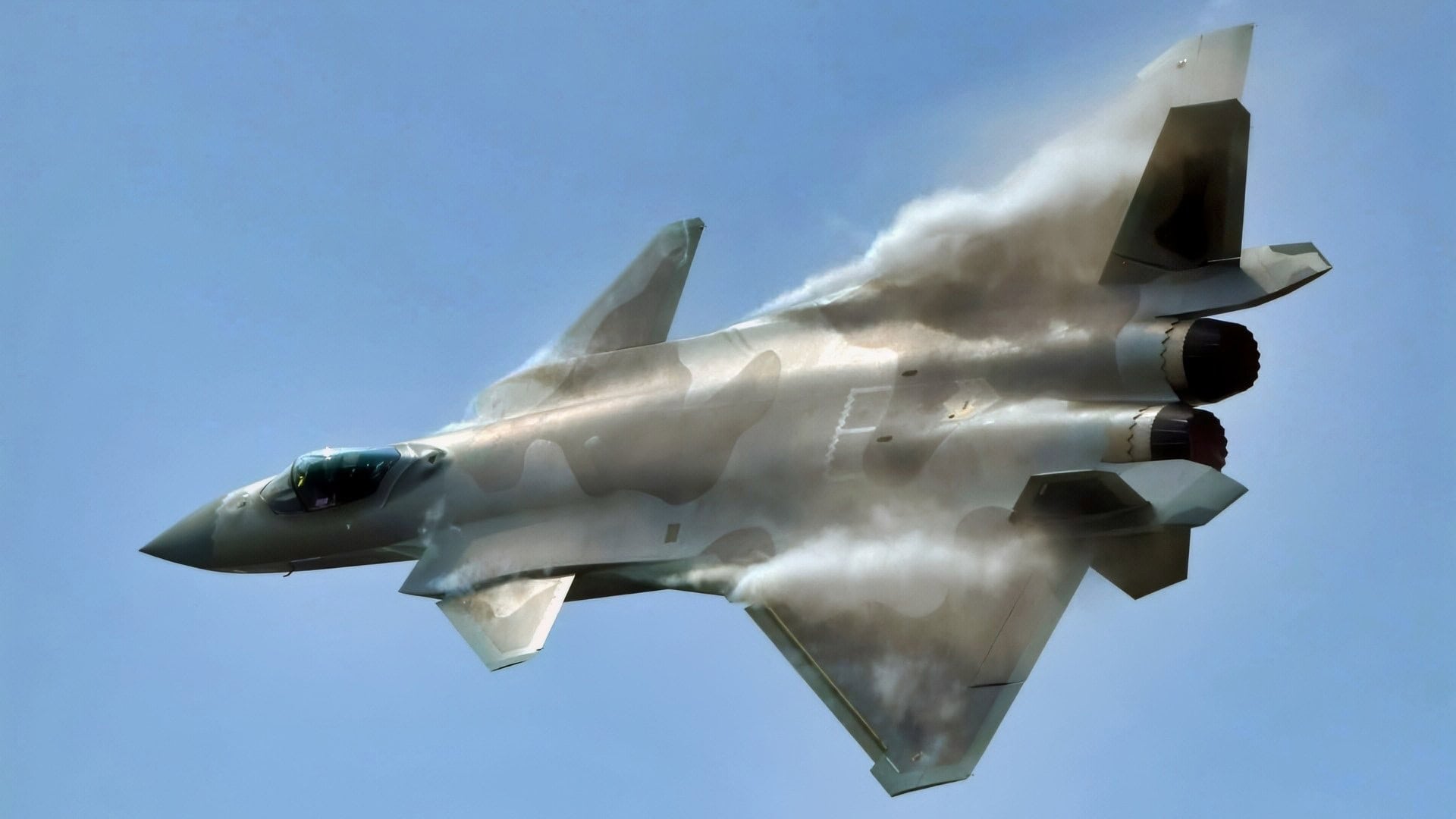
This can be connected to the May 12 report about the J-20 component "dark factory." The digital production line related to Chengdu Aircraft Industry reportedly doubles the production efficiency of stealth aircraft components, with automated handling and AI-driven equipment operating nearly around the clock. One is responsible for structural component production, while the other focuses on basic component design, both pointing to the same issue: the bottleneck in PLA modernization is shifting from the performance of individual equipment to the rhythm of R&D, quality consistency, and the supply of engineers.
Shortcomings are Also Clear
I do not believe that a bearing intelligent agent can allow Chinese weapon R&D to "leapfrog." Bearing design still requires materials, heat treatment, machining precision, lubrication, batch production testing, and extreme environment testing to ensure reliability. AI can shorten the initial scheme selection, but it cannot replace high-temperature, high-load, long-lifespan testing. In simple terms, it is like providing the design department with an assistant engineer who does not get tired, rather than directly adding a mature military production line.
There is also a more practical question: will the PLA be able to use it? On May 19, the South China Morning Post quoted an article from the PLA Daily stating that some units still have deficiencies in human-machine integration, professional talent training, and trust in new equipment, especially unmanned and intelligent equipment. Frontline units are already struggling to digest new equipment, and if the backend military industry continues to accelerate, the training, maintenance, and support systems may become new bottlenecks.
Comparative Significance to the United States
The U.S. military-industrial advantage lies in top-tier chips, long-term combat feedback, and system engineering accumulation, while China's advantage increasingly manifests in rapidly integrating the civilian industrial chain into military tasks. Systems like ChatBearing may not immediately change a specific type of missile or aircraft, but if it can replicate in a large number of "low visibility parts" such as bearings, gears, actuators, and structural components, the impact will be very real: shortened R&D cycles, reduced rework, faster onboarding for young engineers, and easier small-batch modifications.
What is truly worth watching is not the impressive number of 3 minutes in the paper, but whether it will enter the design closed loop of real models next. The public information is still insufficient, and we can only speculate. However, if the Journal of Ordnance Engineering continues to feature similar intelligent agents for hydraulic, sealing, thermal control, composite material connections, etc., it would indicate that Chinese military AI is no longer just capable of "commanding operations," but is transforming the most tedious and hardest-to-observe industrial foundations.
Source
The ChatBearing AI system, developed by a team at Chongqing University, can automate bearing design processes for the PLA, reducing design time significantly. This advancement reflects a broader trend in integrating AI into military manufacturing, although challenges remain in the effective deployment of such technologies in operational settings.
- ChatBearing AI can complete bearing design in under 3 minutes, reducing time from 2-3 hours.
- The system improves design scores compared to existing models by significant margins.
- The development indicates a shift in PLA's modernization efforts towards AI integration in manufacturing.
- Concerns exist regarding the PLA's ability to effectively utilize such technology in the field.