
China Coast Guard Pushes East of Taiwan in 2026 Patrol Rotation
 Marcus Chen
China Coast Guard Pushes East of Taiwan in 2026 Patrol Rotation
One rotation is the point. On July 4, the China Coast Guard said the CCGS Xiushan task group had relieved the CCGS Daishan task group east of Taiwan. Beijing described it as routine law enforcement. The word that matters is not routine. It is relieved.
A one-time patrol is a message. A handoff between task groups is the beginning of a standing pattern. Since June, according to the China Coast Guard statement, the Daishan group had conducted patrols, vessel checks, fishery protection, and rescue operations in those waters. Xiushan now continues the same mission. That gives Beijing something more useful than another military exercise: persistence.
The East Coast Is the Rear Area Taiwan Cannot Lose
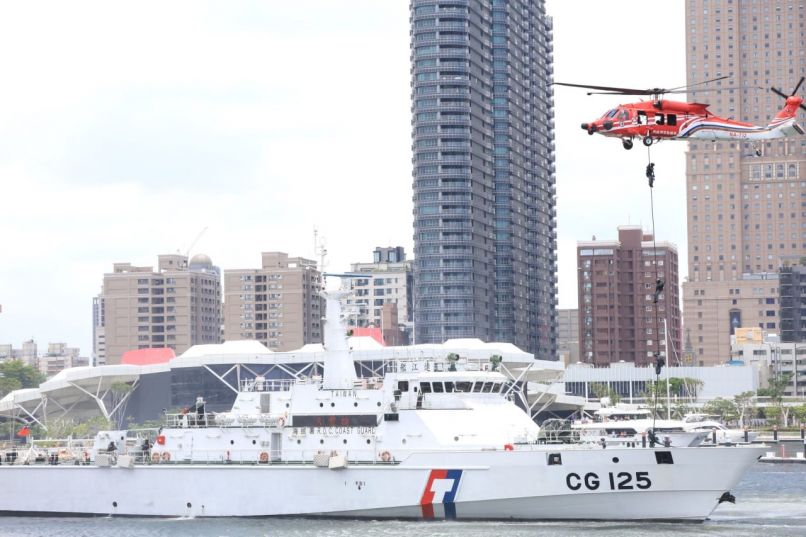
Most Taiwan scenarios focus on the western beaches, the Taiwan Strait, and missile salvos from the mainland. That is where the geography looks obvious. But Taiwan is roughly 394 kilometers long, and its eastern side opens into the Philippine Sea. If Taiwan has to receive fuel, ammunition, spare parts, evacuees, or foreign military support under pressure, the east coast matters. Hualien and Suao are not just place names on a map. They are potential lifelines.
That is why Chinese activity east of the island deserves more attention than another count of aircraft crossing an air defense identification zone. A blockade that only pressures the west side is incomplete. A coercion campaign that can put coast guard ships east of Taiwan starts to probe the rear door.
The official Chinese explanation is deliberately constabulary: inspection operations, fisheries protection, rescue missions, navigational order. Those words are designed to sit below the threshold of naval combat. They also create a practical problem for Taiwan. A gray-hulled destroyer is easy to classify. A white-hulled coast guard cutter asking to inspect fishing activity is harder to handle without looking like the side that escalated first.
White Hulls Can Do Military Work
Anyone who has stood watch on a warship understands that maritime control is not only about missiles. It is about who is present, who can identify traffic, who can force a merchant captain to change course, and who can make the next ship think twice. The China Coast Guard does not need to sink anything to change behavior. It needs to be there often enough that commercial operators, fishing fleets, and local authorities begin to treat its presence as normal.
That is the military value of the July 4 rotation. It suggests Beijing is testing endurance, command routines, and the information picture east of Taiwan. Vessel verification sounds bureaucratic. In a crisis, the same habits become a shipping database, a pattern-of-life file, and a map of who moves where when the pressure rises.
CSIS noted in its 2026 ChinaPower assessment that Chinese military and paramilitary activity in 2025 rose across the Taiwan Strait, South China Sea, near Japan, and beyond the First Island Chain. It also recorded that China Coast Guard presence around Scarborough Shoal more than doubled in 2025 compared with 2024. The Taiwan patrol should be read inside that wider habit. Beijing uses white hulls to make contested waters administratively familiar before they become tactically important.
The US Answer Is Still Mostly Kinetic
Washington is not ignoring the theater. US Pacific Command reported that an F-15EX returned to Kadena Air Base on June 29 as the 18th Wing prepares to transition from older F-15C and F-15D fighters. The Eagle II brings more payload, modern sensors, electronic warfare improvements, and longer-term relevance to air defense around the Ryukyus. That matters.
But F-15EX capacity at Kadena does not solve a coast guard problem east of Taiwan. Fighters can deter air raids and complicate PLA air operations. They cannot inspect fishing boats, escort commercial traffic, or decide how to respond when a Chinese cutter claims a law enforcement mission outside the main battle line.
The same gap shows up farther south. US Pacific Command also reported that Philippine and US forces conducted their eighth Maritime Cooperative Activity of 2026 inside the Philippine Exclusive Economic Zone on June 27 and 28, using Philippine patrol vessels, a Jose Rizal-class frigate, and US Coast Guard Sentinel-class fast response cutters. That exercise was built around maritime domain awareness, search and rescue, and law enforcement tactics. In other words, the US side already understands that gray-zone pressure has to be met by coast guard and maritime policing tools, not only by destroyers and fighters.
Taiwan faces the harder version of that problem. It has to respond near its own coast, under constant political pressure, against an opponent that can choose when to make each patrol look civilian, legal, or military.
The Blockade Math Changes Slowly
A serious blockade of Taiwan would require submarines, surface combatants, aircraft, missiles, mines, cyber attacks, and coast guard forces working together. No single Xiushan patrol proves China can execute that package. The point is narrower and more uncomfortable: the non-naval pieces are being rehearsed in public.
For Beijing, coast guard persistence east of Taiwan offers three advantages. First, it stretches Taiwan surveillance and response forces away from the strait. Second, it builds a legal narrative before a crisis, with phrases like jurisdiction, order, and fishermen rights. Third, it trains crews to operate in the waters where outside help would have to arrive.
For Taiwan and the United States, the answer cannot be only another statement about freedom of navigation. The operational requirement is less elegant: more maritime domain awareness east of Taiwan, more coast guard capacity, more procedures for mixed civilian-paramilitary encounters, and more planning for escort routes that do not assume the Philippine Sea remains clean.
The July 4 patrol rotation is not a war warning by itself. It is a marker on the chart. Beijing is no longer only practicing how to close the front door across the Taiwan Strait. It is learning how to stand watch near the back door, one white-hulled handoff at a time.
On July 4, 2026, the China Coast Guard rotated its task groups, with CCGS Xiushan replacing CCGS Daishan east of Taiwan, continuing patrols and inspections. This shift indicates a persistent Chinese maritime presence in the region, which is strategically significant for Taiwan's defense and logistics. The U.S. recognizes the need for enhanced maritime domain awareness in response to these developments.
- China Coast Guard rotated task groups east of Taiwan on July 4, 2026.
- CCGS Xiushan took over from CCGS Daishan, which had been conducting patrols since June.
- The patrols are described as routine law enforcement but indicate a persistent military presence.
- Taiwan's eastern coast is strategically important for potential military support and logistics.
- The U.S. is aware of the need for maritime domain awareness in response to Chinese activities.