
China Russia 4 Ship Patrol Near Japan Stretches Allied Sea Control
 Marcus Chen
China Russia 4 Ship Patrol Near Japan Stretches Allied Sea Control
Four ships are enough to create a surveillance problem when they are the right four ships in the right water. Japan reported a Chinese-Russian patrol moving off Honshu and then south of Hokkaido last week, and USNI News identified the group as the People’s Liberation Army Navy cruiser CNS Anshan (103), destroyer CNS Kaifeng (124), fleet oiler CNS Kekexilihu (903), and Russian corvette RFS Rezkiy (343).
That is not a battle fleet. It is a test package. One large Chinese air-defense combatant, one modern destroyer, one replenishment ship, and one Russian escort can force Japan to keep aircraft, destroyers, and air-defense readiness tied to a moving track for days. The point is not whether four ships can defeat the Japan Maritime Self-Defense Force. They cannot. The point is that China and Russia can now impose routine monitoring costs around Japan while preserving escalation options.
The Track Matters More Than The Tonnage
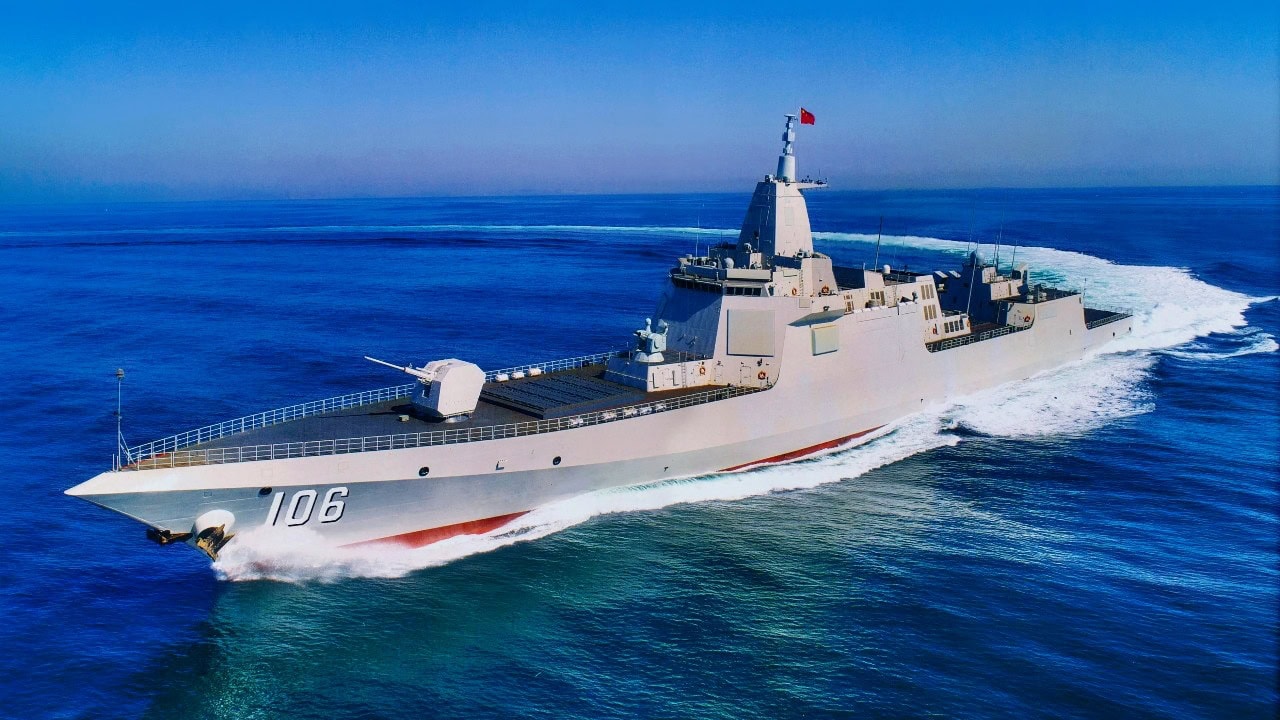
According to the USNI account, Anshan was sighted at 4 p.m. local time on July 24 about 220 kilometers northeast of Cape Inubō on the east coast of Honshu. Later that evening, Kaifeng, Kekexilihu, and Rezkiy were spotted roughly 130 kilometers southeast of Cape Inubō. By July 25, all four ships were about 300 kilometers southeast of Cape Nosappu on Hokkaido.
Those distances keep the patrol outside Japanese territorial waters but inside the zone where Tokyo has to care. A surface group operating 130 to 300 kilometers off the coast is close enough to be tracked continuously, close enough to collect signals, and close enough to complicate crisis planning around Hokkaido, Honshu, and the approaches into the Philippine Sea.
Japan responded with JMSDF destroyers JS Samidare (DD-106) and JS Suzunami (DD-114), supported by P-3C Orion maritime patrol aircraft, according to Japan’s Joint Staff Office details cited by USNI. That is the operational bill. Four Chinese and Russian hulls drew at least two Japanese destroyers and airborne surveillance. If the patrol stays predictable, Japan can manage it. If Beijing and Moscow make it frequent, the arithmetic starts to bite.
What China Put In The Package
The lead Chinese ship matters. Anshan is a Type 055 cruiser in U.S. terminology, a roughly 12,000-ton combatant with 112 vertical launch cells and a large phased-array radar suite. The class gives the PLAN area air defense, long-range anti-ship strike options, land-attack cruise missile potential, and command-and-control capacity in one hull. It is the kind of ship China needs if it wants formations to operate beyond shore-based air cover with fewer compromises.
Kaifeng, a Type 052D destroyer, adds another modern air-defense and strike platform, generally assessed at about 7,000 to 7,500 tons with 64 vertical launch cells. Between a Type 055 and a Type 052D, the Chinese side alone brings roughly 176 VLS cells before counting deck guns, close-in weapons, helicopters, or the Russian escort.
Then comes the oiler. Kekexilihu, a Type 903 replenishment ship, is the least glamorous hull in the group and probably the most honest indicator of intent. A replenishment ship turns a port-call navy into a patrol navy. It lets China keep combatants on station, stretch a route, and choose when to return rather than being forced back by fuel and stores. A cruiser without an oiler is a sortie. A cruiser with an oiler is a presence mission.
Russia’s Rezkiy, a Project 20380 corvette, is smaller than the Chinese ships but useful for the signal Moscow wants to send. The class is designed for near-seas operations with anti-ship missiles, air defense, and anti-submarine capability. It does not make Russia an equal partner in the western Pacific. It does let Moscow attach a naval flag to Chinese operational reach at low cost.
The Japan Problem Is ISR Endurance
Japan is not short of capable ships. The JMSDF has one of the world’s best anti-submarine and surface surveillance forces. Its problem is geography and repetition. Hokkaido, the Sea of Japan, the East China Sea, the Ryukyus, and the Philippine Sea are not one patrol box. They are a chain of patrol boxes, each demanding aircraft hours, destroyer days, and command attention.
USNI also noted that Japan’s first-quarter fiscal 2026 scramble count reached 181, up 24 from the same period the previous year, with 139 scrambles tied to Chinese aircraft and unmanned systems and 42 to Russian aircraft. That matters because the surface patrol is not happening in isolation. It follows China-Russia bomber flights, Russian IL-20 electronic intelligence flights, Chinese Y-9 electronic intelligence flights, and a July 19 live-fire drill by Kaifeng around Okinotori Island that drew a Japanese protest.
This is how pressure works below the threshold of combat. One event is manageable. A bomber flight here, a surface patrol there, an ELINT aircraft routing through the Sea of Okhotsk and into the Pacific, a destroyer firing machine guns near a disputed reef. Each is deniable as routine training. Together they force Japan to practice crisis response on Beijing and Moscow’s schedule.
Washington Should Not Read This As Symbolism
The United States often talks about allied interoperability as if the alliance network automatically converts into sea control. It does not. Sea control is a product of hulls, aircraft, munitions, sensors, maintenance, fuel, and time on station. A Chinese-Russian four-ship patrol near Japan is not going to close the Pacific. But it shows that China can put a balanced surface group into waters where Japan must track it, and Russia can add enough presence to complicate the political picture.
The U.S. Navy’s forward posture in Japan helps, but it is not infinite. The same week this patrol was reported, USNI’s fleet tracker placed USS George Washington in the South China Sea on its first patrol of 2026, with Carrier Air Wing 5, cruiser USS Robert Smalls, and destroyers USS Benfold and USS Shoup. That is serious combat power. It is also one carrier strike group covering an enormous theater.
China does not need to match the U.S. Navy carrier for carrier to create operational stress. It can send surface action groups, coast guard formations, aircraft, and missile forces into separate parts of the first island chain and make allies spend readiness in multiple directions. Russia’s contribution is secondary, but it gives China a partner for northern approaches and a way to present the activity as a Eurasian naval problem rather than a single-country provocation.
The Hard Conclusion
The patrol near Japan is a small event with a large lesson. A Type 055, a Type 052D, an oiler, and a Russian corvette do not change the naval balance by themselves. They do show that China’s blue-water problem is no longer whether it can leave port and be noticed. It can. The question is whether Japan and the United States can keep paying the surveillance bill every time Beijing and Moscow decide to take another lap around the map.
That bill is measured in aircraft hours, destroyer availability, maintenance backlog, and crew fatigue. It is not measured in communiques. If allied planning treats every patrol as a one-off signal, China wins the accounting fight before the first missile is fired.
A Chinese-Russian naval patrol consisting of four ships operated near Japan from July 24 to 25, 2026, specifically off Honshu and Hokkaido. The group included the Chinese cruiser CNS Anshan, destroyer CNS Kaifeng, replenishment ship CNS Kekexilihu, and Russian corvette RFS Rezkiy. This presence challenges Japan's maritime surveillance and response capabilities, necessitating the deployment of JMSDF destroyers and surveillance aircraft.
- A Chinese-Russian patrol was reported near Japan.
- The patrol included four ships: CNS Anshan, CNS Kaifeng, CNS Kekexilihu, and RFS Rezkiy.
- The ships operated 130 to 300 kilometers off the Japanese coast.
- Japan responded with JMSDF destroyers and P-3C Orion aircraft.
- The patrol complicates Japan's crisis planning and surveillance efforts.