
China's 2026 100-Ship Taiwan Surge Is a Blockade Rehearsal
 Marcus Chen
China's 2026 100-Ship Taiwan Surge Is a Blockade Rehearsal
Taiwan's defense authorities are tracking more than 100 Chinese navy and coast guard vessels across the Western Pacific, while separate reporting counted roughly 21 to 22 Chinese military aircraft around the island. Those numbers do not prove that Beijing is preparing an invasion. They do show something more useful: the People's Liberation Army (PLA) is practicing how to make Taiwan's surrounding waters feel closed without announcing a blockade.
That distinction matters. An invasion requires a force large enough to cross the strait, seize ports and airfields, and sustain an army under fire. A blockade or quarantine needs a distributed maritime presence, persistent sensors, law-enforcement cover, and the ability to raise the cost of every ship and aircraft approaching Taiwan. The latest surge points more clearly to the second problem.
The Fleet Is Bigger Than a Headline Number
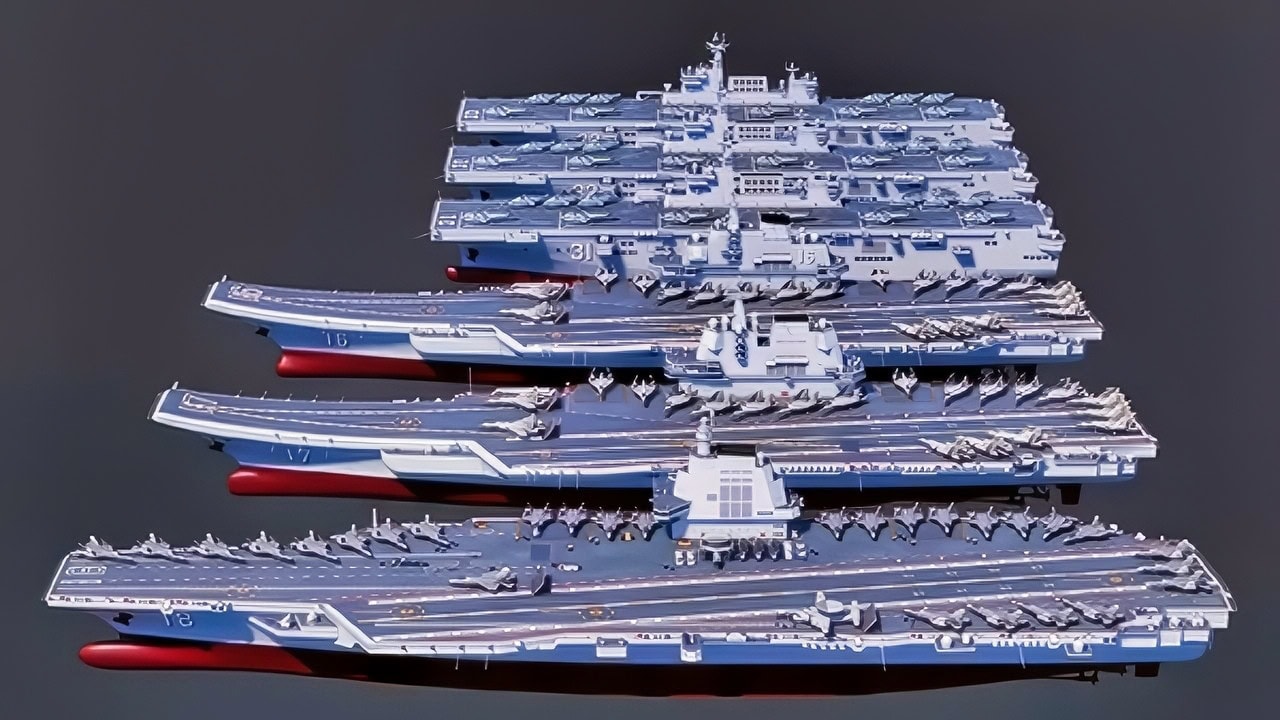
The figure of more than 100 vessels must be handled carefully. It appears to combine Chinese navy and China Coast Guard ships operating in a wider Western Pacific area, rather than a single task force sitting off Taiwan's beaches. The composition is therefore more important than the total. A carrier group, large-deck amphibious ships, air-defense destroyers, frigates, submarines, and coast guard cutters perform different jobs in a pressure campaign.
A Type 055 Renhai-class cruiser, for example, carries a reported 112 vertical-launch system cells and is built to provide air-defense and strike capacity for a task group. A Type 052D destroyer adds a smaller but still substantial missile battery. Coast guard cutters bring something the navy cannot easily provide: the appearance of routine maritime law enforcement. In a quarantine scenario, that gray-zone layer gives Beijing more room to threaten inspections, reroute commercial traffic, or create navigational uncertainty before it fires a shot.
Twenty-one or 22 aircraft around Taiwan is not an especially large wartime air package. It is large enough, however, to keep Taiwan's fighters, ground crews, and air-defense operators working while ships maneuver. The aircraft are not merely a count of sorties. They are part of a sensor-and-command system that forces Taipei to spend readiness every day.
Why This Looks Like Blockade Practice
A blockade is a logistics problem before it becomes a missile problem. Taiwan imports most of its energy and depends on sea and air links for trade. China does not need to sink every commercial vessel. It needs to make insurers, shipowners, and crews believe that entering Taiwan's ports carries an unacceptable delay or escalation risk.
The naval surge tests three parts of that equation. First, it measures how quickly Taiwan can identify and classify contacts across multiple approaches. Second, it checks whether coast guard and naval units can maintain pressure without creating an obvious act of war. Third, it watches the response of the United States, Japan, the Philippines, and commercial shipping. Those reactions are the real intelligence gain.
Beijing can also vary the intensity. A short exercise can become a temporary exclusion zone, then a customs or safety inspection campaign, then a missile or air-defense deployment. Each step presents Washington with a harder decision than a clean invasion warning would. The political objective is to split the response before the military objective is even attempted.
Taiwan's Readiness Bill Comes Due
Taiwan can track a large maritime formation, but tracking is not the same as stopping it. The island's navy and air force must preserve enough combat power for the first days of a war while responding to a pressure campaign that is designed to exhaust them before the shooting starts.
This is where the 2026 defense debate should focus. Taiwan needs more than additional anti-ship missiles. It needs a layered maritime picture, hardened command nodes, mobile air defense, unmanned surveillance, fuel reserves, and a civil-military system that can keep ports operating under harassment. Small unmanned surface and aerial systems are useful because they increase the number of contacts Taiwan can observe without putting a frigate or fighter at risk.
The United States faces a parallel calculation. A blockade rehearsal is exactly the kind of crisis in which an aircraft carrier is politically visible but operationally vulnerable. Submarines, long-range bombers, unmanned systems, and distributed land-based missiles offer more options, but only if Washington has stockpiled the weapons and secured access to bases. The first island chain is not a map problem. It is a sortie-generation and resupply problem.
The Signal Beijing Is Sending
There is no reliable public evidence that the latest vessel count represents an imminent invasion order. The safer judgment is more uncomfortable: China is normalizing the force package and command relationships that would make a future quarantine credible. Repetition is the capability. Every exercise teaches crews, coast guards, local officials, and political leaders how to operate together while staying below the threshold of open war.
That gives Beijing a menu of pressure options. It can concentrate around Taiwan, push vessels into the Philippine Sea, or use coast guard ships to wrap a military operation in a legal narrative. Taiwan's response will be judged not by whether it intercepts every aircraft, but by whether it can keep commercial traffic moving and reserve combat power for the moment when gray-zone pressure turns kinetic.
The headline is more than 100 ships. The military lesson is that China is rehearsing control of access, not simply displaying tonnage. If Taiwan and the United States prepare only for the visible invasion fleet, they will be preparing for the last phase of the crisis. The first phase will look like maritime administration backed by missiles.
Sources
- South China Morning Post, “Taiwan flags massive PLA naval mobilisation, spike in air sorties,” November 4, 2026.
- Taiwan News, “Taiwan says China deploys over 100 navy, coast guard vessels in Western Pacific,” November 4, 2026.
- Taiwan News, “Taiwan tracks 22 Chinese military aircraft and 12 ships,” November 4, 2026.
China is conducting a naval surge with over 100 vessels and 21 to 22 military aircraft around Taiwan in 2026, practicing blockade tactics. This operation aims to create a perception of restricted access to Taiwan's waters without formally declaring a blockade. The People's Liberation Army (PLA) is testing Taiwan's response capabilities and the reactions of the United States and regional allies.
- China is tracking over 100 navy and coast guard vessels in the Western Pacific.
- 21 to 22 Chinese military aircraft are operating around Taiwan.
- The PLA is practicing blockade tactics without formally announcing a blockade.
- Taiwan's defense capabilities are being tested by China's naval surge.
- The exercise aims to normalize military operations and command relationships.